The Delayed Departure of the Third Crusade:…
July 1190 CE
The Delayed Departure of the Third Crusade: Richard I and Philip II at Vézelay (1190 CE)
Although Archbishop Joscius of Tyre had successfully won over both Philip II of France and Henry II of England to the Third Crusade, Henry’s death in 1189 shifted leadership of the English effort to Richard I (the Lionheart). Richard quickly raised a formidable fleet and army, but unresolved Anglo-French tensions delayed the expedition.
Anglo-French Rivalry Delays the Crusade (1189–1190)
- The Angevin Empire’s extensive holdings in France, particularly Normandy, remained a major point of contention between Richard and Philip.
- Philip sought to recover Norman lands, and despite their shared Crusader vow, neither king was willing to set aside their dynastic ambitions entirely.
- These disputes resulted in delays, preventing an earlier departure for the Holy Land.
The Meeting at Vézelay (July 4, 1190)
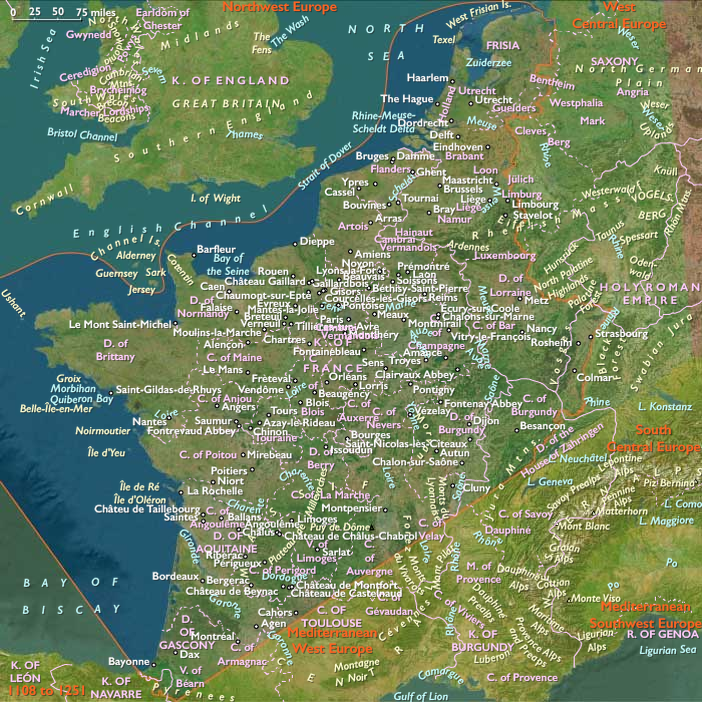
- After three years of preparations, the two kings finally assembled their forces at Vézelay on July 4, 1190, marking the first major step toward the Third Crusade’s departure.
- Despite their rivalry, they formally agreed to cooperate, though tensions between their armies persisted throughout the campaign.
Significance of the Delayed Departure
- The three-year delay between the fall of Jerusalem in 1187 and the departure of the Anglo-French Crusader forces in 1190 weakened the Christian position in the Levant.
- The ongoing tensions between Richard and Philip foreshadowed their eventual conflicts in France after the Crusade.
- Although both kings pledged to work together, their competing ambitions would continue to shape the course of the Third Crusade.
Thus, while Vézelay marked the official start of the joint Crusader expedition, the underlying Anglo-French disputes remained unresolved, shaping the dynamics of their uneasy alliance.
Locations
People
Groups
Commodities
Subjects
Regions
West Europe
View →Subregions