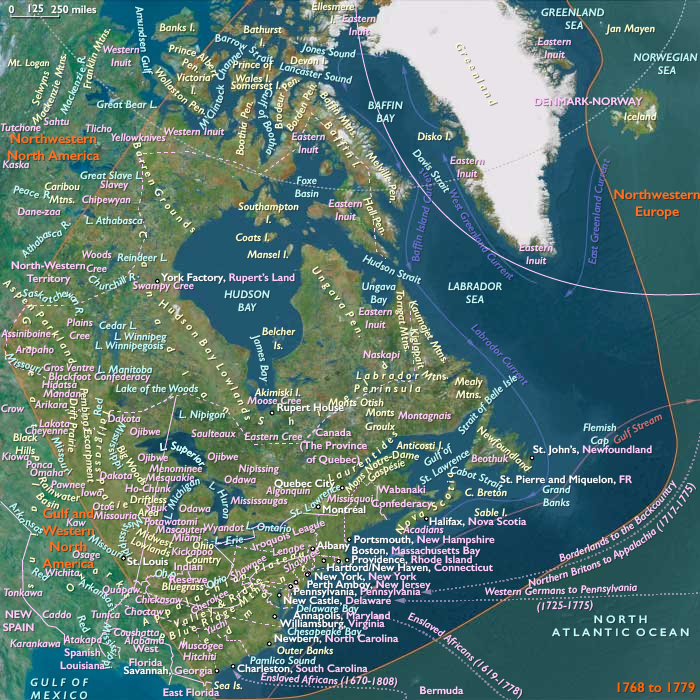
General John Thomas had been unable to…
May 1776 CE
Concerned about reports of troop readiness and sickness, he had made requests to Washington for additional men to follow him while he waited for conditions to improve.
Upon his arrival in Montreal, he learned that many men had promised to stay only until April 15, and most of these were insistent on returning home.
This was compounded by relatively low enrollments in regiments actually raised for service in Quebec.
One regiment with an authorized strength of seven hundred and fifty had sailed north with but seventy-five men.
These deficiencies had prompted Congress to order Washington to send more troops north.
In late April, Washington had ordered ten regiments, led by Generals William Thompson and John Sullivan, to go north from New York.
This had significantly reduced Washington's forces that were preparing for a British attack there.
This had also exposed transport problems: there are insufficient sailing hands on Lakes George and Champlain to easily move all of these men.
Furthermore, there is also a shortage of supplies in Quebec, and much of the shipping is needed to move provisions instead of men.
As a result, Sullivan's men had been held up at Ticonderoga, and Sullivan will not reach Sorel until the beginning of June.
General Wooster had arrived in the American camp outside Quebec City in early April with reinforcements.
Reinforcements had continued to arrive from the south in modest numbers, until General Thomas arrived at the end of April and assumed command of a force that was nominally over two thousand strong, but in reality has been significantly diminished by the effects of smallpox and the hardships of the Canadian winter.
Rumors had begun circulating on May 2 that British ships were coming up the river.
Thomas had decided on May 5 to evacuate the sick to Trois-Rivières, with the rest of the forces to withdraw as soon as practical.
Late on that day he received intelligence that fifteen ships were forty leagues below the city, awaiting favorable conditions to come up the river.
The pace of camp evacuation had taken on a sense of urgency early the next day when ship's masts were spotted; the wind had changed, and three ships of the fleet had reached the city.
Locations
People
Groups
Topics
Regions
Northern North America
View →Subregions