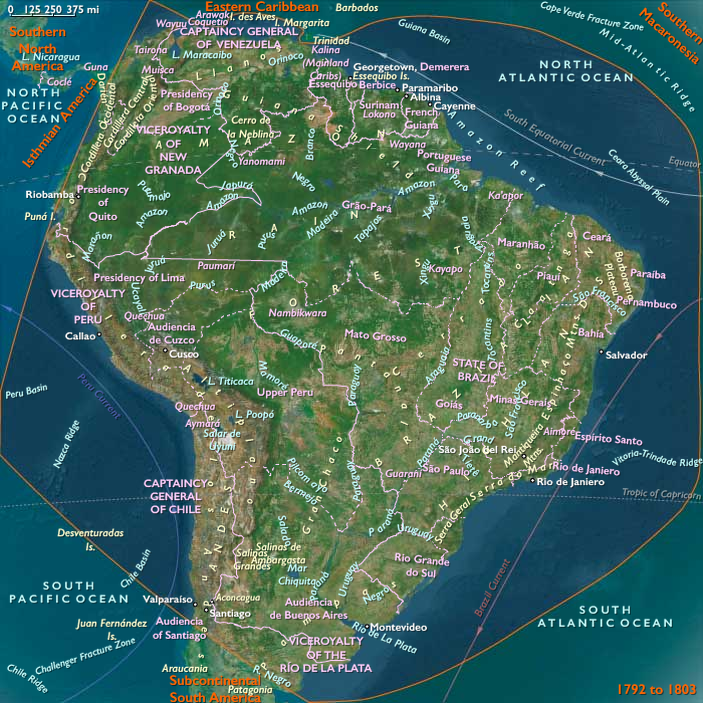
The return of Dutch rule reignites the…
1792 CE to 1803 CE
Disturbed by plans for an increase in the slave tax and a reduction in their representation on the colony's judicial and policy councils, the colonists petition the Dutch government to consider their grievances.
In response, a special committee is appointed, which proceeds to draw up a report called the Concept Plan of Redress.
This document calls for far-reaching constitutional reforms and later becomes the basis of the British governmental structure.
The plan proposes a decision-making body to be known as the Court of Policy.
The judiciary is to consist of two courts of justice, one serving Demerara and the other, Essequibo.
The membership of the Court of Policy and of the courts of justice will consist of company officials and planters who own more than twenty-five slaves.
The Dutch commission that is assigned the responsibility of implementing this new system of government returns to the Netherlands with extremely unfavorable reports concerning the Dutch West India Company's administration.
The company's charter therefore is allowed to expire in 1792, and the Concept Plan of Redress is put into effect in Demerara and Essequibo.
Renamed the United Colony of Demerara and Essequibo, the area now comes under the direct control of the Dutch government.
Berbice maintains its status as a separate colony.
Groups
Dutch people
View →
French people (Latins)
View →
English people
View →
Netherlands, United Provinces of the (Dutch Republic)
View →
France, (Bourbon) Kingdom of
View →
Essiquibo (Dutch colony)
View →
Dutch West India Company
View →
Berbice (Dutch colony)
View →
Dutch West Indies
View →
Britain, Kingdom of Great
View →
Demerara (Dutch colony)
View →
Topics
Subjects
Regions

South America
View →Subregions