The Investiture Controversy and the Struggle for…
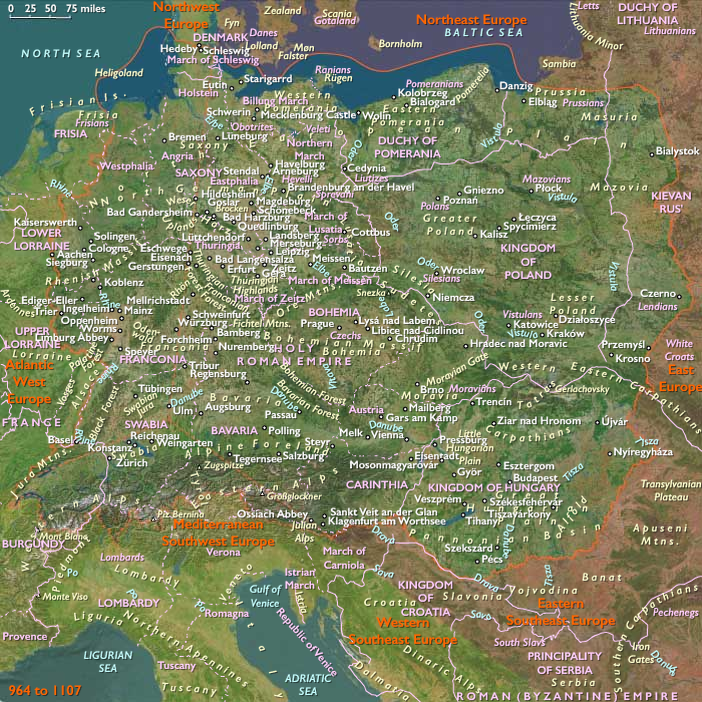
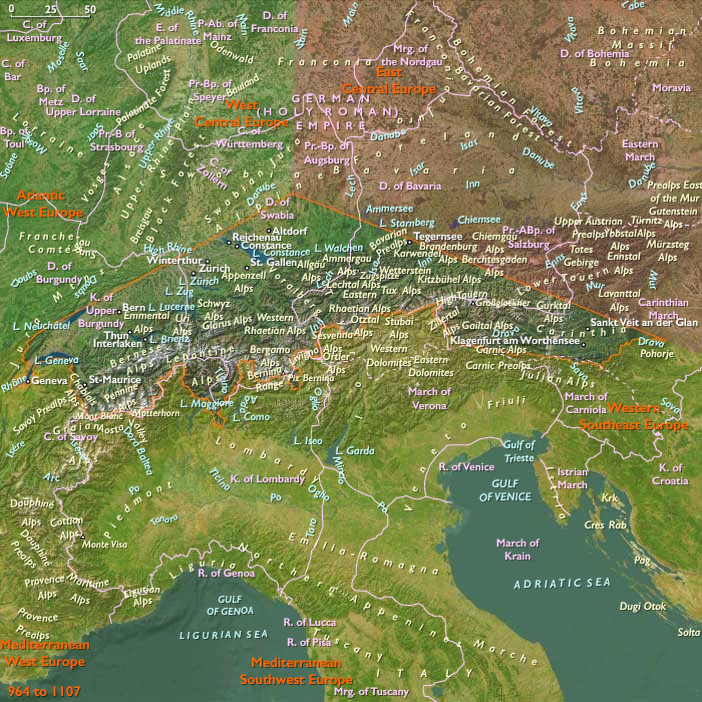
964 CE to 1107 CE
The Investiture Controversy and the Struggle for Imperial Authority (11th–12th Century)
The Investiture Controversy was a pivotal conflict between the papacy and the monarchs of Western and Central Europe, particularly the Holy Roman Emperors, over the right to appoint (invest) bishops and abbots. At stake was not only control over church offices but also the broader question of secular vs. spiritual authority, a struggle that would shape the political landscape of medieval Europe.
Origins of the Conflict
Since the Ottonian era (10th century), Holy Roman Emperors had exercised significant influence over the Church, appointing bishops and abbots who served as both religious leaders and imperial administrators. However, by the mid-11th century, a wave of Church reform, centered in Rome and Cluny, sought to end lay investiture, asserting that only the pope had the authority to appoint high-ranking clergy.
The Height of the Controversy: Pope Gregory VII vs. Emperor Henry IV
The conflict came to a head in the late 11th century, when Pope Gregory VII (r. 1073–1085) attempted to enforce the Dictatus Papae (1075), which declared that only the pope had the power to appoint, depose, and reinstate bishops. This directly challenged the authority of Emperor Henry IV of Germany (r. 1056–1106), who defied the decree by appointing his own bishops.
- 1076: In retaliation, Gregory VII excommunicated Henry IV, absolving his vassals of their oaths of loyalty.
- 1077: Seeking to restore his rule, Henry IV performed the Walk to Canossa, a dramatic act of penance before the pope at Canossa Castle, securing temporary absolution.
- 1080: Conflict resumed when Henry IV appointed an antipope, leading to Gregory’s deposition and death in exile.
Long-Term Consequences: Imperial Weakness and Civil War
The controversy severely weakened imperial authority, particularly in Germany, where it fueled civil war (1077–1122). The erosion of centralized power led to the rise of powerful regional lords, including dukes and prince-bishops, who asserted greater independence.
- The Salian emperors, especially Henry IV and Henry V, struggled to reassert their dominance but faced continued opposition from the papacy and rebellious nobles.
- By the early 12th century, the Holy Roman Empire had become highly fragmented, with rival claimants vying for control.
The Concordat of Worms (1122) and the Hohenstaufen Revival
The conflict was partially resolved in 1122 with the Concordat of Worms, an agreement between Pope Calixtus II and Emperor Henry V. The compromise:
- The emperor retained influence in the selection of bishops but relinquished the right to invest them with religious authority.
- The pope, in turn, acknowledged the emperor’s role in secular governance.
Despite this resolution, the damage to imperial centralization had already been done. Germany remained politically fractured, and only with the rise of the Hohenstaufen dynasty, particularly under Frederick I Barbarossa (r. 1152–1190), did imperial power begin to recover.
The Investiture Controversy was one of the defining struggles of medieval Europe, shaping the relationship between Church and State for centuries and highlighting the growing strength of papal authority in contrast to the declining unity of the Holy Roman Empire.