
Atlantic Southwest Europe (1648–1659 CE): Consolidation, Conflict, …
Years: 1648 - 1659
Atlantic Southwest Europe (1648–1659 CE): Consolidation, Conflict, and Regional Transformation
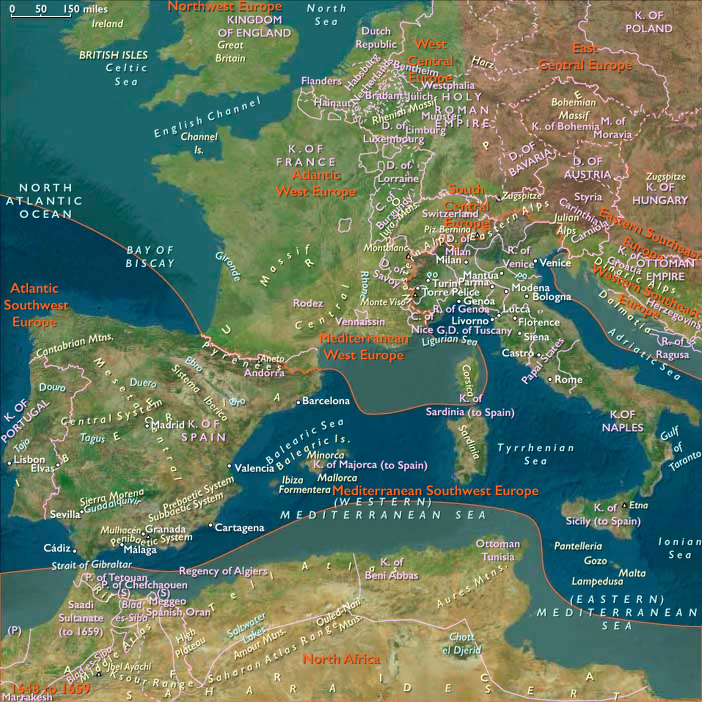
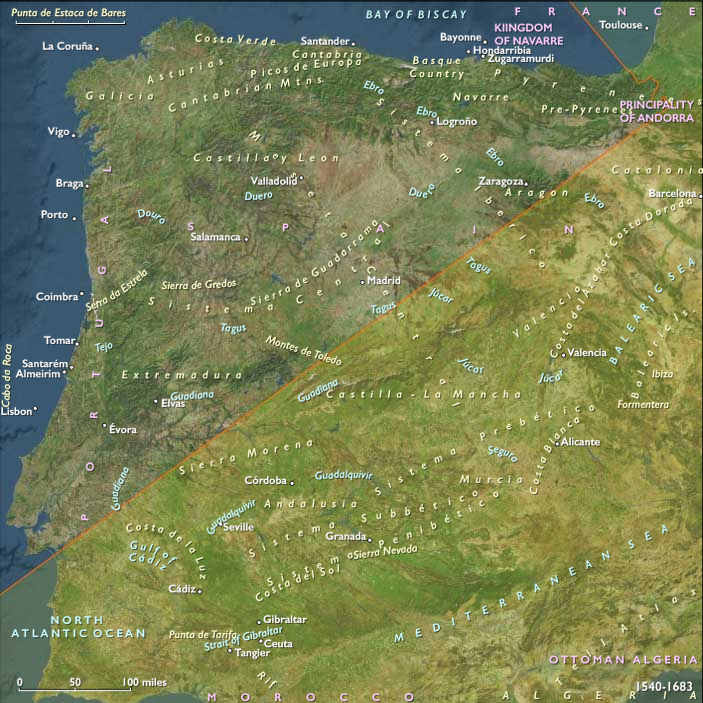
Between 1648 and 1659, Atlantic Southwest Europe—encompassing northern and central Portugal (including Lisbon), Galicia, Asturias, Cantabria, northern León and Castile, northern Navarre, northern Rioja, and the Basque Country—experienced a decisive decade of political consolidation, economic stabilization, and intensified regional identities. Marked by Portugal’s successful defense of independence, adjustments in Spain following the Treaty of Westphalia, and reinforced regional autonomy in northern Spanish territories, this era established critical foundations for future stability, cultural flourishing, and distinct national identities.
Political and Military Developments
Portugal’s Successful Defense of Independence
Portugal effectively defended its newly regained independence (Portuguese Restoration War, 1640–1668) under King João IV (House of Braganza), significantly stabilizing political governance. Northern and central Portugal, particularly the strategic cities of Porto, Viana do Castelo, and the capital, Lisbon, fortified coastal defenses against Spanish incursions, ensuring continued maritime security and national sovereignty.
Impact of the Peace of Westphalia (1648) on Northern Spain
The Treaty of Westphalia (1648) concluded the devastating Thirty Years’ War (1618–1648), compelling Spain to reassess and curtail its expansive European ambitions. Northern Spanish regions—Galicia, Asturias, Cantabria, the Basque Country, northern León, and Castile—benefited from the reduced military burden, enabling economic stabilization and fostering a revival of local governance through reassertion of traditional fueros.
The Franco-Spanish Conflict and the Treaty of the Pyrenees (1659)
Ongoing hostilities between Spain and France, culminating in the Treaty of the Pyrenees (1659), significantly impacted northern Navarre and northern Rioja. Notably, border territories in northern Navarre were transferred to France, reshaping local political allegiances, trade networks, and cultural identities, reflecting enduring geopolitical shifts.
Economic Developments: Recovery and Realignment
Economic Stabilization in Northern Spanish Territories
Following decades of prolonged conflict, northern Spanish regions experienced gradual economic recovery. Agricultural revitalization, fishing industry improvements, and modest maritime trade resurgence notably benefited coastal cities such as Vigo, Santander, Bilbao, and San Sebastián. Enhanced commercial relations with England, the Dutch Republic, and France partially compensated for diminished Portuguese trade links post-1640.
Portuguese Maritime and Commercial Revival
Northern and central Portugal experienced sustained economic growth and maritime expansion. Stability under the Braganza monarchy facilitated renewed overseas trade and strengthened commercial connections, especially with England and the Dutch Republic. Porto thrived through increased export of its renowned port wine, while Lisbon reasserted itself as an essential hub for transatlantic commerce, significantly contributing to Portugal’s national prosperity.
Religious and Cultural Developments
Reinforced Counter-Reformation Orthodoxy
Counter-Reformation influence remained deeply entrenched across Atlantic Southwest Europe. Catholic orthodoxy was rigorously maintained through influential ecclesiastical institutions and active inquisitorial tribunals, notably in Valladolid, Pamplona, Braga, and Lisbon. Catholic education and doctrinal enforcement persisted, integrating religious orthodoxy with regional cultural traditions.
Flourishing of Regional Cultures and Identities
Despite rigid religious oversight, vibrant cultural expression flourished across the region. Galicia, Asturias, the Basque Country, and northern Portugal experienced notable growth in regional literature, music, folklore, and visual arts, expressing robust local identities. In central Portugal, the cultural atmosphere of Lisbon flourished under royal patronage, marked by distinctive Portuguese Baroque architecture, literary achievements, and artistic innovation, deeply reinforcing national pride and identity.
Social and Urban Developments
Urban Revival and Regional Prosperity
Northern Portuguese cities, notably Porto, Braga, and central Portugal’s Lisbon, benefited significantly from political stability, maritime commerce, and economic opportunities. Urban centers expanded, attracting rural migrants, bolstering merchant and artisan classes, and enhancing civic infrastructure and social stability. In northern Spanish regions, cities such as Bilbao, Santander, Santiago de Compostela, and Vigo likewise experienced urban revitalization, although more modest due to ongoing economic recovery.
Affirmation of Regional Autonomy and Fueros
In northern Spain, traditional regional privileges (fueros) in Galicia, the Basque territories, and northern Navarre were decisively reaffirmed, reinforcing local governance and economic independence from central authority. Local elites skillfully defended regional autonomy, resisting Madrid’s centralizing attempts, thereby preserving distinct governance structures and cultural identities amidst broader geopolitical pressures.
Persistent Rural Hardship and Demographic Shifts
While urban regions prospered, rural areas across Galicia, Asturias, northern León, and Castile continued experiencing economic hardships. Agricultural stagnation, demographic pressures, and fiscal demands perpetuated rural poverty, prompting significant internal migration to cities and overseas emigration to Portuguese and Spanish colonies in the Americas, reshaping demographic patterns.
Notable Regional Groups and Settlements
-
Portuguese (Northern and Central): Successfully consolidated independence, establishing strong governance, economic prosperity, and cultural vitality, notably in Porto, Braga, and Lisbon.
-
Galicians and Asturians: Benefited modestly from reduced warfare but continued struggling economically, preserving vibrant cultural traditions and regional autonomy.
-
Cantabrians and Northern Castilians: Experienced gradual economic stabilization and modest maritime revival but remained under fiscal strain from central authorities.
-
Basques and Navarrese: Strengthened regional autonomy and fueros significantly, successfully preserving local governance and cultural distinctiveness amid geopolitical shifts caused by the Treaty of the Pyrenees.
Long-Term Significance and Legacy
Between 1648 and 1659, Atlantic Southwest Europe:
-
Achieved decisive political consolidation and regional stability, notably through Portugal’s successful defense of independence and strengthened local governance across northern Spain.
-
Experienced significant economic recovery and maritime revival, particularly benefiting northern and central Portuguese cities, shaping future economic trajectories and prosperity.
-
Reinforced distinct regional identities, cultural expressions, and autonomy movements, influencing enduring patterns of governance, cultural resilience, and local heritage preservation.
-
Underwent notable geopolitical realignment due to the Treaty of the Pyrenees, reshaping political boundaries and alliances with lasting implications for regional identities and governance.
This critical decade firmly established the political, economic, and cultural foundations of modern Atlantic Southwest Europe, marking a definitive shift from prolonged conflict toward stability, prosperity, and enduring regional autonomy, significantly influencing the region’s subsequent historical development.
People
Groups
- Galicia, Kingdom of
- Portuguese people
- Basque people
- Christians, Roman Catholic
- Galicians
- Asturias, Principality of
- Portuguese Empire
- Ottoman Empire
- Portuguese Gold Coast
- Inquisition, Spanish
- England, (Tudor) Kingdom of
- Christians, New
- Marranos
- Portuguese Mozambique
- Portuguese Malacca
- Spain, Habsburg Kingdom of
- Spaniards (Latins)
- Protestantism
- Inquisition, Portuguese
- Morocco, Sa'di Sharifate of
- Brazil, Colonial
- Spain, Habsburg Kingdom of
- Iberian Union
- Portugal, Bragança Kingdom of
Topics
- Colonization of the Americas, Portuguese
- Renaissance, Portuguese
- Renaissance, Spanish
- Colonization of the Americas, Spanish
- Colonization of Asia, Portuguese
- Colonization of Asia, Spanish
- Counter-Reformation (also Catholic Reformation or Catholic Revival)
- Eighty Years War (Netherlands, or Dutch, War of Independence)
- Thirty Years' War
- Portuguese Restoration War
Commodoties
Subjects
Regions
Subregions
Years: 1648 - 1659
People
Groups
- Galicia, Kingdom of
- Portuguese people
- Basque people
- Christians, Roman Catholic
- Galicians
- Asturias, Principality of
- Portuguese Empire
- Ottoman Empire
- Portuguese Gold Coast
- Inquisition, Spanish
- England, (Tudor) Kingdom of
- Christians, New
- Marranos
- Portuguese Mozambique
- Portuguese Malacca
- Spain, Habsburg Kingdom of
- Spaniards (Latins)
- Protestantism
- Inquisition, Portuguese
- Morocco, Sa'di Sharifate of
- Brazil, Colonial
- Spain, Habsburg Kingdom of
- Iberian Union
- Portugal, Bragança Kingdom of
Topics
- Colonization of the Americas, Portuguese
- Renaissance, Portuguese
- Renaissance, Spanish
- Colonization of the Americas, Spanish
- Colonization of Asia, Portuguese
- Colonization of Asia, Spanish
- Counter-Reformation (also Catholic Reformation or Catholic Revival)
- Eighty Years War (Netherlands, or Dutch, War of Independence)
- Thirty Years' War
- Portuguese Restoration War
Commodoties
Subjects
Regions
Subregions