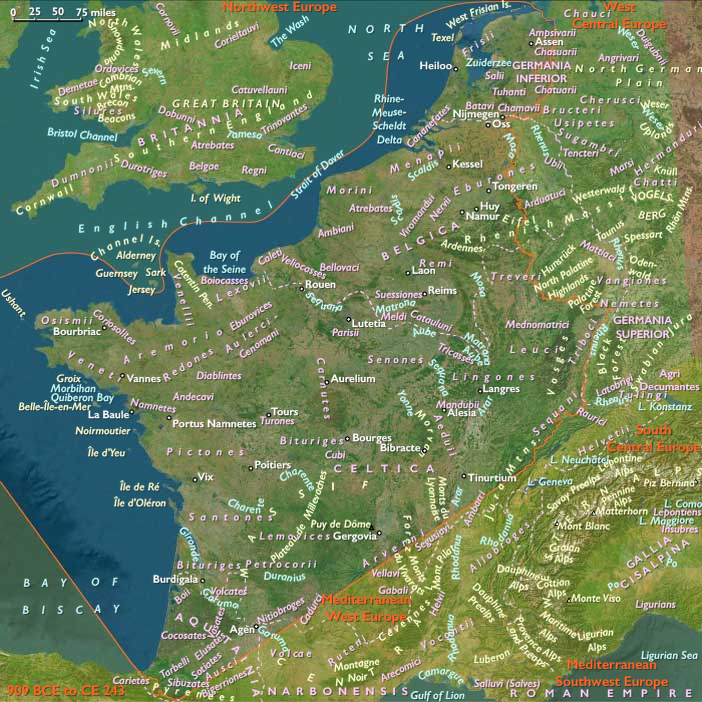
Atlantic West Europe: 160–171 From 160 to…
160 CE to 171 CE
Atlantic West Europe: 160–171
From 160 to 171 CE, Atlantic West Europe—encompassing Aquitaine, the Atlantic coast, northern and central France, Alsace, and the Low Countries—experienced the final peaceful years of Antoninus Pius’ reign and transitioned into the early rule of Marcus Aurelius (r. 161–180). Stability and prosperity remained prevalent, though subtle signs of change began emerging toward the era's end.
Political and Military Developments
-
Transition of Imperial Power (161):
-
Following Antoninus Pius' peaceful and stable rule, Marcus Aurelius ascended, initially co-ruling with Lucius Verus (until 169).
-
Provincial administration remained stable, with minimal military conflict affecting Atlantic West Europe directly, as Roman attention was primarily diverted eastward to the Parthian War (161–166).
-
-
Continued Peace and Provincial Stability:
-
Marcus Aurelius maintained Antonine administrative policies, ensuring regional stability and relative peace throughout these years.
-
Economic Developments
-
Sustained Economic Prosperity:
-
Bordeaux (Burdigala) continued to thrive as a major center for wine production, exporting extensively to Britain, Rome, and the Germanic provinces.
-
Agricultural productivity and trade remained stable and profitable, sustaining urban growth and infrastructure maintenance in major cities such as Lyon (Lugdunum), Autun (Augustodunum), and Toulouse (Tolosa).
-
Urban and Infrastructure Developments
-
Ongoing Urban Growth and Infrastructure Investment:
-
Continued expansion and enhancement of roads, aqueducts, and public buildings maintained strong urban economies and improved living standards.
-
Cities saw incremental developments rather than dramatic expansions, reflecting steady, long-term investment.
-
Cultural and Religious Life
-
Deepening Romanization:
-
Latin language and Roman legal systems became further entrenched, particularly among urban elites and municipal governments.
-
Religious syncretism and the coexistence of traditional Celtic deities with Roman gods persisted, reflecting a deeply rooted cultural fusion.
-
Signs of Future Change
-
While the era concluded peacefully, the broader empire began facing challenges on its eastern borders and along the Danube frontier, eventually affecting resource allocation and economic stability in the following decades.
Long-term Significance
The era (160–171 CE) represented continuity and stability inherited from Antoninus Pius’ principate. Marcus Aurelius initially preserved the administrative and economic structures established by his predecessor, maintaining peace and prosperity. However, the stability of this period also laid foundations for significant transformations and challenges soon to arise within the Roman Empire and its provinces.
Groups
Commodities
Subjects
Regions

West Europe
View →Subregions