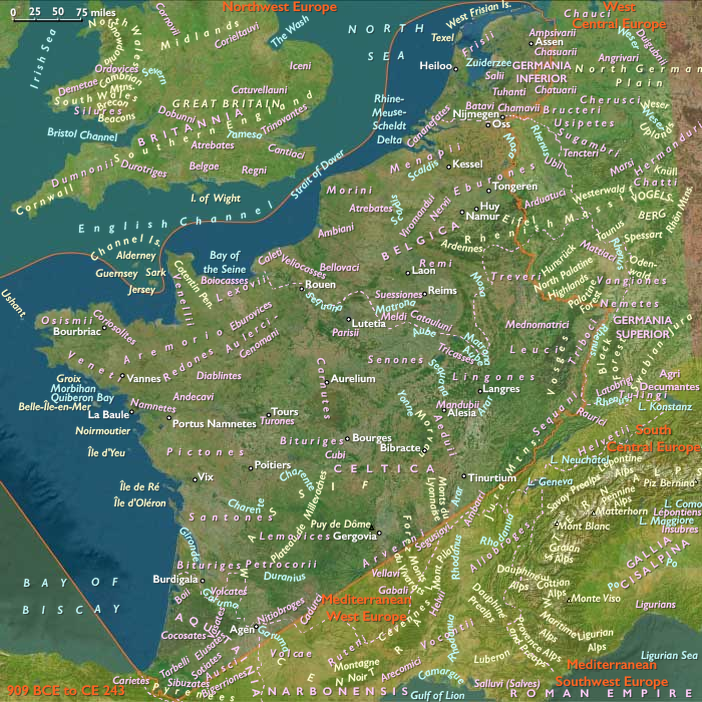
Atlantic West Europe: Era 196–207 During the…
196 CE to 207 CE
Atlantic West Europe: Era 196–207
During the era 196 to 207 CE, Atlantic West Europe—including Aquitaine, the Atlantic coast, northern and central France, Alsace, and the Low Countries—experienced a return to relative stability under Septimius Severus (r. 193–211). After the defeat and death of Clodius Albinus near Lyon in 197, Severus restored imperial control and initiated administrative and military reforms that had significant local impacts.
Political and Military Developments
-
Consolidation under Septimius Severus:
-
Severus decisively defeated Albinus at the Battle of Lugdunum (197), stabilizing imperial rule and eliminating regional threats.
-
Imperial administration focused on reasserting central authority through strengthened military garrisons along the Rhine frontier, influencing local economies and infrastructure in Alsace and northern France.
-
Economic and Social Developments
-
Urban Growth and Infrastructure:
-
Continued Roman investment in urban centers such as Autun (Augustodunum), Bordeaux (Burdigala), and Trier (Augusta Treverorum—near the border, impacting Atlantic provinces) reinforced these cities as economic hubs, promoting trade along the Atlantic coast and inland routes.
-
Infrastructure improvements—including roads and fortifications—supported increased regional trade and connectivity between Aquitaine, central France, and the Low Countries.
-
Cultural and Religious Developments
-
Romanization and Local Cultures:
-
Imperial stability promoted Roman cultural assimilation in Aquitaine and northern Gaul, further integrating local elites into Roman administration.
-
Traditional Celtic religious practices persisted in rural regions, coexisting alongside official Roman religious observances, reflecting a sustained cultural duality in Atlantic West Europe.
-
Long-term Significance
This era's stability and renewed imperial attention set the stage for the continued development of Atlantic West Europe’s urban infrastructure, economic vitality, and cultural integration, fostering resilience ahead of future third-century crises.
Groups
Topics
Commodities
Subjects
Regions
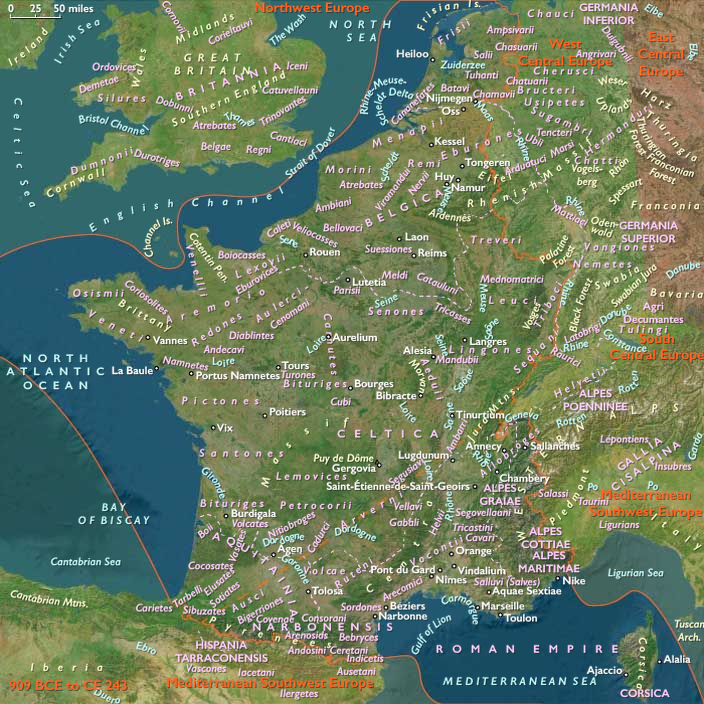
West Europe
View →Subregions