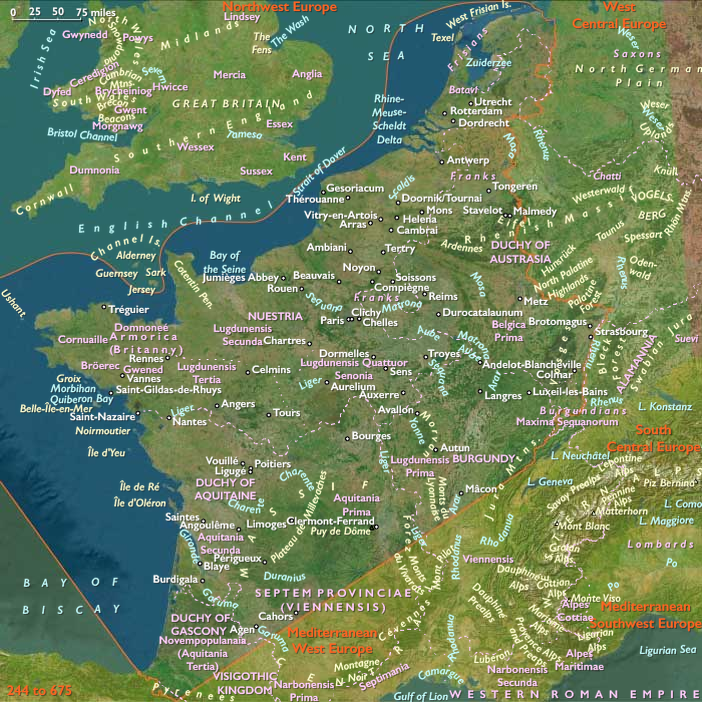
Atlantic West Europe, 316–327: Consolidation Under Constantine…
316 CE to 327 CE
Atlantic West Europe, 316–327: Consolidation Under Constantine and Regional Transformation
Political and Military Developments
-
Imperial Consolidation Under Constantine
-
Constantine, residing primarily in Trier, solidified his control over the Western Roman Empire, transforming Gaul into an essential administrative and military center.
-
Strengthening frontier defenses along the Rhine deterred significant invasions by Germanic tribes, reinforcing regional stability.
-
-
Civil Administration Reforms
-
Constantine’s extensive administrative restructuring enhanced provincial efficiency, refining taxation, governance, and legal procedures across Atlantic West Europe.
-
Provincial capitals, notably Trier, Bordeaux, and Lyon, became vital administrative hubs, attracting investment and increasing regional cohesion.
-
Economic and Social Developments
-
Urban Expansion and Infrastructure
-
Major urban centers, including Trier, expanded significantly under Constantine’s patronage, with investments in public buildings, fortifications, bridges, roads, and baths stimulating local economies.
-
Bordeaux, benefiting from the stable economy and strengthened trade routes, solidified its position as a primary wine-exporting hub, further integrating Atlantic Gaul into Mediterranean commerce.
-
-
Agricultural and Rural Stability
-
Rural estates (villae) prospered due to a stable political environment and administrative oversight, resulting in enhanced agricultural output and regional economic strength.
-
Cultural and Religious Developments
-
Christian Institutionalization
-
Constantine’s active patronage led to substantial growth in Christian infrastructure. Churches and basilicas arose in key cities, including notable structures in Trier and Poitiers, solidifying the church’s visible presence.
-
Christianity rapidly expanded as the favored religion, though traditional Roman religious practices persisted in many rural areas.
-
-
Influence of Bishops and Ecclesiastical Leaders
-
Bishops’ roles evolved beyond spiritual leadership, becoming influential civic figures who mediated between imperial officials and local populations, a pattern visible notably in Lyon and Trier.
-
Significance
The years 316–327 represented a period of robust imperial consolidation under Constantine, profoundly transforming Atlantic West Europe. Constantine’s reforms fostered economic stability, infrastructural expansion, and the rapid institutionalization of Christianity, reshaping the region’s political, economic, and cultural landscape.
People
Groups
Topics
Commodities
Regions
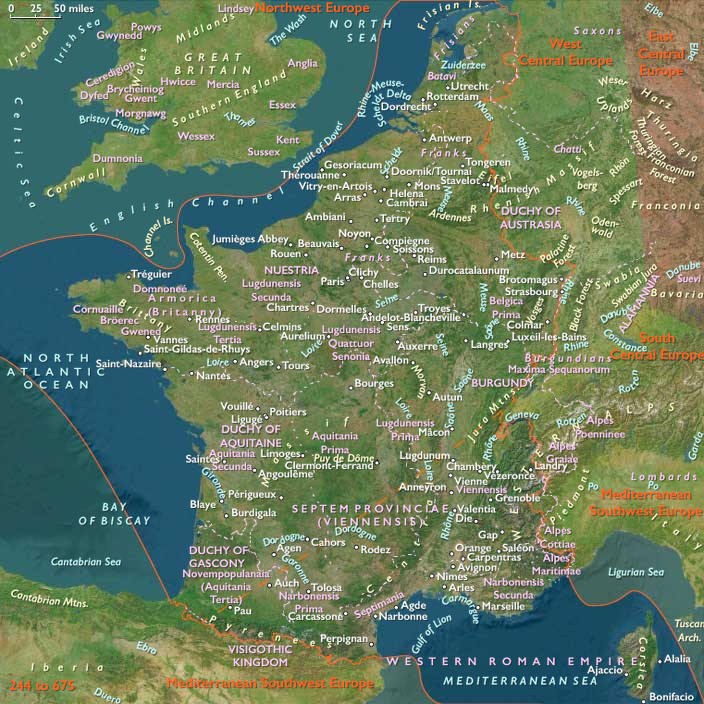
West Europe
View →Subregions