
Atlantic West Europe (21–10 BCE): Consolidation of …
Years: 21BCE - 10BCE
Atlantic West Europe (21–10 BCE): Consolidation of Roman Rule and Cultural Integration
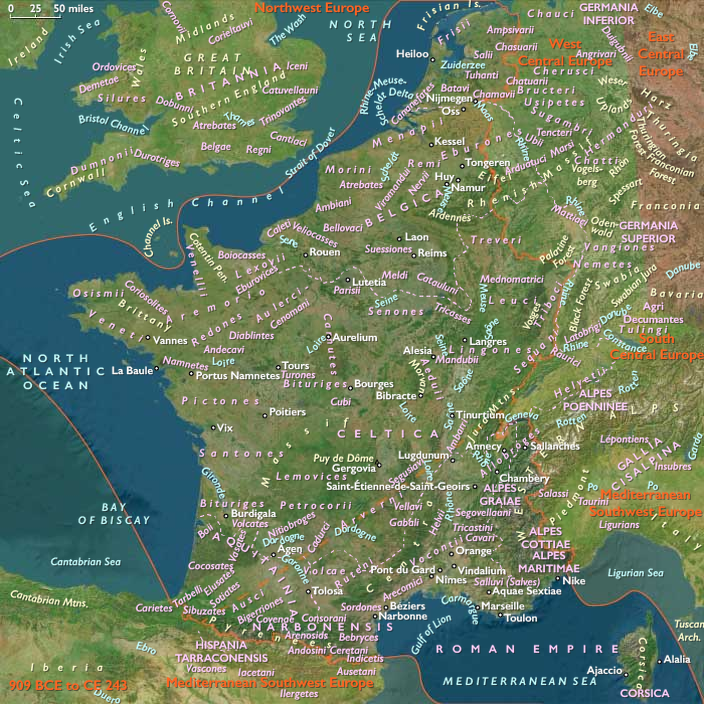
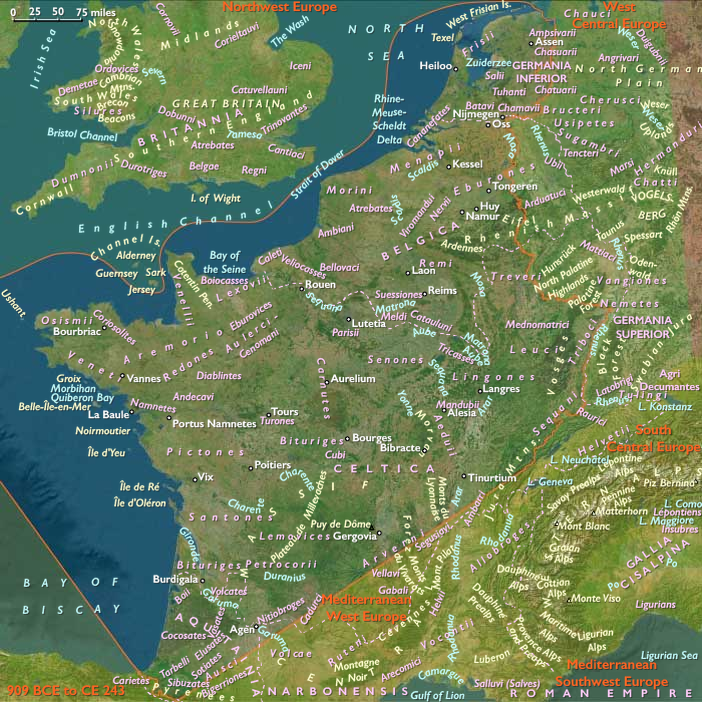
Between 21 and 10 BCE, Atlantic West Europe—including Aquitaine, the Atlantic coast, northern and central France, Alsace, and the Low Countries—saw Augustus continue his efforts to solidify Roman administrative, economic, and cultural structures. This decade marked deeper integration of local societies into the Roman system and laid a firm foundation for long-term stability and prosperity.
Political and Military Developments
Establishment of Stable Governance
-
Roman provincial administration matured, strengthening imperial governance through appointed governors and local elites who were granted Roman citizenship and integrated into Rome's political hierarchy.
-
Augustus maintained peace and stability in the region, with minimal military conflict, focusing instead on consolidating existing territories.
Fortification and Infrastructure
-
Roman engineers expanded infrastructure, fortifying strategic locations to protect trade routes and facilitate rapid movement of troops.
-
A growing network of roads, including extensions of the Via Agrippa, connected major urban centers like Burdigala (Bordeaux), Lutetia (Paris), and regional hubs in Gallia Belgica, Aquitania, and Lugdunensis.
Economic and Social Developments
Flourishing Trade and Agriculture
-
Wine production from Aquitaine further expanded, turning Bordeaux into a major export hub supplying both Roman and Mediterranean markets.
-
Northern Gaul, particularly in Gallia Belgica, developed thriving industries in pottery, metalworking, and textiles, bolstering regional prosperity.
Romanization and Urbanization
-
Established Roman colonies and municipia (self-governing cities) evolved into vibrant urban centers, adopting Roman legal frameworks, civic organization, and architectural styles.
-
Roman culture permeated local customs, creating a dynamic Gallo-Roman society characterized by blended traditions and languages.
Cultural and Religious Developments
Promotion of Roman Religious Practices
-
The Romans continued to promote their pantheon and civic religious practices, while subtly incorporating local deities into the Roman religious system to facilitate smoother cultural integration.
-
Druidic influence continued to decline as Roman authorities actively suppressed indigenous religious leaders perceived as politically destabilizing.
Emergence of a Unified Cultural Identity
-
The introduction of Roman education and Latin literacy among local elites created a more unified cultural identity across the region.
-
Urban centers saw increased construction of public buildings such as forums, temples, amphitheaters, and bathhouses, underscoring the integration into Roman civic life.
Key Figures and Events
-
Augustus Caesar: His policies emphasized cultural assimilation and political stability, setting the stage for centuries of peaceful Roman governance.
-
Local Gallic Leaders: Aristocratic families gained prestige and power by aligning themselves closely with Roman interests, further solidifying imperial control.
Long-Term Significance
By 10 BCE, Atlantic West Europe had firmly entered an era defined by Roman governance, culture, and economic prosperity:
-
Roman administrative structures brought stability, allowing for regional economic development and urban growth.
-
Cultural Romanization transformed local traditions, creating the distinctive Gallo-Roman society that would profoundly influence the future of the region.
-
Infrastructure expansion facilitated economic and social cohesion, establishing lasting links within the Roman Empire that persisted well beyond the Augustan age.
People
Groups
- Polytheism (“paganism”)
- Gallo-Roman culture
- Roman Principate (Rome)
- Gallia Lugdunensis (Roman province)
- Gallia Aquitania (Roman province)
- Gallia Belgica (Roman province)
Topics
Commodoties
Subjects
Regions
Subregions
Years: 21BCE - 10BCE
People
Groups
- Polytheism (“paganism”)
- Gallo-Roman culture
- Roman Principate (Rome)
- Gallia Lugdunensis (Roman province)
- Gallia Aquitania (Roman province)
- Gallia Belgica (Roman province)
Topics
Commodoties
Subjects
Regions
Subregions