Atlantic West Europe (52–63 CE): Neronian Rule,…
52 CE to 63 CE
Atlantic West Europe (52–63 CE): Neronian Rule, Economic Prosperity, and Provincial Consolidation
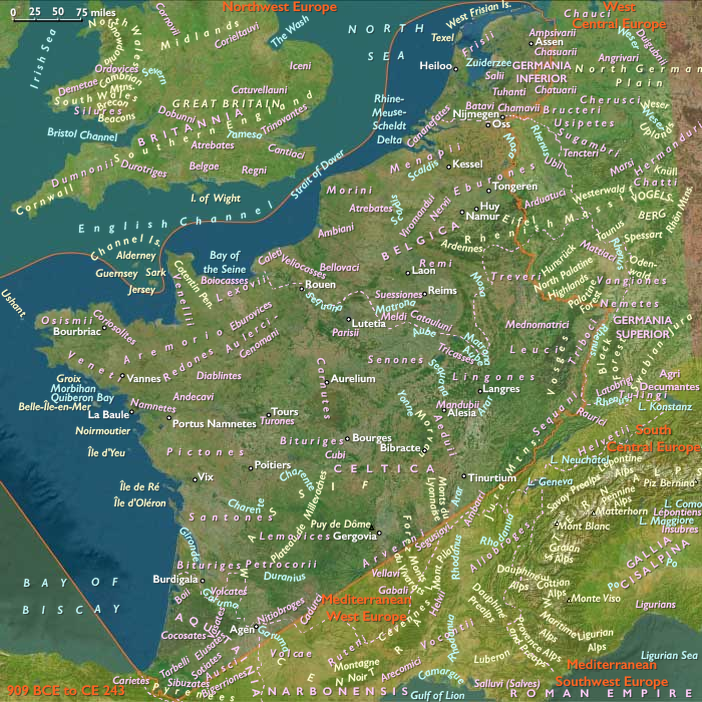
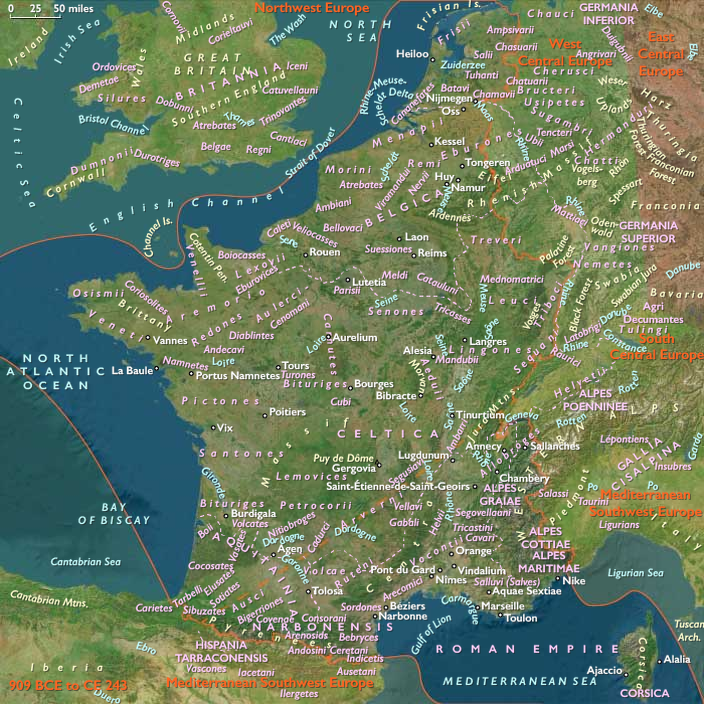
From 52 to 63 CE, Atlantic West Europe—including Aquitaine, the Atlantic coast, northern and central France, Alsace, and the Low Countries—enjoyed a period of relative peace, economic prosperity, and deepening Romanization under the reign of Emperor Nero (r. 54–68 CE). The region continued to benefit from expanded trade networks, infrastructural improvements, and strengthened provincial governance, reinforcing its integration into the wider Roman Empire.
Political and Military Developments
Stable Provincial Administration under Nero
-
Under Nero’s early rule, Atlantic West Europe maintained political stability, supported by a well-organized provincial administration that continued Claudius’s policies of granting citizenship and autonomy to local elites.
-
Governors appointed by Nero upheld a balanced governance approach, fostering strong ties with Gallo-Roman aristocrats.
Strengthening of the Rhine Frontier
-
The Rhine frontier remained well-secured, with Roman legions continuing their watchful presence, ensuring peace and economic stability across Gaul’s northeastern borders.
-
Military fortifications and infrastructure along the frontier saw modest improvements, providing security for trade routes and settlements in northern and eastern Gaul.
Economic and Social Developments
Flourishing Trade and Commerce
-
The region’s economic prosperity continued to thrive, driven by robust trade connections with Britain, the Mediterranean, and other parts of the empire.
-
Ports like Burdigala (Bordeaux) and Gesoriacum (Boulogne) grew increasingly prosperous from the export of wine, grain, pottery, and metals, becoming key economic centers.
Agricultural Wealth and Urban Expansion
-
Agricultural production, especially viticulture in Aquitaine, reached new heights during Nero’s rule, significantly increasing exports and enriching local elites.
-
Urban areas expanded further, marked by growth in prominent cities such as Lugdunum (Lyon, indirectly influential), Augustodunum (Autun), Durocortorum (Reims), and coastal settlements benefiting from maritime trade.
Infrastructural Investments
-
Nero continued the infrastructure projects initiated by Claudius, further expanding road networks, bridges, and urban amenities (baths, amphitheaters, forums), stimulating economic growth and urbanization.
-
These enhancements increased regional connectivity and facilitated administrative efficiency.
Cultural and Religious Developments
Advancement of Romanization
-
Romanization reached deeper layers of society, with the Latin language widely adopted among the provincial elite and in urban centers.
-
Roman cultural institutions, including theaters, baths, and forums, became focal points of urban social life, highlighting the region's increasing alignment with Roman cultural norms.
Religious Practices and Imperial Cult
-
Religious syncretism persisted, with indigenous deities integrated seamlessly into the Roman religious framework.
-
Imperial worship flourished as an expression of provincial loyalty, with temples and altars dedicated to Nero and the imperial family increasingly common in urban and rural contexts.
Key Figures and Events
-
Nero (r. 54–68 CE): His early reign fostered provincial stability, economic growth, and strong imperial ties with local elites, despite later controversies in Rome itself.
-
Provincial governors appointed by Nero contributed effectively to the region's stability and economic prosperity.
Long-Term Significance
By 63 CE, Atlantic West Europe experienced:
-
Continued economic prosperity driven by agricultural and maritime trade.
-
Further urban growth and increased Romanization of society and culture.
-
Reinforced provincial stability due to effective governance and frontier security.
These developments solidified Atlantic West Europe's role as a prosperous and culturally integrated region within the Roman Empire, laying foundations for sustained growth and resilience in subsequent decades.
People
Groups
Topics
Commodities
Subjects
Regions
West Europe
View →Subregions