
Atlantic West Europe (33–22 BCE): Augustan Reorganization …
Years: 33BCE - 22BCE
Atlantic West Europe (33–22 BCE): Augustan Reorganization and Regional Integration
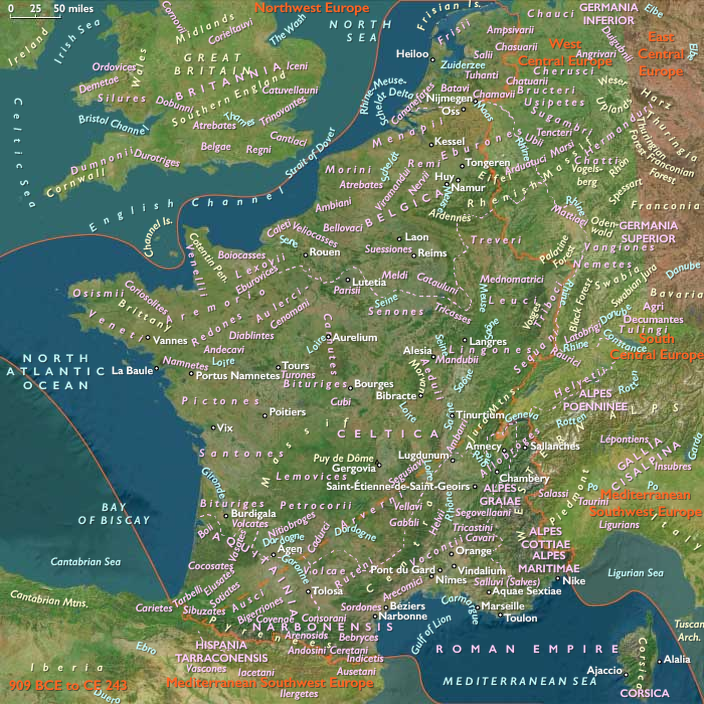
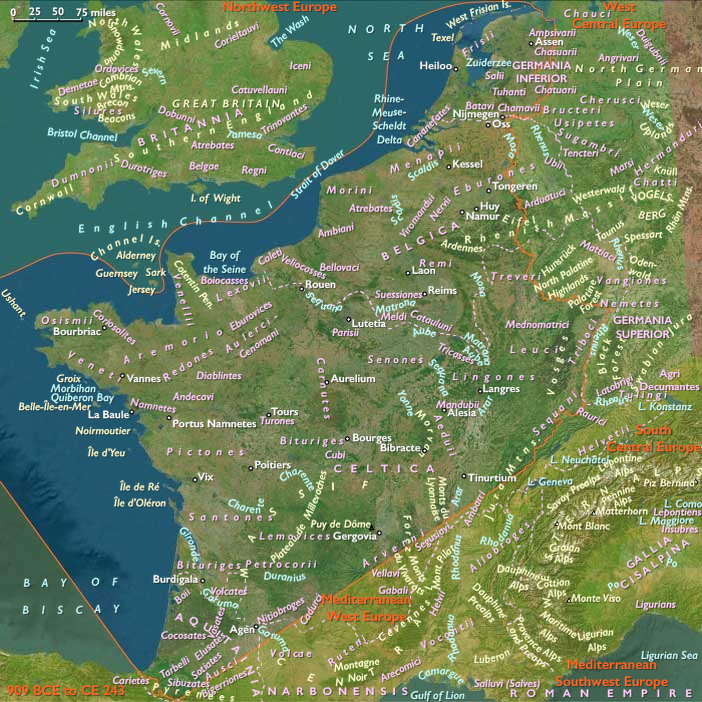
Between 33 and 22 BCE, Atlantic West Europe—including Aquitaine, the Atlantic coast, northern and central France, Alsace, and the Low Countries—experienced significant changes as Octavian (Augustus) solidified his rule and began systematic provincial reorganization. This era laid critical foundations for Roman imperial administration, economic expansion, and the deeper integration of regional cultures into the Roman world.
Political and Military Developments
Augustan Provincial Reforms
-
Augustus implemented administrative reorganizations, establishing a clear division into provinces, notably:
-
Gallia Aquitania (centered around Bordeaux),
-
Gallia Belgica (covering northern Gaul and the Low Countries),
-
Gallia Lugdunensis (extending into central and northern France).
-
-
Roman legions and auxiliary forces maintained peace along strategic routes, ensuring safe passage from the Atlantic coast to central Gaul and beyond.
Diplomatic and Military Consolidation
-
Augustus secured loyalty through strategic patronage of Gallic aristocrats, effectively integrating local tribal leaders into the Roman administrative and social system.
-
Construction of military roads facilitated troop movement, trade, and cultural exchange, strengthening Rome's control across the region.
Economic and Social Developments
Expansion of Trade Networks
-
Under Augustan stability, cities such as Burdigala (Bordeaux) flourished, exporting wine and agricultural goods throughout the Roman world.
-
Aquitaine’s vineyards increasingly supplied Roman and Mediterranean markets, elevating regional prosperity and urban growth.
Urban Development and Romanization
-
Roman infrastructure projects expanded dramatically, including roads connecting northern Gaul (Gallia Belgica) and central regions (Gallia Lugdunensis) to Mediterranean trade centers.
-
The creation of coloniae and municipia promoted the development of urban lifestyles, consolidating Roman influence among the Gallic elite.
Cultural and Religious Developments
Growth of Gallo-Roman Culture
-
Roman influence permeated deeper into Gallic society, fostering cultural syncretism. Local deities became increasingly aligned with Roman gods, reflecting the broader integration of Gallic communities into Roman religious practices.
-
Latin became widely adopted among elites, supporting the emergence of a distinctive Gallo-Roman culture.
Suppression of Druids
-
Roman authorities increasingly viewed the Druids as political threats due to their influence and potential for rebellion, initiating policies aimed at reducing their social authority.
Key Figures and Events
-
Augustus (Octavian): Established lasting provincial structures and ensured peace through strategic diplomatic and military policies.
-
Marcus Vipsanius Agrippa: Continued major public works, including road construction, contributing significantly to regional prosperity and cohesion.
Long-Term Significance
By 22 BCE, Atlantic West Europe had achieved substantial integration into the Roman Empire:
-
Augustan reforms solidified administrative structures, paving the way for centuries of stability.
-
Urban centers flourished economically and culturally, laying foundations for continued growth.
-
The era marked a critical point in the transformation of indigenous Celtic societies into an integrated, stable Gallo-Roman civilization, influencing regional identity for generations.
People
Groups
- Polytheism (“paganism”)
- Gallo-Roman culture
- Roman Principate (Rome)
- Gallia Lugdunensis (Roman province)
- Gallia Aquitania (Roman province)
- Gallia Belgica (Roman province)
Topics
Commodoties
Subjects
Regions
Subregions
Related Events
Showing 4 events out of 4 total
Years: 33BCE - 22BCE
People
Groups
- Polytheism (“paganism”)
- Gallo-Roman culture
- Roman Principate (Rome)
- Gallia Lugdunensis (Roman province)
- Gallia Aquitania (Roman province)
- Gallia Belgica (Roman province)
Topics
Commodoties
Subjects
Regions
Subregions