
Atlantic West Europe (4–15 CE): Consolidation of …
Years: 4 - 15
Atlantic West Europe (4–15 CE): Consolidation of Imperial Rule and Strengthening of Roman Institutions
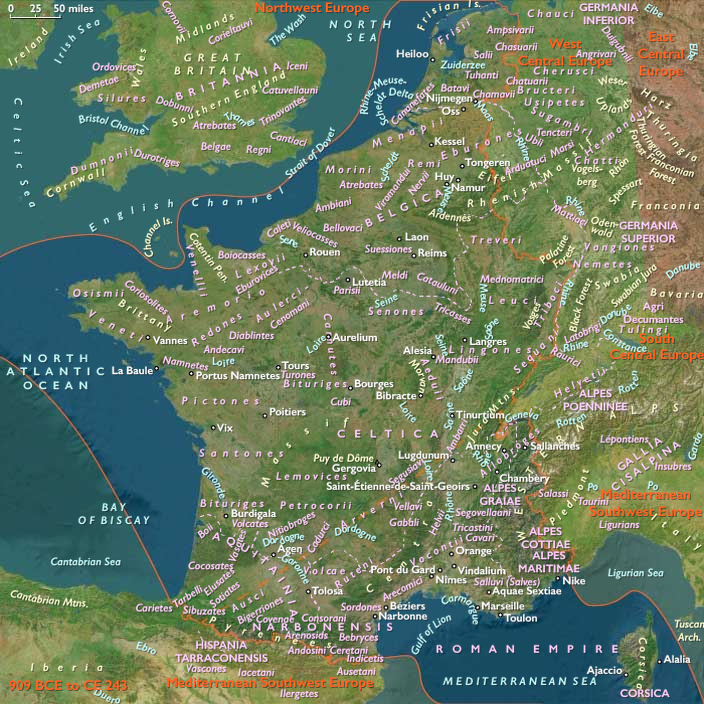
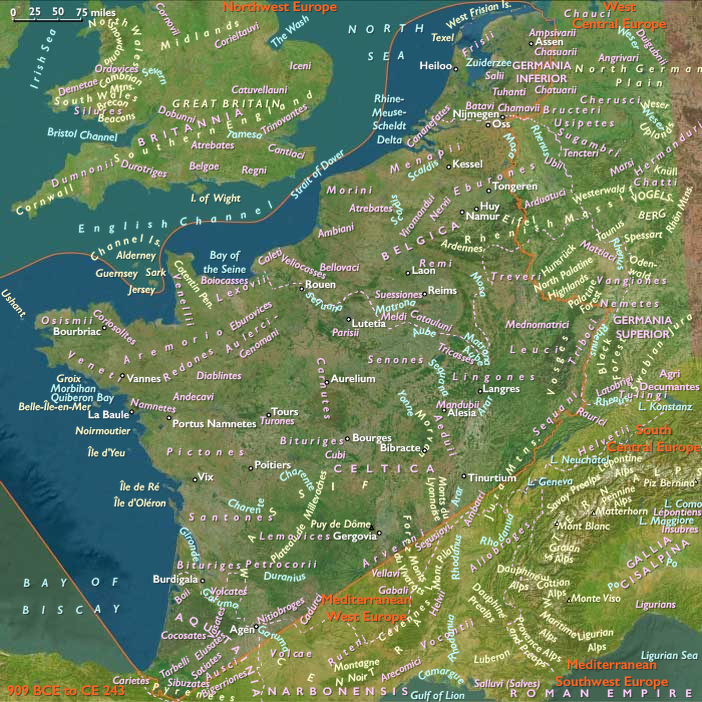
From 4 to 15 CE, Atlantic West Europe—including Aquitaine, the Atlantic coast, northern and central France, Alsace, and the Low Countries—continued to benefit from the Pax Romana under Augustus and then Tiberius. This era saw the consolidation of imperial administration, further economic integration, and ongoing cultural assimilation into Roman society.
Political and Military Developments
Transition of Imperial Power
-
Augustus's death (14 CE) and the succession of Tiberius occurred smoothly, underscoring the stability of Roman governance in the provinces.
-
Provincial administration, based on clearly defined territorial divisions and systematic taxation, maintained order and promoted loyalty to Rome.
Military Stabilization
-
The Rhine frontier was solidified, enhancing security and trade throughout Atlantic West Europe, particularly in Alsace and the Low Countries.
-
Roman legions stationed along the Rhine ensured regional peace, allowing economic and social stability in Gaul.
Economic and Social Developments
Growth of Trade Networks
-
The extensive Roman road network continued to develop, further strengthening connections among key cities like Burdigala (Bordeaux), Lugdunum (Lyon), Lutetia (Paris), and Durocortorum (Reims).
-
Trade in agricultural products, notably wine from Aquitaine and grains from northern France and the Low Countries, grew steadily, supporting urban prosperity and provincial wealth.
Urbanization and Infrastructure
-
Cities continued to flourish under Roman influence, as amphitheaters, baths, forums, and aqueducts became increasingly common.
-
Infrastructure improvements in roads and bridges facilitated more efficient movement of goods, troops, and information.
Cultural and Religious Developments
Further Romanization
-
The Imperial Cult and Latin language continued to spread, fostering a unified cultural identity among local Gallic elites.
-
Indigenous traditions and Roman religious practices blended seamlessly, contributing to the unique Gallo-Roman culture that distinguished the region.
Educational and Literary Advances
-
Latin became firmly entrenched among the elites, supporting administrative efficiency and cultural unity.
-
Provincial centers such as Burdigala and Lutetia became hubs of learning and literary activity, laying foundations for long-term cultural development.
Key Figures and Events
-
Tiberius: His peaceful succession demonstrated the stability of imperial institutions, ensuring continuity in administration, governance, and economic policy after Augustus’s transformative reign.
Long-Term Significance
By 15 CE, Atlantic West Europe was firmly integrated into the fabric of the Roman Empire:
-
Stability and prosperity underpinned robust economic growth and significant urban expansion.
-
Cultural and linguistic Romanization continued, permanently shaping regional identities.
-
Secure frontiers and strong administrative institutions laid enduring foundations for future centuries of stability, even amidst later imperial challenges.
People
Groups
- Polytheism (“paganism”)
- Gallo-Roman culture
- Roman Principate (Rome)
- Gallia Lugdunensis (Roman province)
- Gallia Aquitania (Roman province)
- Gallia Belgica (Roman province)
Topics
Commodoties
Subjects
Regions
Subregions
Years: 4 - 15
People
Groups
- Polytheism (“paganism”)
- Gallo-Roman culture
- Roman Principate (Rome)
- Gallia Lugdunensis (Roman province)
- Gallia Aquitania (Roman province)
- Gallia Belgica (Roman province)
Topics
Commodoties
Subjects
Regions
Subregions