
Atlantic West Europe (81–70 BCE): Prelude to…
81 BCE to 70 BCE
Atlantic West Europe (81–70 BCE): Prelude to Roman Conquest and Internal Realignments
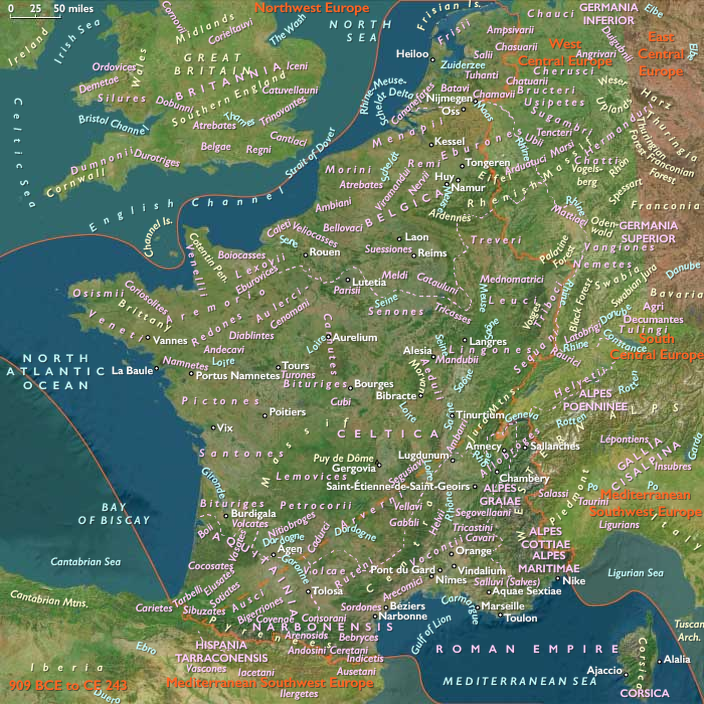
From 81 to 70 BCE, Atlantic West Europe—encompassing Aquitaine, northern and central Gaul, Alsace, and the Low Countries—experienced heightened internal rivalries and increased Roman diplomatic and commercial penetration, setting the stage for transformative political shifts. The period saw significant urban expansion, economic integration, and intensified cultural interactions with the Mediterranean world.
Political and Military Developments
Heightened Inter-Tribal Rivalries
-
Arverni-Aedui Power Struggle: Continued clashes between these influential tribes dominated central Gaul, as both factions sought alliances and influence through strategic control of trade corridors.
-
Belgae Tribes Strengthening: Tribes including the Bellovaci and Nervii intensified military preparations and expanded defensive fortifications, consolidating power in anticipation of external pressures and internal conflicts with tribes like the Remi, Suessiones, and eastern neighbors such as the Treveri and Mediomatrici.
-
Veneti Maritime Rivalries Escalate: Persistent conflicts along the Atlantic coastline involved neighboring maritime rivals, notably the Namnetes and Coriosolites, as well as southern coastal competitors like the Pictones and Santones, who actively challenged Veneti dominance.
Expanding Roman Diplomatic Engagement
-
Roman diplomatic initiatives intensified, exploiting tribal rivalries and trade dependencies to establish more direct influence. Diplomatic missions from Massalia became increasingly involved in shaping regional politics and alliances.
-
Mediterranean colonies along southern Gaul and the Rhône valley exerted increasing pressure on local tribes, impacting internal dynamics and regional stability.
Economic and Social Developments
Enhanced Economic Integration
-
Trade volumes soared, driven by continued Roman demand for regional resources, including precious metals (gold, silver, tin), agricultural products, timber, textiles, livestock, and notably, slaves. The slave trade persisted as a crucial economic element, deeply embedded in societal structures.
-
Tribal elites capitalized on expanding trade networks, reinforcing their economic and political power, and increasingly aligning their interests with Mediterranean commerce.
Urban Growth and Advanced Infrastructure
-
Major oppida such as Bibracte, Lutetia, Cenabum, and Gergovia further matured into robust urban centers, characterized by sophisticated fortifications, marketplaces, artisanal quarters, and enhanced administrative capabilities.
-
Improved regional infrastructure—including comprehensive road systems, fortified river ports, and advanced bridges—facilitated smoother integration into broader Mediterranean economic networks.
Cultural and Religious Developments
Peak of La Tène Cultural Integration
-
La Tène artistic traditions reached new heights, deeply influenced by Mediterranean techniques and aesthetics. Fine metalwork, pottery, weaponry, and jewelry increasingly displayed hybridized designs, underscoring extensive cultural exchanges.
-
Elite burials prominently featured Mediterranean imports such as amphorae, fine jewelry, sophisticated metalware, and luxurious textiles, reinforcing social stratification and the regional elite’s cosmopolitan status.
Increased Influence of Druids
-
Druids continued to expand their influence as indispensable political mediators and religious authorities, actively participating in diplomatic exchanges and inter-tribal negotiations.
-
Ritual sanctuaries became critical communal spaces for diplomacy, cultural exchange, and collective religious ceremonies, further reinforcing tribal unity and cultural identity.
Notable Tribal Powers and Settlements
-
Arverni: Maintained regional economic and political dominance despite persistent conflict, leveraging trade prosperity and strong administrative capabilities.
-
Aedui: Continued to exercise significant regional influence through strategic diplomacy and control of essential trade routes.
-
Veneti: Successfully preserved maritime trade dominance despite ongoing rivalries, reinforcing their economic significance along the Atlantic coast.
-
Belgae (Bellovaci, Nervii): Solidified defensive and political structures, preparing strategically for anticipated external conflicts and internal pressures.
Long-Term Significance and Legacy
Between 81 and 70 BCE, Atlantic West Europe:
-
Experienced increasingly direct Roman influence, laying critical groundwork for impending military and political interventions.
-
Witnessed escalating tribal tensions and strengthened defensive preparations, anticipating future large-scale conflicts.
-
Achieved significant economic integration, urban expansion, and cultural refinement, profoundly impacting societal complexity and regional identity.
This decade marked a critical prelude to the Roman conquest, positioning Atlantic West Europe on the threshold of extensive transformation and incorporation into the expansive Mediterranean world.
Groups
Commodities
Subjects
Regions
West Europe
View →Subregions
