Australian painters Louis Buvelot and Tom Roberts,…
August 1884 CE
Australian painters Louis Buvelot and Tom Roberts, in emphasizing the quality of local light, help to create a distinctive Australian style of landscape painting.
Buvelot, born in Morges, Vaud, Switzerland, as the second son of François Simeon Buvelot, postal official, and his wife Jeanne-Louise née Heizer, a school teacher, worked under Marc-Louis Arland at Lausanne, and from around 1834 had continued his studies at Paris with Camille Flers, a well-known landscape painter of the day.
After a few months there, he had migrated to Bahia, Brazil where he worked on his uncle's coffee plantation.
In October 1840, Buvelot (who disliked his first name and never used it) had moved to Rio de Janeiro and attracted the notice of the emperor Dom Pedro II, who bought some of his pictures and decorated him with the Order of the Rose.
In November 1843, Buvelot married Marie-Félicité, née Lalouette (born 1816).
Returning to Switzerland in 1852, in 1856, Buvelot had been awarded a silver medal for a picture exhibited at Bern.
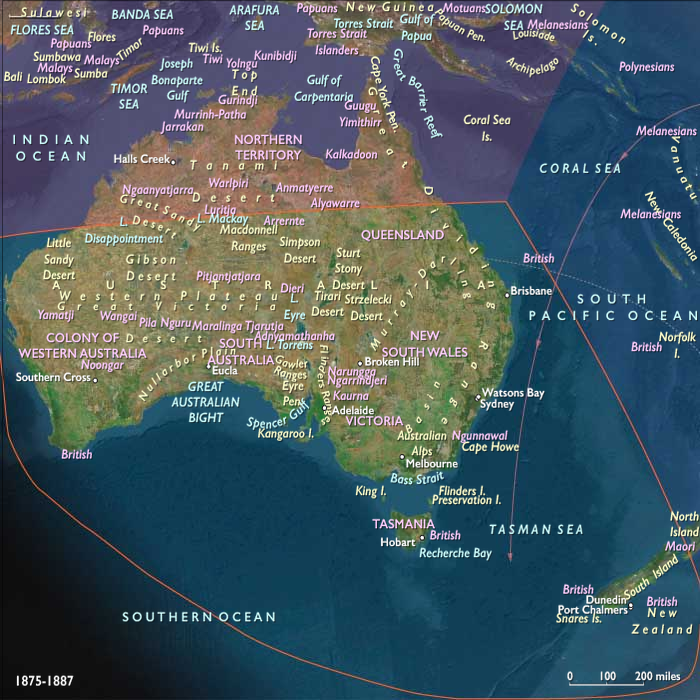
Having lived in a warm country and finding the cold of Switzerland trying to his health, Buvelot left his family in La Chaux-de-Fonds and sailed from Liverpool bound for Melbourne, Australia in 1864 accompanied by Caroline-Julie Beguin, a teacher.
Arriving in Melbourne in February 1865, Buvelot had been in business as a photographer in Bourke Street for a year but soon resumed his painting.
He lived for some years in Latrobe Street East, and then moved to George Street, Fitzroy.
His new wife, Caroline-Julie Beguin, ha helped by teaching French, and presently he began to find buyers for his pictures, of whom James Smith was one of the earliest.
In 1869, the trustees of the national gallery of Victoria bought two of his pictures, and in 1870 paid £131 for the Waterpool at Coleraine.
He receives a silver medal at the Philadelphia exhibition of 1876, and In 1873, 1880 and 1884 he is awarded gold medals at exhibitions held in Melbourne.
His reputation becomes established, his only interest is his work, and he will go on steadily painting until his death on May 30, 1888.
Buvelot is best known for his great contribution to Australian art.
His works, mostly oil landscapes, are quite well regarded, but perhaps his impact is even greater as a tutor of several members of the Heidelberg School, including Arthur Streeton, who named Buvelot's 1866 painting Summer Evening Near Templestowe the "first fine landscape painted in Victoria". (Streeton, Arthur (October 16, 1934). Eaglemont in the Eighties: Beginnings of Art in Australia.The Argus.)
Buvelot’s enthusiasm for plein air painting (that is, painting directly in the open air) is a key characteristic of these artists' work.
Images

Macedonia Ranges, by Louis Buvelot, 1874. Oil on canvas.
Locations
Topics
Subjects
Regions
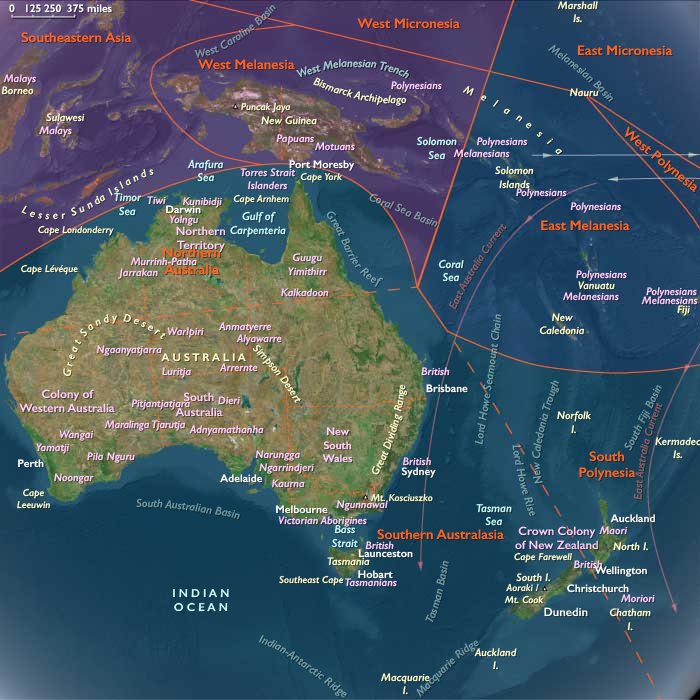
Australasia
View →Subregions