The belligerents had declared an armistice from…
August 1813 CE
The belligerents had declared an armistice from June 4, 1813 which lasts until August 13, during which time both sides have attempted to recover from approximately quarter of a million losses since April.
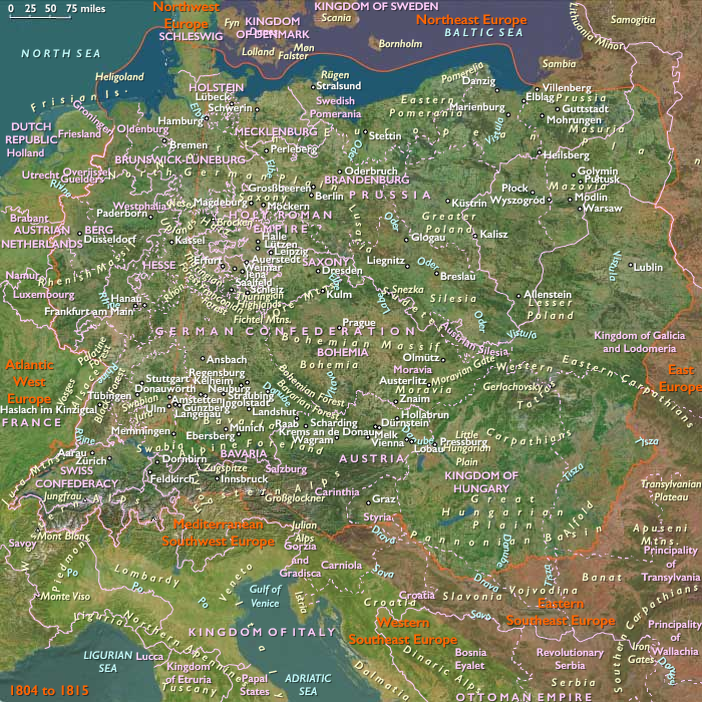
During this time Allied negotiations had finally brought Austria out in open opposition to France (like Prussia, Austria has moved from nominal ally of France in 1812 to armed neutral in 1813).
Two principal Austrian armies deploy in Bohemia and Northern Italy, adding three hundred thousand troops to the Allied armies.
In total the Allies now have around eight hundred thousand front-line troops in the German theater, with a strategic reserve of three hundred and fifty thousand.
Napoleon succeeds in bringing the total imperial forces in the region up to around six hundred and fifty thousand (although only two hundred and fifty thousand were under his direct command, with another one hundred and twenty thousand under Nicolas Charles Oudinot and thirty thousand under Davout).
The Confederation of the Rhine furnishes Napoleon with the bulk of the remainder of the forces, with Saxony and Bavaria as principal contributors.
In addition, to the south, Murat's Kingdom of Naples and Eugène de Beauharnais's Kingdom of Italy have a combined total of one hundred thousand men under arms.
In Spain an additional one hundred and fifty thousand to two hundred thousand French troops are being steadily beaten back by Spanish and British forces numbering around one hundred and fifty thousand.
Thus, in total around nine hundred thousand French troops are opposed in all theaters by somewhere around a million Allied troops (not including the strategic reserve being formed in Germany).
People
Groups
Subjects
Regions
Central Europe
View →Subregions