
Filters:
Napoleon's invasion of Spain in 1808, the …
Years: 1804 - 1815
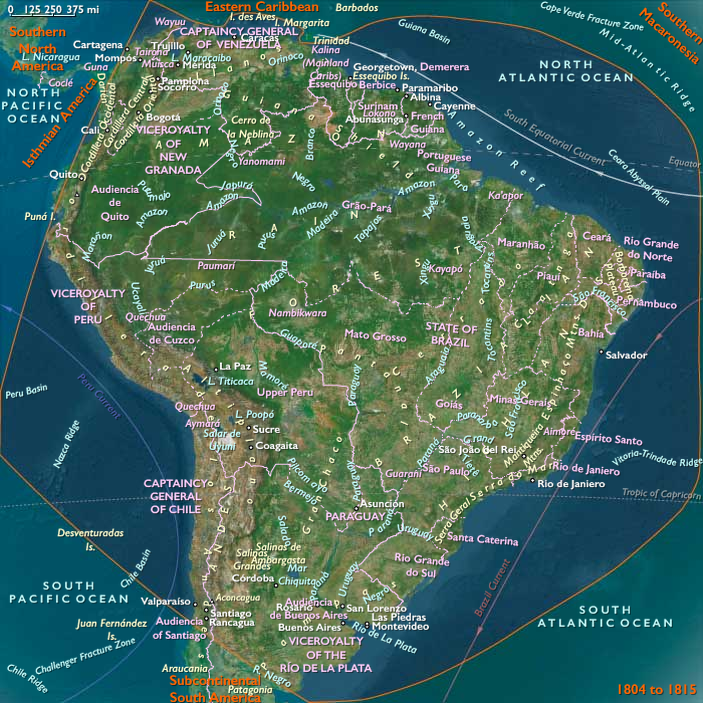
Napoleon's invasion of Spain in 1808, the capture of the Spanish king, Ferdinand VII (ruled 1808, 1814-33), and Napoleon's attempt to put his brother, Joseph Bonaparte, on the Spanish throne, severs the major remaining links between metropolis and satellite.
Joseph has no constituency in Spanish America.
Without a king, the entire colonial system loses its legitimacy, and the colonists revolt.
The Buenos Aires cabildo, buoyed by their recent victory over British troops, deposes the Spanish viceroy on May 25, 1810, vowing to rule in the name of Ferdinand VII.
The porteño action has unforeseen consequences for the histories of Argentina and Paraguay.
Joseph has no constituency in Spanish America.
Without a king, the entire colonial system loses its legitimacy, and the colonists revolt.
The Buenos Aires cabildo, buoyed by their recent victory over British troops, deposes the Spanish viceroy on May 25, 1810, vowing to rule in the name of Ferdinand VII.
The porteño action has unforeseen consequences for the histories of Argentina and Paraguay.
Locations
People
Groups
- Tupi people (Amerind tribe)
- Germans
- Portuguese people
- Guaraní (Amerind tribe)
- French people (Latins)
- Christians, Roman Catholic
- English people
- Querandí
- Spain, Habsburg Kingdom of
- Spaniards (Latins)
- Jesuits, or Order of the Society of Jesus
- Charcas, Real Audiencia of (Upper Peru)
- Spain, Habsburg Kingdom of
- Río de la Plata, Viceroyalty of
- Río de la Plata, United Provinces of the
Topics
- Colonization of the Americas, Spanish
- Spanish American wars of independence
- Paraguayan War of Independence
- Argentine War of Independence
Commodoties
- Hides and feathers
- Domestic animals
- Fibers
- Textiles
- Lumber
- Money
- Manufactured goods
- Stimulants
- Tobacco
Subjects
Regions
Subregions
Years: 1804 - 1815
Locations
People
Groups
- Tupi people (Amerind tribe)
- Germans
- Portuguese people
- Guaraní (Amerind tribe)
- French people (Latins)
- Christians, Roman Catholic
- English people
- Querandí
- Spain, Habsburg Kingdom of
- Spaniards (Latins)
- Jesuits, or Order of the Society of Jesus
- Charcas, Real Audiencia of (Upper Peru)
- Spain, Habsburg Kingdom of
- Río de la Plata, Viceroyalty of
- Río de la Plata, United Provinces of the
Topics
- Colonization of the Americas, Spanish
- Spanish American wars of independence
- Paraguayan War of Independence
- Argentine War of Independence
Commodoties
- Hides and feathers
- Domestic animals
- Fibers
- Textiles
- Lumber
- Money
- Manufactured goods
- Stimulants
- Tobacco
Subjects
Regions
Subregions