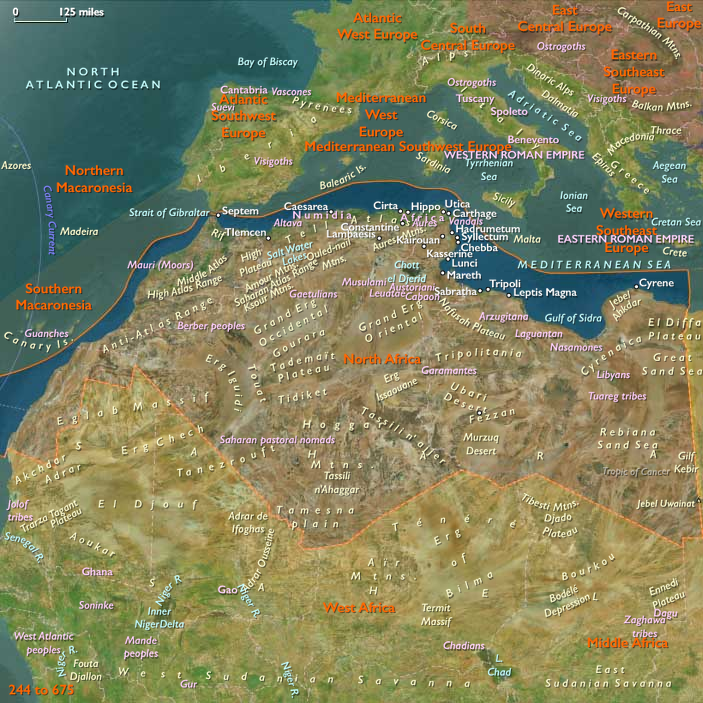
The coming of Islam, which is spread…
532 CE to 675 CE
The new faith, in its various forms, will penetrate nearly all segments of society, bringing with it armies, learned men, and fervent mystics; in large part, it will replace tribal practices and loyalties with new social norms and political idioms.
Nonetheless, the Islamization and Arabization of the region are complicated and lengthy processes.
Whereas nomadic Berbers are quick to convert and assist the Arab invaders, not until the twelfth century under the Almohad Dynasty will the Christian and Jewish communities become totally marginalized.
The first Arab military expeditions into the Maghreb, between 642 and 669, result in the spread of Islam.
These early forays from a base in Egypt occur under local initiative rather than under orders from the central caliphate.
When the seat of the caliphate moved from Medina to Damascus, however, the Umayyads (a Muslim dynasty ruling from 661 to 750) recognize that the strategic necessity of dominating the Mediterranean dictated a concerted military effort on the North African front.
In 670, therefore, an Arab army under Uqba ibn Nafi establishes the town of Kairouan (also known as Al Qayrawan) about one hundred and sixty kilometers south of present-day Tunis and use it as a base for further operations.
People
Groups
Arab people
View →
Berber people (also called Amazigh people or Imazighen, "free men", singular Amazigh)
View →
Numidians
View →
Africa proconsularis (Roman province)
View →
Mauretania Tingitana (Roman province)
View →
Mauretania Caesariensis (Roman province)
View →
Numidia (Roman Province)
View →
Christianity, Chalcedonian
View →
Islam
View →
Rashidun Caliphate
View →
Umayyad Caliphate (Damascus)
View →
Regions
North Africa
View →Subregions