Birth rates crash and plague ravages the…
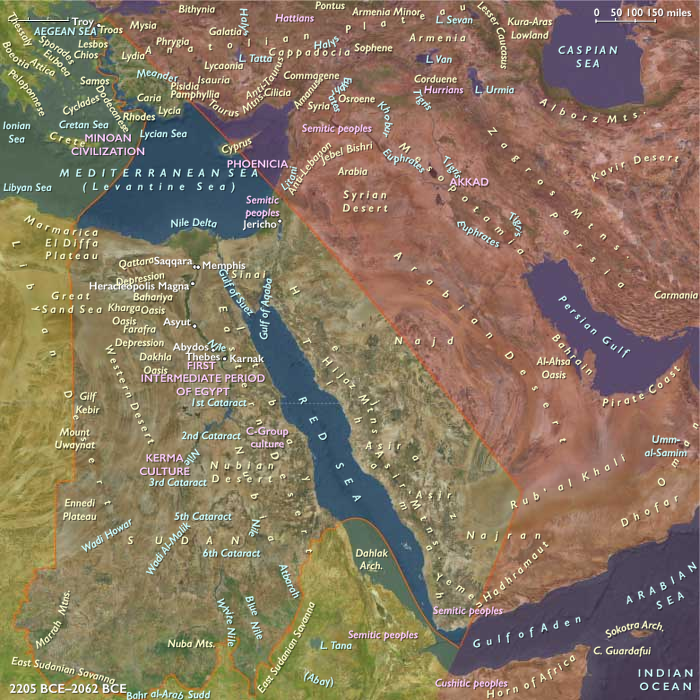
2205 BCE to 2062 BCE
Birth rates crash and plague ravages the land as the central government, ruled by Egypt's Sixth Dynasty, collapses around 2150.
The country slides into anarchy, forfeiting its gains in Nubia and West Asia.
The Memphite monarchs of the short-lived Seventh Dynasty of Manetho's history, “from which no king’s name is known,” are powerless to prevent the breakdown of centralized rule as provincial warlords fight each other over territory.
The Seventh Dynasty is most likely an oligarchy that attempts to retain control of the country.
The Eighth Dynasty rulers, claiming to be the descendants of the Sixth Dynasty kings, also rule from Memphis.
Little is known about these two dynasties since very little textual or architectural evidence survives to describe the period. (Several Eighth Dynasty kings are known from inscriptions found in the temple of Min at Qift in the south; this indicates that their rule was recognized throughout the country. As the combined span of the Seventh and Eighth dynasties encompassed only twenty years, the instability of the throne suggests political decay. Egyptians may have accepted the fiction of centralized rule only because there was no alternative style of government to monarchy.)
While there are next to no official records covering this period, there a number of fictional texts known as Lamentations from the early period of the subsequent Middle Kingdom that may shed some light on what happened during this period.
Some of these texts reflect on the breakdown of rule, others allude to invasion by "Asiatic bowmen.”
In general, the stories focus on a society where the natural order of things of both society and nature is overthrown.
One particularly interesting phrase talks about times of high taxation even when the waters of the river Nile are abnormally low ("Dry is the river of Egypt, and one can cross it by foot").
Traditionally, people are taxed according to the inundation level of the Nile in a given year.
The fact that people are taxed by what they should have been able to grow instead of what they had actually grown suggests a long period of relatively low inundations that historically often lead to famine (an instance of which is recorded on the Famine Stele at Elephantine).
The high taxation also implies an inherent breakdown of rule, reflecting an arbitrary approach not evident during the Old Kingdom.
With the end of the Eighth Dynasty in 2130, the Old Kingdom state collapses.
During the so-called First Intermediate Period that ensues, famine and violence are widespread; sharply increased numbers of burials in cemeteries bear witness to the consequent rise in the death rate.
It is also highly likely that it is during this period that all of the pyramid and tomb complexes are robbed ("Those who were entombed are cast on high ground").
Further lamentation texts allude to this fact, and more directly at the beginning of the Middle Kingdom we begin to see mummies decorated with magical spells that were once exclusive to the pyramid of the kings of the Sixth Dynasty.
Locations
Groups
Topics
Commodities
Regions
The Near and Middle East
View →Subregions