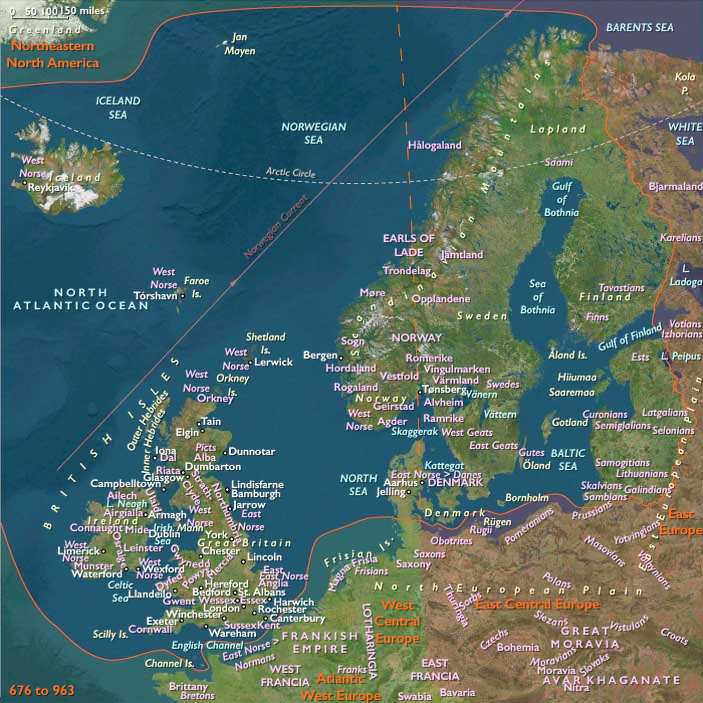
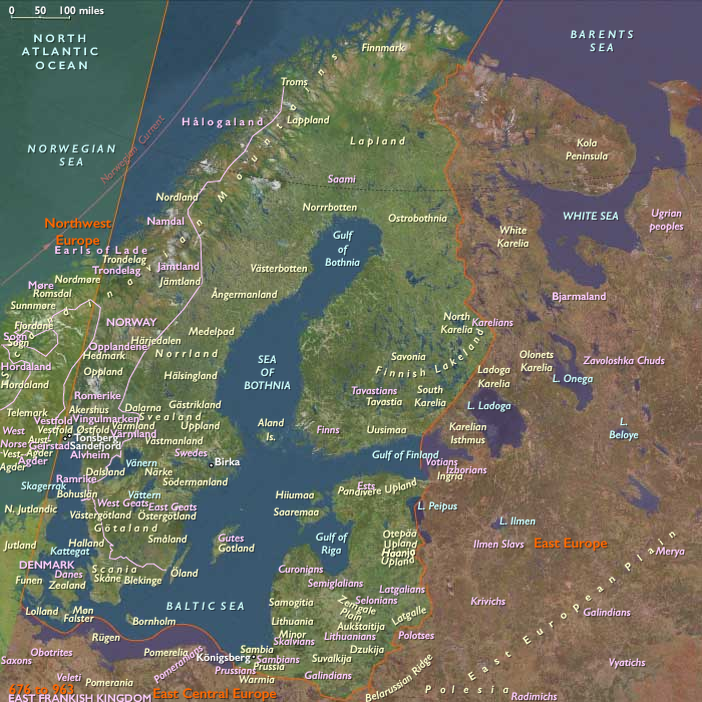
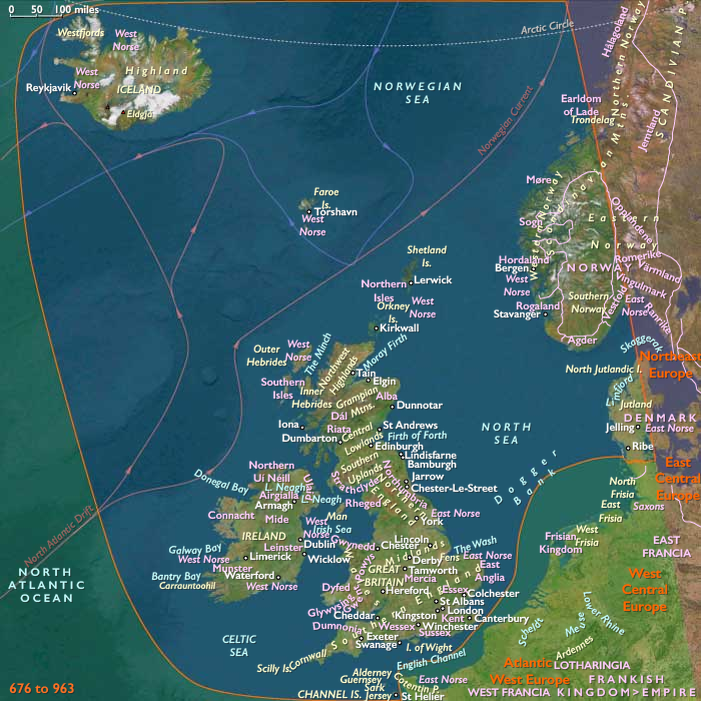
Northern Europe experiences mass migrations from around…
909 BCE to 819 CE
The Germanic Iron Age begins with the fall of the Roman Empire and the rise of the Celtic and Germanic kingdoms in Western Europe.
It is followed, in Northern Europe and Scandinavia, by the Viking Age.
During the decline of the Roman Empire, an abundance of gold flows into Scandinavia; there are excellent works in gold from this period.
Gold is used to make scabbard mountings and bracteates.
After the Western Roman Empire falls, gold becomes scarce and Scandinavians begin to make objects of gilded bronze, with decorative figures of interlacing animals.
In the EGIA, the decorations tended to be representational—the animal figures are rather faithful anatomically; in the LGIA, they will tend to be more abstract or symbolic—intricate interlaced shapes and limbs.
The LGIA in the eighth century blends into the Viking Age and the proto-historical period, with legendary or semi-legendary oral tradition recorded a few centuries later in the Gesta Danorum, heroic legend and sagas, and an incipient tradition of primary written documents in the form of runestones.
Groups
Celts
View →
Germania
View →
Teutons
View →
Danes (North Germanic tribe)
View →
Roman Empire, Western (Ravenna)
View →
Suebic Kingdom of Galicia
View →
Burgundians, (first) Kingdom of the
View →
Visigothic Kingdom of Toulouse
View →
Vandals and the Alans, Kingdom of the
View →
Burgundians, (second) Kingdom of the
View →
Kent, Kingdom of
View →
Francia (Merovingians)
View →
Soissons, (Gallo-Roman) Domain of
View →
Sussex, Kingdom of
View →
Francia (Merovingians)
View →
Francia (Merovingians)
View →
Dál Riata, or Dalriada, Scots Kingdom of
View →
Soissons (eventually Neustria), Frankish Kingdom of
View →
Wessex, English Kingdom of
View →
Mercia, Kingdom of
View →
Essex, Kingdom of
View →
East Angles, Kingdom of the
View →
Vikings
View →
Danes (Scandinavians)
View →
Topics
Commodities
Regions