
George Washington, whose army is encamped at…
May 1777 CE
The principal question on the minds of Washington and his generals Horatio Gates and Philip Schuyler—who both are at turns responsible for the Continental Army's Northern Department and its defense of the Hudson River—is of the movements of Howe's army in New York.
They have no significant knowledge of what is being planned for the British forces in Quebec, in spite of Burgoyne's complaints that everyone in Montreal knows what he is planning.
The three generals disagree on what Burgoyne's most likely movement is, and Congress also renders the opinion that Burgoyne's army is likely to move to New York by sea.
Partly as a result of this indecision, and the fact that it will be isolated from its supply lines if Howe moved north, the garrisons at Fort Ticonderoga and elsewhere in the Mohawk and Hudson valleys have not been significantly increased.
Schuyler had taken the measure in April 1777 of sending a large regiment under Colonel Peter Gansevoort to rehabilitate Fort Stanwix in the upper Mohawk valley as a step in defending against British movements in that area.
Washington has also ordered four regiments to be held at Peekskill, New York that can be directed either to the north or the south in response to British movements.
American troops are allocated throughout New York theater in June 1777.
About fifteen hundred troops (including those of Colonel Gansevoort) are in outposts along the Mohawk River, about three thousand troops are in the Hudson River highlands under the command of General Israel Putnam, and Schuyler commands about four thousand troops (inclusive of local militia and the troops at Ticonderoga under St. Clair).
People
Groups
Topics
Subjects
Regions
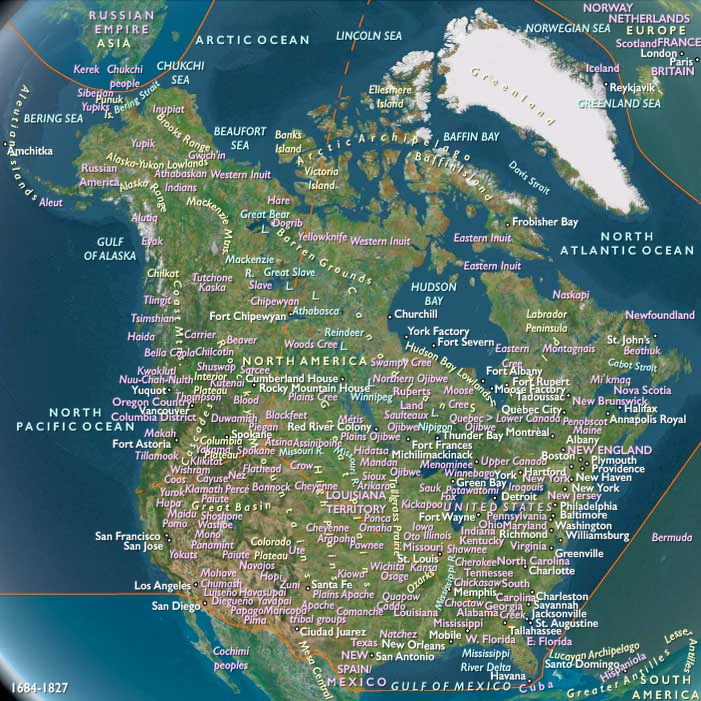
Northern North America
View →Subregions
