Armed British cavalry charges into a crowd…
August 1819 CE
The pressure generated by poor economic conditions, coupled with the relative lack of suffrage in Northern England, had enhanced the appeal of political radicalism.
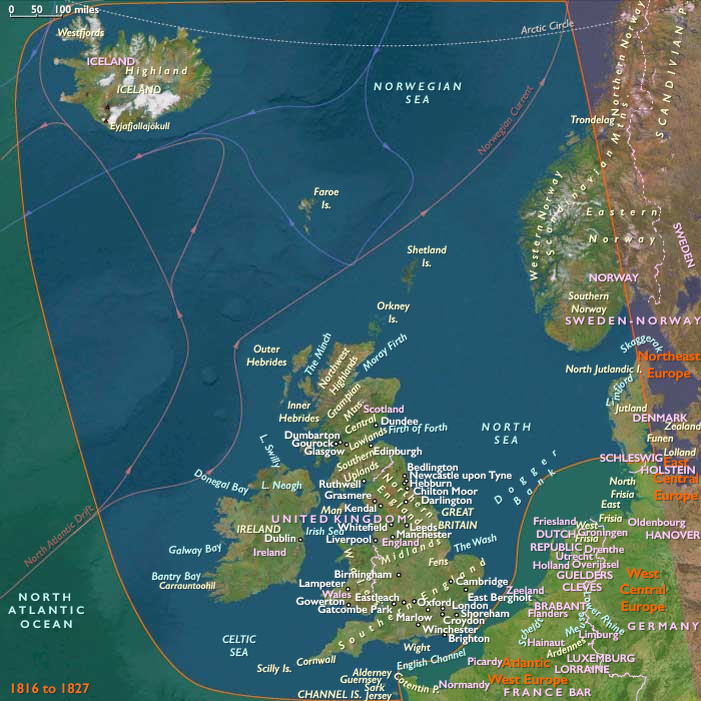
In response, the Manchester Patriotic Union, a group agitating for parliamentary reform, had organized a demonstration at St. Peter's Field to be addressed by the well-known radical orator Henry Hunt.
Shortly after the meeting began local magistrates had called on the military authorities to arrest Hunt and several others on the hustings with him, and to disperse the crowd.
Within ten minutes the crowd is dispersed, at the cost of eleven dead and more than six hundred injured.
Only the wounded, their helpers, and the dead are left behind.
For some time afterwards there is rioting in the streets, most seriously at New Cross, where troops fire on a crowd attacking a shop belonging to someone rumored to have taken one of the women reformers' flags as a souvenir.
Peace will not be not restored in Manchester until the next morning, and in Stockport and Macclesfield rioting will continue on the 17th.[
There is also a major riot in Oldham that day, during which one person is shot and wounded.
The massacre is given the name Peterloo in an ironic comparison to the Battle of Waterloo, which had taken place four years earlier.
Many of those present at the massacre, including local masters, employers and owners, are horrified by the carnage.
Peterloo is the first public meeting at which journalists from important, distant newspapers are present and within a day or so of the event, accounts will be published in London, Leeds and Liverpool.
The immediate effect of Peterloo is a crackdown on reform.
The government declares its support for the actions taken by the magistrates and the army.
Subjects
Regions
North Europe
View →Subregions