
Buthrotum, an ancient Greek and later Roman…
1386 CE
Buthrotum, an ancient Greek and later Roman city in southern Epirus inhabited since prehistoric times, had been a city of the Greek tribe of the Chaonians, later a Roman colony and a bishopric.
It had entered into decline in Late Antiquity before being abandoned during the third century after a major earthquake flooded most of the city.
Buthrotum, following the model of classical cities throughout the Mediterranean, had by the seventh century shrunk to a much smaller fortified post and with the collapse of Roman power was briefly controlled by First Bulgarian Empire before being regained by Constantinople in the ninth century.
It remained an outpost of the empire fending off assaults from the Normans until 1204 when following the Fourth Crusade, the Empire fragmented, Butrint falling to the breakaway Despotate of Epirus.
In the ensuing centuries, the area has been a site of conflict between the imperial Greeks, the Angevins of southern Italy, and the Venetians, and the city has changed hands many times.
Charles of Anjou in 1267 had taken control of both Buthrotum and Corfu leading to further restorations of the walls and the Great Basilica.
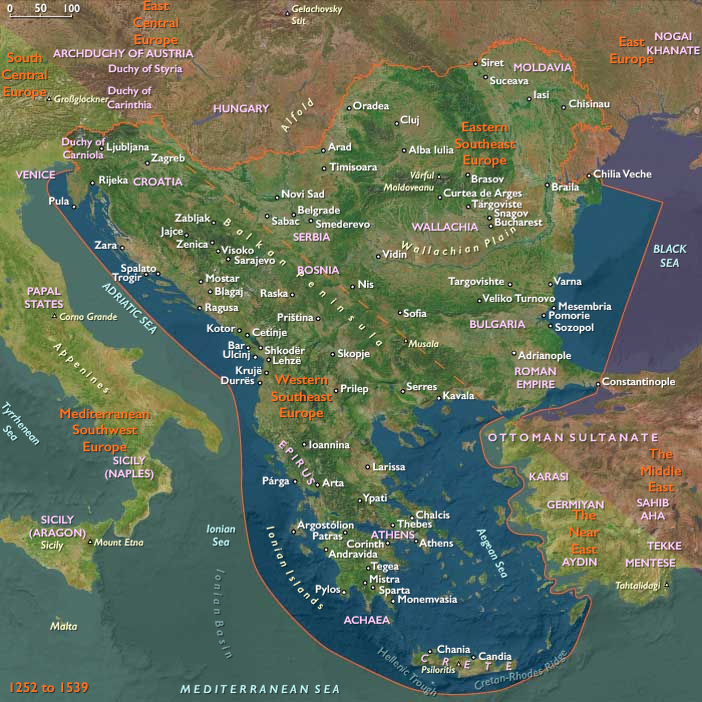
The Republic of Venice in 1386 purchases the area including Corfu from the Angevins; the Venetian merchants are principally interested in Corfu, however, and Buthrotum will once again decline.
Locations
Subjects
Regions
Southeast Europe
View →Subregions
