The other major transformation in Palestinian Arab…
November 1939 CE
The other major transformation in Palestinian Arab society during the Mandate concerns the issue of land ownership.
During the years of Ottoman rule, the question of private property rights was never fully articulated.
The tenuous nature of private property rights has enabled the Zionist movement to acquire large tracts of land that had been Arab owned.
The sale of land to Jewish settlers, which occurred even during the most intense phases of the Palestinian Revolt, reflects the lack of national cohesion and institutional structure that might have enabled the Palestinian Arabs to withstand the lure of quick profits.
Instead, when increased Jewish land purchases cause property prices to spiral, both the Arab landowning class and absentee property owners, many of whom reside outside Palestine, are quick to sell for unprecedented profits.
In the 1930s, when Palestine is beset by a severe economic depression, large numbers of Arab peasants, unable to pay either their Arab landlords or taxes to the government, sell their land.
The British do not intervene in the land purchases mainly because they need the influx of Jewish capital to pay for Jewish social services and to maintain the Jewish economy.
People
Groups
Commodities
Regions
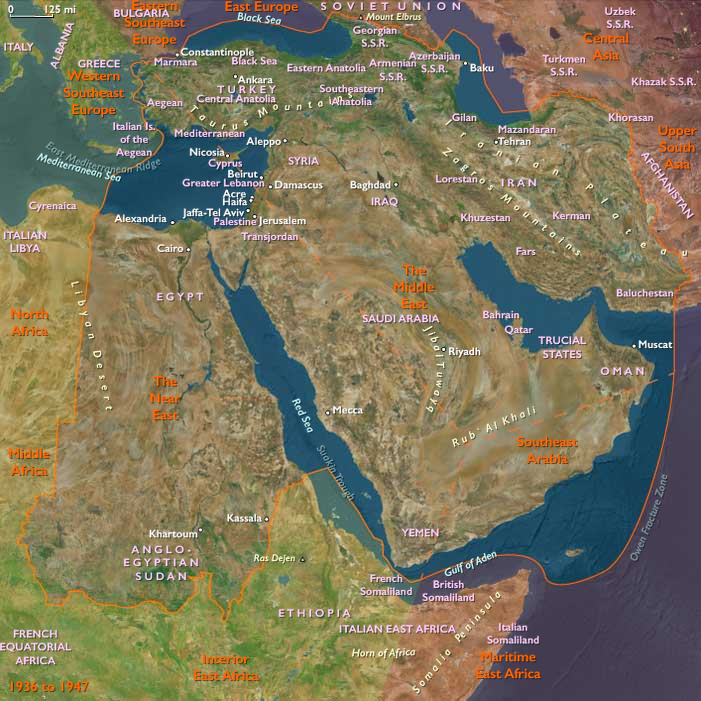
The Near and Middle East
View →Subregions