
The Battle of Nancy and the Death …
Years: 1477 - 1477
January
The Battle of Nancy and the Death of Charles the Bold (January 5, 1477)
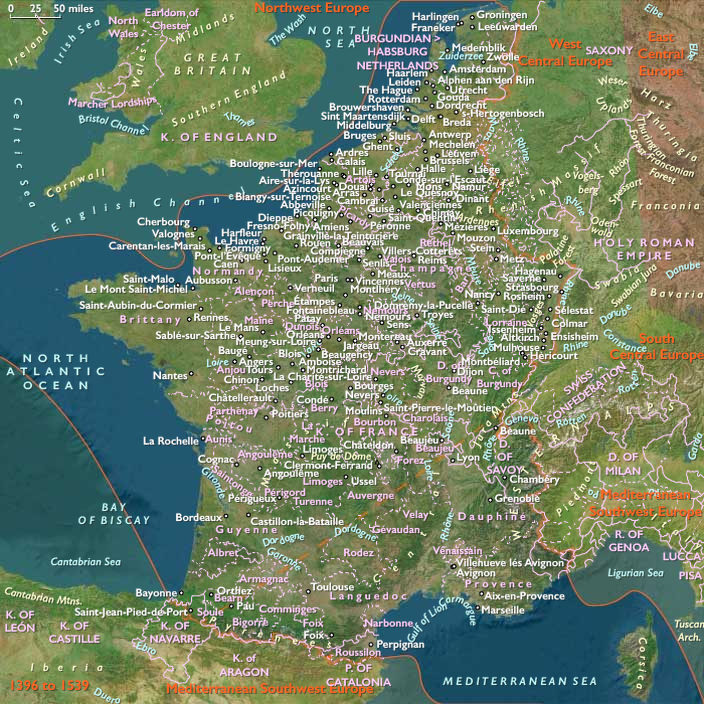
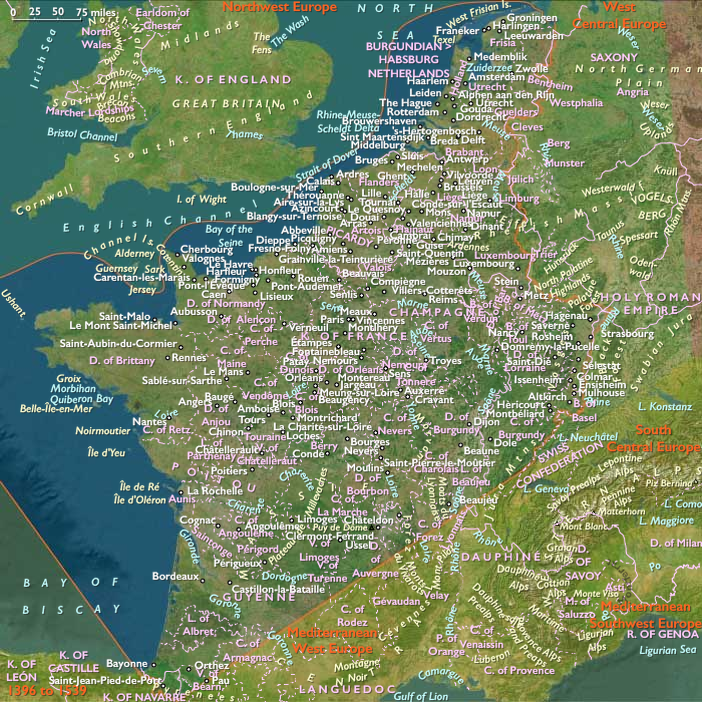
On January 5, 1477, the fate of the Duke of Burgundy, Charles the Bold, was sealed decisively at the Battle of Nancy. Reduced by harsh winter conditions to only a few thousand exhausted men, Charles faced a vastly superior alliance composed of the forces of René II of Lorraine and the formidable Swiss Confederation, who had come to relieve the besieged city. The battle, a culmination of years of strategic miscalculations and diplomatic isolation, ended catastrophically for Burgundy, marking the dramatic collapse of Charles’s ambitious political and military aspirations.
The Decisive Engagement
The Burgundian forces, already weakened by severe cold, hunger, and attrition during the preceding siege, were swiftly encircled by the coalition forces. Charles’s army was overwhelmed, suffering devastating losses. In the ensuing chaotic retreat, Charles himself perished. His body, abandoned on the frozen battlefield, was discovered several days later, half-submerged and frozen in the icy waters of a nearby stream, stripped of clothing and grotesquely disfigured.
Discovery and Identification of Charles’s Remains
Charles’s body had been subjected to extreme violence: his skull cleft by a halberd blow, lances lodged deeply in his abdomen and loins, and his face mutilated beyond recognition by scavenging animals. The identification of Charles’s corpse was possible only through the meticulous observation of his personal physician, who recognized distinguishing features—Charles’s unusually long fingernails and distinctive battle scars, accumulated over a lifetime of military campaigns.
Burial and Symbolic End to Burgundian Ambition
Initially, René II respectfully ordered Charles’s battered remains interred within the ducal church at Nancy. This burial symbolically underscored the finality of Burgundy’s defeat and the restoration of Lorraine’s independence. Charles’s death effectively ended the Burgundian defiance against the French monarchy, extinguishing the vision of a unified, autonomous middle kingdom.
Political and Territorial Consequences
Charles’s demise and the destruction of his army at Nancy had profound and lasting implications for European geopolitics. Burgundy’s expansive and ambitious territorial domain fractured rapidly. The original Duchy of Burgundy reverted swiftly to direct royal control under Louis XI of France, while Charles’s heiress, his daughter Mary of Burgundy, retained authority only over the Low Countries and the Franche-Comté. These territories subsequently passed through Mary’s marriage to Austrian Archduke Maximilian of Habsburg, laying foundations for the enduring Habsburg dominance in European affairs.
Cultural and Historical Significance
Charles’s dramatic fall marked a defining moment in late medieval Atlantic West Europe. It signaled the decisive shift from feudal fragmentation and ducal autonomy toward centralized, national monarchies. His catastrophic defeat at Nancy vividly illustrated the consequences of overambitious territorial expansion without sufficient diplomatic and strategic flexibility, leaving a lasting impression on political and military thought across Europe.
Long-Term Legacy
The violent end of Charles the Bold symbolized the limits of late medieval territorial ambition, precipitating the decline of feudal territorial states and the rise of more centralized, modern European states. The dissolution of Burgundy following Nancy reshaped European alliances and set the stage for centuries of rivalry, notably between France and the Habsburgs, fundamentally influencing Europe's historical trajectory into the early modern era.
Locations
People
Groups
- Burgundy, Duchy of
- Austria, Archduchy of
- Lorraine, (second) Duchy of
- Artois, County of
- Swiss Confederacy, Old (Swiss Confederation)
- Swiss mercenaries
- France, (Valois) Kingdom of
- Netherlands, Burgundian
- Holy Roman Empire
Topics
Commodoties
Subjects
Regions
Subregions
Related Events
Showing 10 events out of 40760 total
Years: 1477 - 1477
January
Locations
People
Groups
- Burgundy, Duchy of
- Austria, Archduchy of
- Lorraine, (second) Duchy of
- Artois, County of
- Swiss Confederacy, Old (Swiss Confederation)
- Swiss mercenaries
- France, (Valois) Kingdom of
- Netherlands, Burgundian
- Holy Roman Empire
Topics
Commodoties
Subjects
Regions
Subregions