
François Rabelais, the Chinon-born son of Antoine …
Years: 1532 - 1532
François Rabelais, the Chinon-born son of Antoine Rabelais, a rich Touraine landowner and a prominent lawyer, apparently studied law, then became a Franciscan novice at La Baumette in about 1510.
A French scholar and cleric of whose career comparatively little is known, Rabelais was in 1520 studying Greek in the Puy-Saint-Martin convent at Fontenay-le-Comte, where he studied Greek and Latin as well as science, philology, and law, already becoming known and respected by the humanists of his era, including Guillaume Budé.
Harassed due to the directions of his studies, Rabelais had petitioned Pope Clement VII and in 1525 gained permission to leave the Franciscans and to enter the Benedictine order at Maillezais in Poitou, where he was more warmly received.
He had subsequently qualified as a doctor in 1530 and practices medicine in Lyon, where he is credited with performing one of the first public dissections in France.
He also publishes several scientific treatises in Latin.
Rabelais travels widely, mainly with his patrons Geoffroy d'Estissac and Cardinal Jean du Bellay and his brother Guillaume du Bellay, Governor of Piedmont; he visits Rome on several occasions.
The father of at least two illegitimate children, Rabelais, now in his late thirties, begins writing a satirical prose series in 1532, beginning with “Pantagruel,” a humanist's attack on prejudice and old-fashioned scholastic learning.
Mocking linguistic affectation and legal jargon, Rabelais, using the pseudonym Alcofribas Nasier (an anagram of François Rabelais minus the cedille on the c), proselytizes on behalf of humanist education and the Reformers' religious views: the Catholic church should be purified and simplified until it again resembles the church of the early Christians.
In this book, Rabelais sings the praises of the wines from his hometown of Chinon through vivid descriptions of the "eat, drink and be merry" lifestyle of the main character, Pantagruel, and of his friends.
Locations
People
Groups
- Benedictines, or Order of St. Benedict
- Christians, Roman Catholic
- Franciscans, or Order of St. Francis
- France, (Valois) Kingdom of
- Protestantism
Topics
Subjects
Regions

Subregions
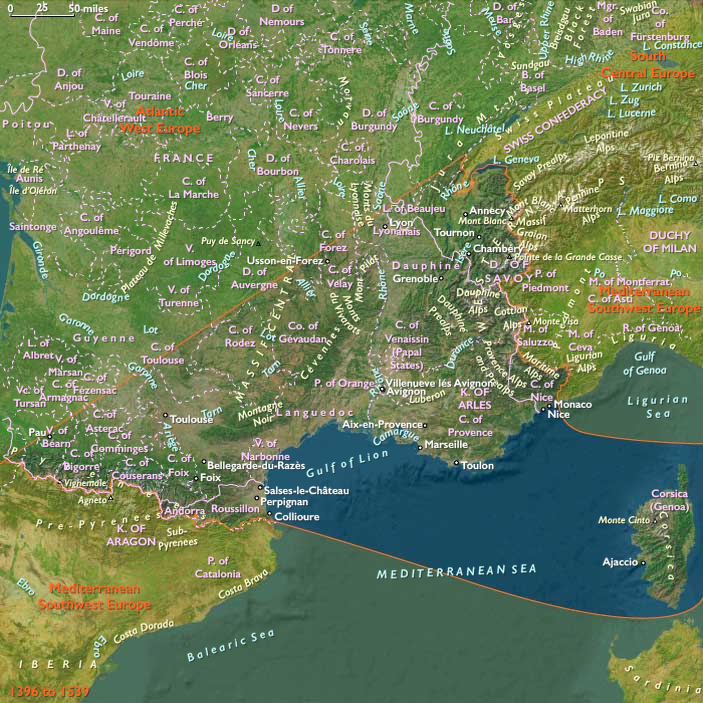
Years: 1532 - 1532
Locations
People
Groups
- Benedictines, or Order of St. Benedict
- Christians, Roman Catholic
- Franciscans, or Order of St. Francis
- France, (Valois) Kingdom of
- Protestantism
Topics
Subjects
Regions
Subregions