
José Martí had been arrested and incarcerated…
March 1870 CE
More than four months later, Martí confesses to the charges and is condemned to six years in prison.
Clubs of supporters for the Cuban nationalist cause have formed all over Cuba, and young José Martí and his friend Fermín Valdés, the son of a wealthy slave-owning family had joined them.
Martí, who has a precocious desire for the independence and freedom of Cuba, had started writing poems about this vision, while, at the same time, trying to do something to achieve this dream.
He had published his first political writings in the only edition of the newspaper El Diablo Cojuelo, published by Fermín Valdés in 1869.
That same year he published "Abdala", a patriotic drama in verse form in the one-volume La Patria Libre newspaper, which he had published himself.
"Abdala" is about a fictional country called Nubia which struggles for liberation.
His famous sonnet "10 de octubre", later to become one of his most famous poems, is also written during this year, and is published later in his school newspaper.
In March of that year, colonial authorities had shut down the school, interrupting Martí's studies.
He had come to resent Spanish rule of his homeland at an early age; likewise, he has developed a hatred of slavery, which is still practiced in Cuba and Brazil but nowhere else in the Western Hemisphere.
Topics
Commodities
Subjects
Regions
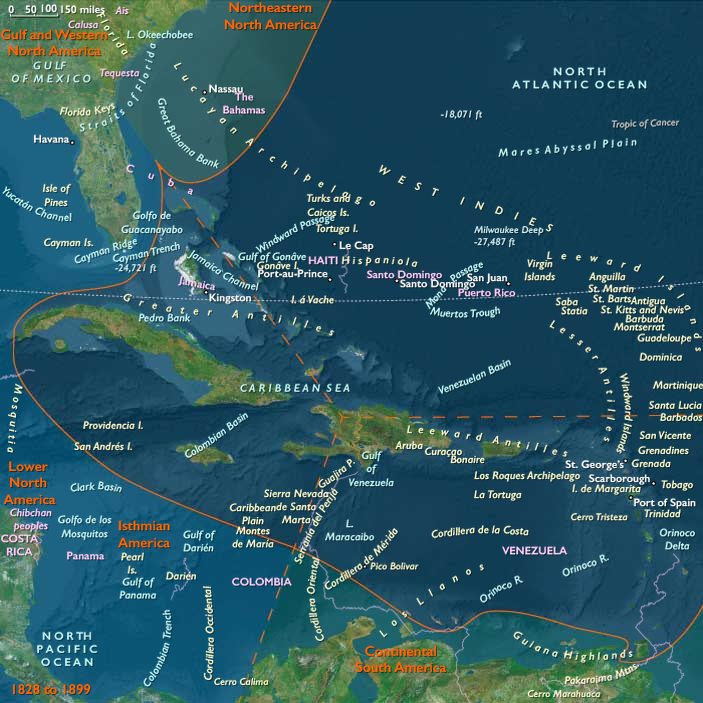
West Indies
View →Subregions
