
José Martí
Cuban national hero and an important figure in Latin American literature
1853 CE to 1895 CE
José Julián Martí Pérez (January 28, 1853 – May 19, 1895) is a Cuban national hero and an important figure in Latin American literature.
In his short life he is a poet, an essayist, a journalist, a revolutionary philosopher, a translator, a professor, a publisher, and a political theorist.
He is also a part of the Cuban Freemasons.
Through his writings and political activity, he becomes a symbol for Cuba's bid for independence against Spain in the 19th century, and is referred to as the "Apostle of Cuban Independence."
He also fights against the threat of United States expansionism into Cuba.
From adolescence, he dedicates his life to the promotion of liberty, political independence for Cuba and intellectual independence for all Spanish Americans; his death is used as a cry for Cuban independence from Spain by both the Cuban revolutionaries and those Cubans previously reluctant to start a revolt.
Born in Havana, Martí begins his political activism at an early age.
He travels extensively in Spain, Latin America, and the United States raising awareness and support for the cause of Cuban independence.
His unification of the Cuban émigré community, particularly in Florida, is crucial to the success of the Cuban War of Independence against Spain.
He is a key figure in the planning and execution of this war, as well as the designer of the Cuban Revolutionary Party and its ideology.
He dies in military action on May 19, 1895.
Martí is considered one of the great turn-of-the-century Latin American intellectuals.
His written works consist of a series of poems, essays, letters, lectures, a novel, and even a children's magazine.
He writes for numerous Latin American and American newspapers; he also founds a number of newspapers himself.
His newspaper Patria is a key instrument in his campaign for Cuban independence.
After his death, one of his poems from the book, "Versos Sencillos" (Simple Verses) is adapted to the song, "Guantanamera", which has become the definitive patriotic song of Cuba.
The concepts of freedom, liberty, and democracy are prominent themes in all of his works, which are influential on the Nicaraguan poet, Rubén Darío and the Chilean poet, Gabriela Mistral.
World
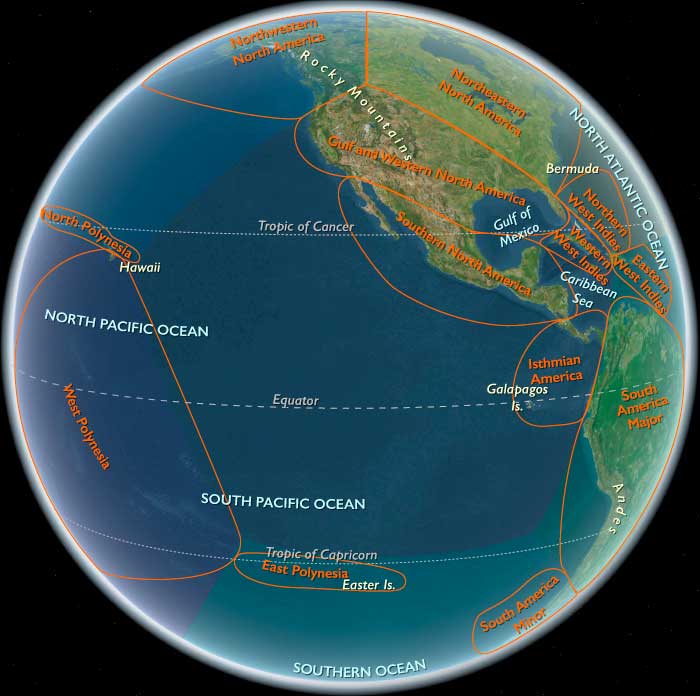
The Far West
View →Related Events
Showing 10 events out of 14 total
...with few exceptions (Vuelta Abajo), remains clandestine.
More than four months later, Martí confesses to the charges and is condemned to six years in prison.
Clubs of supporters for the Cuban nationalist cause have formed all over Cuba, and young José Martí and his friend Fermín Valdés, the son of a wealthy slave-owning family had joined them.
Martí, who has a precocious desire for the independence and freedom of Cuba, had started writing poems about this vision, while, at the same time, trying to do something to achieve this dream.
He had published his first political writings in the only edition of the newspaper El Diablo Cojuelo, published by Fermín Valdés in 1869.
That same year he published "Abdala", a patriotic drama in verse form in the one-volume La Patria Libre newspaper, which he had published himself.
"Abdala" is about a fictional country called Nubia which struggles for liberation.
His famous sonnet "10 de octubre", later to become one of his most famous poems, is also written during this year, and is published later in his school newspaper.
In March of that year, colonial authorities had shut down the school, interrupting Martí's studies.
He had come to resent Spanish rule of his homeland at an early age; likewise, he has developed a hatred of slavery, which is still practiced in Cuba and Brazil but nowhere else in the Western Hemisphere.
José Martí’s mother has tried to free her son (still in his minority) by writing letters to the government; his father had gone to a lawyer friend for legal support, but all efforts had failed.
Eventually Martí had fallen ill; his legs had been severely lacerated by the chains that bound him.
As a result, he had been transferred to another part of Cuba known as Isla de Pinos instead of further imprisonment.
Following this, the Spanish authorities decide in January 1871 to repatriate him to Spain, where he will be allowed to continue his studies with the hopes that studying in Spain will renew his loyalty to Spain.
Instead, he will eventually become a leading Latin American intellectual and Cuba’s foremost national hero as a primary architect of the 1895-98 War of Independence.
Fermín Valdés is arrested in June 1872, because of the November 27 incident.
His sentence of six years of jail is pardoned, and he is exiled to Spain, where he will reunite with his friend José Martí.
The leadership of the war after Marti's death falls to Gomez and Maceo, who are now ready to implement their plan to invade the western provinces.
In repeated attacks, they undermine and defeat the Spanish troops and carry the war to the sugar heart of the island.
Maceo wages a bitter but successful campaign against larger Spanish forces in the provinces of Pinar del Rio and La Habana from January to March of 1896.
The Spanish troops are in retreat by mid-1896, and the Cubans seem victorious throughout the island.
Now comes a change in the Spanish command: the more conciliatory Marshal Arsenio Martinez Campos is replaced by General Valeriano Weyler, a tough and harsh disciplinarian.
Weyler's policy of concentrating the rural population in garrisoned towns and increasing the number of Spanish troops allows the Spaniards to regain the initiative after Maceo's death on December 7, 1896, in a minor battle.
Yet they are unable to defeat the Cuban rebels or even to engage them in a major battle.
Gomez retreats to the eastern provinces and from there carries on guerrilla operations.
He rejects any compromise with Spain.
When, in January 1898, the Spanish monarchy introduces a plan that will make Cuba a self- governing province within the Spanish empire, Gomez categorically opposes the plan.
It had soon become clear that Spain still intends no radical changes in its policies in Cuba.
By 1892 the much promised and awaited reforms are not forthcoming.
Disillusionment and frustration begin to take hold of those who still hope for a continuous association with Spain.
The party warns that unless Spain stops its policy of repression and persecution, another rebellion will be inevitable.
While the stage is being set for the decisive effort at independence, however, the forces that advocate independence are still racked by schism and indecision.
The enthusiasm and prestige of the military leaders of the Ten Years' War are not sufficient to coordinate and direct the independence effort against Spain.
This leadership vacuum comes to be filled by a young poet and revolutionary, José Martí.
José Martí had realized very early that independence from Spain is the only solution for Cuba and that this can only be achieved through a quick war that will at the same time prevent United States intervention in Cuba.
His fear of a military dictatorship after independence led in 1884 to a break with Maximo Gomez and Antonio Maceo, who were at the time engaged in conspiratorial activities.
He withdrew from the movement temporarily, but by 1887 the three men were working together, with Martí assuming political leadership.
In 1892 he forms the Cuban Revolutionary Party (Partido Revolucionario Cubano—PRC) in the United States and directs his efforts toward organizing a new war against Spain.
Martí's pilgrimage through the Americas in the 1880s and early 1890s has helped to unite and organize the Cubans, and with Gomez and Maceo he works tirelessly toward the realization of Cuban independence.
So well have they organized the anti-Spanish forces that their order for the uprising on February 24, 1895, assures the ultimate expulsion of Spain from the island.
The war, however, is not the quick and decisive struggle that Martí has sought.
It takes his life on May 19, 1895, drags on for three more years, and eventually prompts the United States intervention (1899-1902) that he had feared.
United States interest in Cuba had wavered throughout the century.
Early on, United States policy makers supported a Cuba under a weak Spain rather than in the hands of other European powers.
In mid-century, annexation became a temporary hope, only to be ended by the United States Civil War.
In the 1870s and 1880s, United States investments grew in Cuba as a result of the war.
Taking advantage of the bankruptcy of many Spanish and Cuban enterprises, United States capital has acquired sugar estates and mining interests.
When the expansion of European beet sugar production closes this market for Cuban sugar, the United States becomes the largest and most important buyer of the island's crop.
The depressed world price of raw sugar ruins many Cuban producers and facilitates United States economic penetration.
The McKinley Tariff of 1890, which places raw sugar on the free list, leads to an increase in Cuban- American trade and especially to the expansion of sugar production.
Although by 1895 control of the economy is still largely in the hands of the Spaniards, United States capital and influence, particularly in the sugar industry, are dominant.
The ingredients for United States involvement are all present in 1898.
All that is needed is the proper national mood and a good excuse to step in.
The first is easily achieved.
The United States wants intervention.
Aroused by stories of Spanish cruelty blown out of proportion by irresponsible "yellow journalists" and by a new sense of Anglo-Saxon "racial" responsibility toward the "inferior" people of the Latin world, large sectors of public opinion clamor for United States involvement and pressure President William McKinley to intervene.
The excuse is provided by the explosion of the United States battleship U.S.S. Maine in Havana's harbor early in 1898.