
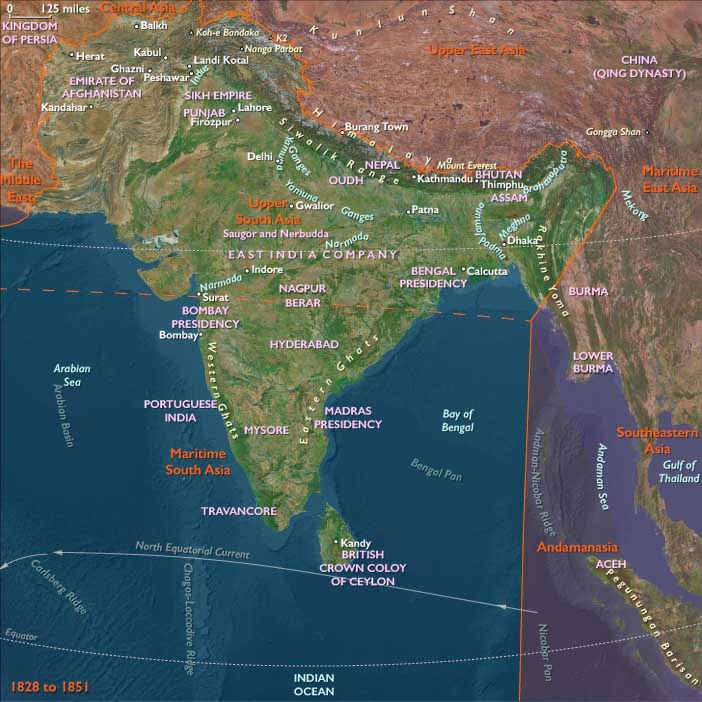
The plantation system dominates the Ceylonese economy…
1840 CE to 1851 CE
Worldwide depression in 1846 temporarily checks the rapid development of the plantation system.
Falling coffee prices cause financial disruption, aggravating the friction that has been developing between the static traditional feudal economy and modernized commercial agriculture.
In order to make up for lost revenue, the government imposes a series of new taxes on firearms, dogs, shops, boats, carriages, and bullock carts.
All of these taxes affect Sinhalese farmers.
Other measures that further alienate the Kandyans include a land tax and a road ordinance in 1848 that reintroduces a form of rajakariya by requiring six days' free labor on roads or the payment of a cash equivalent, but the measure that most antagonizes the Kandyans (especially those associated with the Buddhist sangha) is the alienation of temple lands for coffee plantations.
Groups
Commodities
Subjects
Regions
South Asia
View →Subregions
