The Jewish Communities in Norman France and…
December 1066 CE
The Jewish Communities in Norman France and Rouen’s Role in William’s Realm (c. 1000–1066)
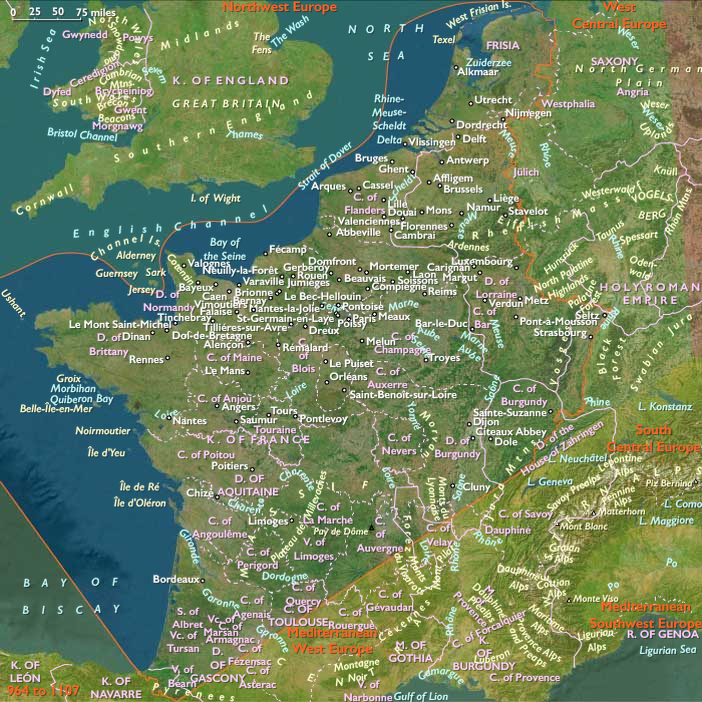
By the 11th century, thriving Jewish communities were present in Norman domains of northern France, including Rouen, the capital of Normandy. These communities had likely been established by at least 1000, contributing to local commerce, finance, and scholarship.
The Jewish Presence in Rouen
- Rouen, originally Rotomagus, was founded by the Celts and later developed under Roman rule.
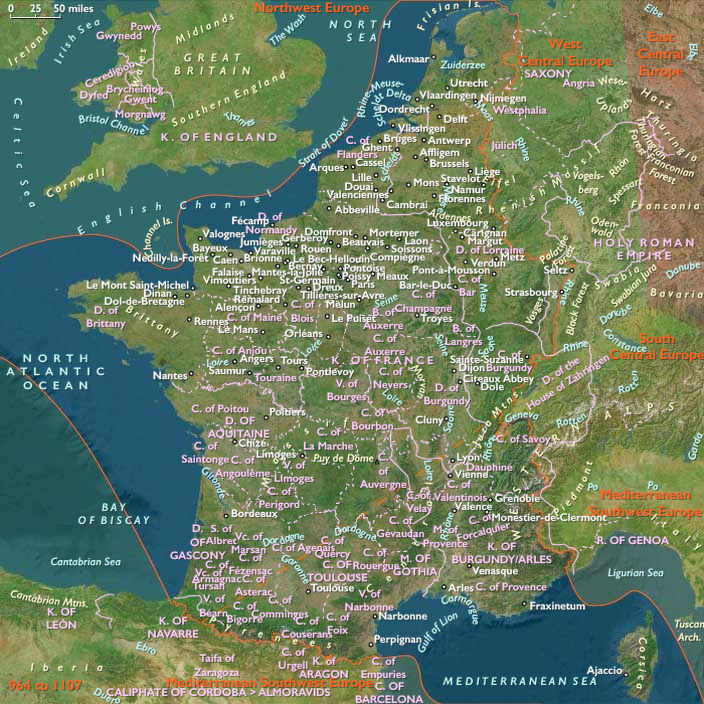
- The city was strategically located on the Seine, about 115 km northwest of Paris, making it an important commercial and political center.
- The Jewish population in Rouen was among the earliest recorded in northern France, indicating economic integration and relative stability under Norman rule.
- Jewish merchants and financiers played a critical role in the economic life of the city, engaging in trade, money-lending, and scholarship.
Rouen Becomes Part of William’s Anglo-Norman Kingdom (1066)
- In 1066, Duke William of Normandy conquered England, becoming King William I ("the Conqueror").
- Rouen, as the Norman capital, now became a central part of his Anglo-Norman realm, linking Normandy and England politically and economically.
- The Jewish community in Rouen remained influential, benefiting from trade between England and the Continent.
Significance of Jewish Communities in Norman France
- Norman rulers, including William, tolerated and protected Jewish settlements, recognizing their economic contributions.
- The Jewish community in Rouen likely had links to Jewish settlements in England, where Jews would later be invited by William’s successors in the late 11th century.
- Their early presence in Normandy laid the foundation for future Jewish communities in medieval England, particularly after William’s conquest.
The Jews of Rouen and Normandy played an essential role in the economic and cultural life of the region, remaining a notable community within William’s expanding realm after 1066.
Locations
People
Groups
Commodities
Subjects
Regions
West Europe
View →Subregions