
Construction of the New Cathedral of Salamanca…
1509 CE
Construction of the New Cathedral of Salamanca (1509): A Fusion of Gothic and Renaissance Architecture
In 1509, construction began on the New Cathedral of Salamanca, commissioned by Ferdinand II of Aragon. The cathedral was designed to blend with the existing Old Cathedral, reflecting a transition from Gothic to Renaissance styles in Spanish architecture.
Architectural Influence and Style
- The French Gothic scheme of Bourges, with its gigantic arcade and short clerestory, had already influenced Spanish Gothic cathedrals, becoming an integral feature of local design.
- By the early 16th century, Gothic architecture was declining, giving way to the Renaissance-inspired Plateresque style, characterized by intricate ornamentation, classical elements, and fine detailing.
- However, because the New Cathedral was meant to harmonize with the Old Cathedral, it retained a strong Gothic influence, rather than fully embracing Renaissance forms.
Key Features of the New Cathedral of Salamanca
-
Blending of Gothic and Renaissance Styles
- While much of Spain was adopting Plateresque architecture, the Salamanca cathedral retained more Gothic elements to ensure continuity with the Old Cathedral.
- This made it one of the last great Gothic cathedrals in Spain.
-
Large, Majestic Structure
- The cathedral was designed to be spacious and grand, reflecting the power and influence of Salamanca as an intellectual and religious center.
-
Cohesion with the Old Cathedral
- Unlike other Spanish cities that completely replaced their medieval cathedrals, Salamanca chose to preserve the Old Cathedral alongside the new structure.
Historical and Cultural Significance
- Commissioned by Ferdinand II of Aragon, the cathedral reflects the religious and political strength of Spain during the early 16th century.
- Salamanca was home to one of the most prestigious universities in Europe, making the construction of an impressive cathedral a symbol of Spain’s cultural and academic prominence.
- It stands as one of the last great Gothic cathedrals, marking the transition from medieval to Renaissance architecture in Spain.
Conclusion: A Monument to Spain’s Architectural Transition
The New Cathedral of Salamanca, begun in 1509, was both a continuation of Gothic traditions and an early example of Spain’s transition into Renaissance architecture. By blending the past with emerging styles, it remains a testament to the evolution of Spanish architecture during the reign of Ferdinand II and the dawn of Spain’s Golden Age.
Locations
Regions
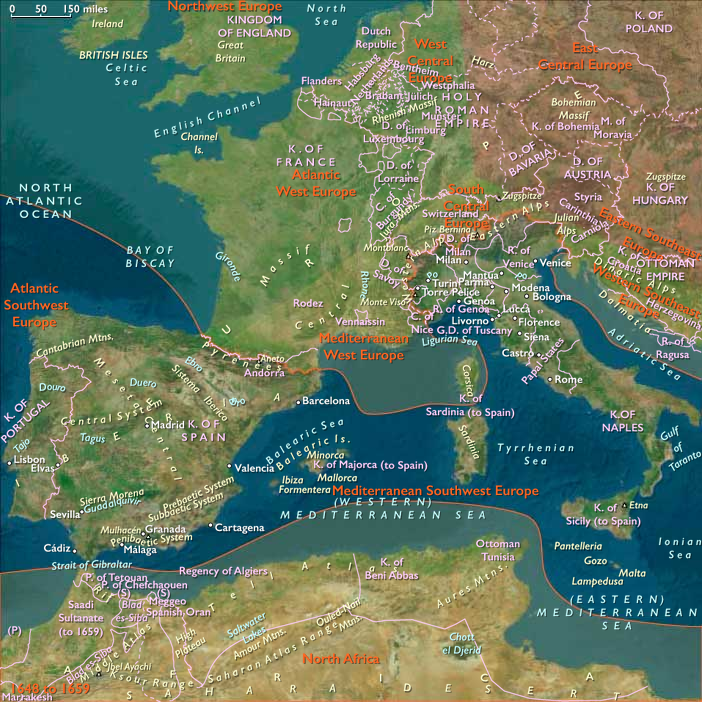
Southwest Europe
View →Subregions
