The Town Hall of Bruges and the…
1380 CE
The Town Hall of Bruges and the Cloth Hall of Ypres: Symbols of Flemish Economic Growth (1376–1380)
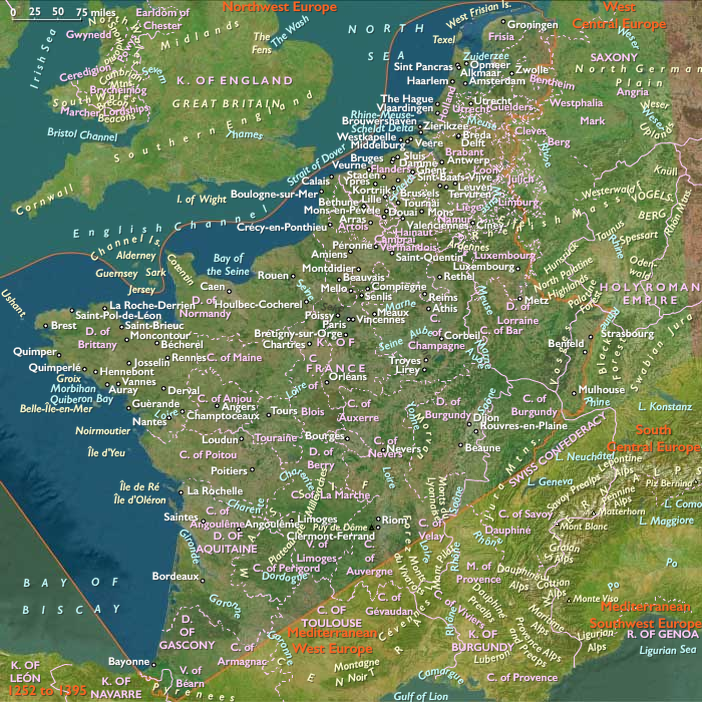
During the late 14th century, the cities of Bruges and Ypres (Ieper) undertook major construction projects that reflected the economic and political strength of Flanders. The Town Hall of Bruges (begun in 1376) and the Cloth Hall of Ypres (completed in 1380) were prominent symbols of civic pride and commercial prosperity, particularly in the flourishing cloth trade.
The Town Hall of Bruges (Begun 1376)
- One of the earliest Gothic town halls in the Low Countries, the Bruges Town Hall symbolized the rising autonomy of Flemish cities.
- Its architectural grandeur showcased Bruges' growing wealth as a leading trade hub.
- The belfry was an essential feature, serving as:
- A watchtower for city security.
- A symbol of municipal independence from feudal rulers.
Groups
Commodities
Regions
West Europe
View →Subregions