
An aggressive system of state control arises…
1108 CE to 1251 CE
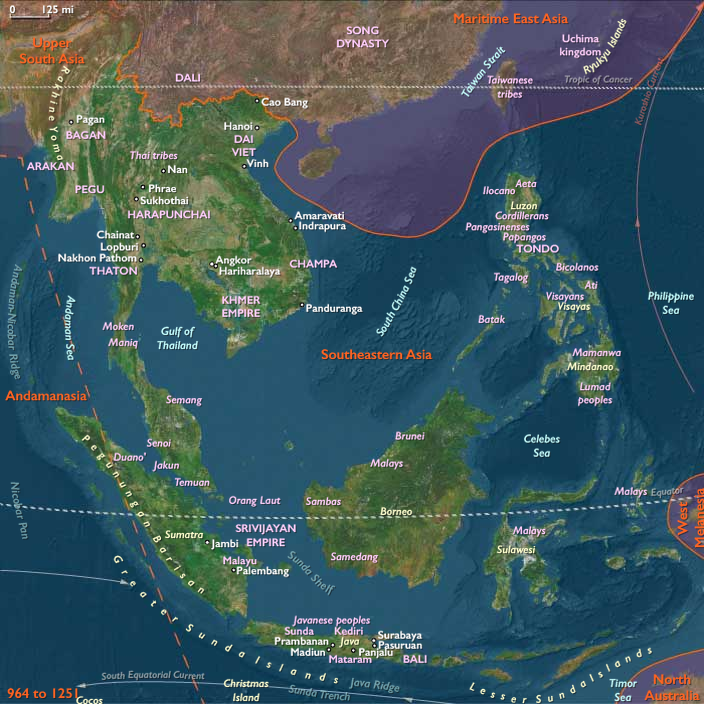
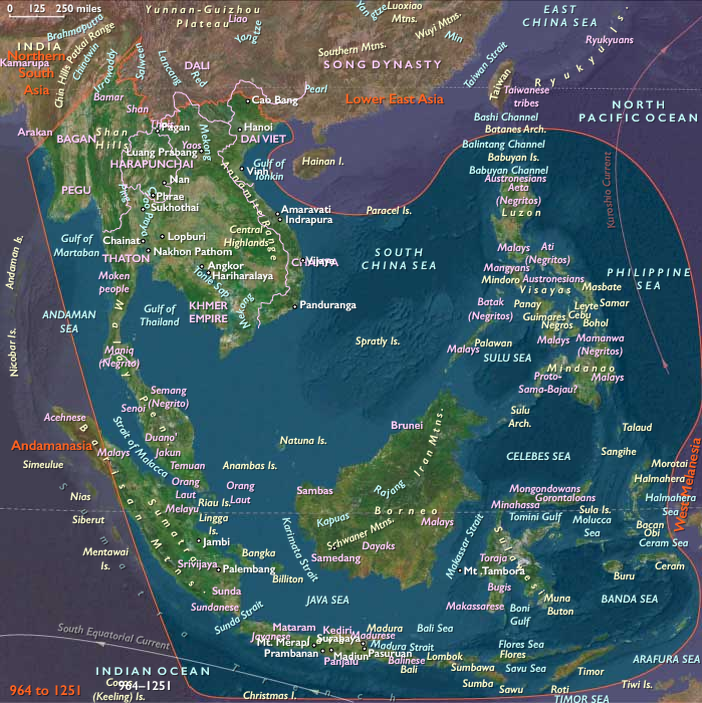
An aggressive system of state control arises in Singhasari, which defeats Kediri in 1222. The state moves in new ways to incorporate local lords' rights and lands under royal control and fosters the growth of mystical Hindu-Buddhist state cults devoted to the powers of the ruler, who come to be accorded divine status.
Locations
Groups
Regions
Southeast Asia
View →Subregions
Southeastern Asia
View →Related Events
Showing 10 events out of 21 total
Atlantic Southwest Europe (1180–1191 CE): Portuguese Territorial Expansion, Iberian Diplomatic Complexity, and Cultural Flourishing
Between 1180 and 1191 CE, Atlantic Southwest Europe—including Galicia, northern and central Portugal, Asturias, Cantabria, and northern Spain south of the Franco-Spanish border (43.05548° N, 1.22924° W)—entered a dynamic period characterized by intensified territorial expansion, diplomatic complexity, and continued economic and cultural flourishing. Portugal, now firmly established under King Afonso Henriques (d. 1185 CE) and subsequently his son, King Sancho I (1185–1211 CE), advanced decisively southward, capturing strategic territories and fortifying frontier governance. León and Castile, under Ferdinand II of León (1157–1188 CE) and Alfonso VIII of Castile (1158–1214 CE), navigated internal stability and diplomatic complexities with increasing assertiveness. Navarre, under Sancho VI "the Wise" (1150–1194 CE), maintained stable governance and diplomatic independence, significantly shaping northern Iberian geopolitics and regional coherence.
Political and Military Developments
Continued Portuguese Southward Expansion
Under King Afonso Henriques, and especially his successor Sancho I, Portugal decisively expanded its southern frontiers, notably capturing vital strongholds such as Beja (1162, definitively secured during this era), Évora (1165), and later Silves (1189). Sancho I strategically fortified these territories, decisively securing frontier governance and significantly advancing Portugal’s territorial sovereignty and national coherence.
Diplomatic and Territorial Realignments in León-Castile
In León, Ferdinand II maintained internal political stability and effective frontier governance until his death in 1188, significantly reinforcing Leonese civic identity. His son and successor, Alfonso IX (1188–1230 CE), navigated internal complexities and frontier challenges, decisively shaping León’s regional coherence. In Castile, Alfonso VIII pursued assertive territorial governance and diplomatic realignments, notably against Muslim taifa incursions, significantly reinforcing Castilian identity, frontier stability, and regional dominance.
Navarre’s Governance Stability and Diplomatic Autonomy
Under Sancho VI "the Wise", Navarre maintained stable governance and strategic diplomatic neutrality amid Iberian conflicts. Sancho’s administrative reforms decisively preserved internal autonomy, territorial integrity, and governance effectiveness, significantly shaping northern Iberian geopolitical alignments and regional stability.
Economic Developments
Robust Agricultural and Economic Prosperity
Agriculture remained vibrant, significantly supported by continued Moorish-influenced innovations (advanced irrigation and diversified crop cultivation—citrus, almonds, olives, vineyards, grain). Ongoing mining (particularly silver and gold in Galicia) and livestock husbandry further sustained regional economic resilience and population growth.
Expansion of Maritime Commerce and Trade Networks
Portuguese maritime commerce decisively expanded, particularly through Lisbon (captured decisively by Portugal in 1147 and significantly thriving during this era), Porto, Braga, and Coimbra, intensifying trade links with northern Europe (England, Flanders, Normandy, Brittany). Galicia’s maritime trade remained strong, especially through A Coruña, significantly reinforcing regional economic autonomy and prosperity.
Pilgrimage-Driven Economic Activity
The pilgrimage route to Santiago de Compostela continued thriving, decisively supporting vibrant regional commerce, hospitality industries, artisanal crafts, and cultural exchanges. Ongoing pilgrimage activity significantly reinforced Galicia’s economic resilience, cultural prominence, and regional identity.
Cultural and Religious Developments
Galician Cultural Continuity and Santiago’s Prestige
Galicia’s cultural vitality flourished, significantly sustained by Santiago de Compostela’s pilgrimage prominence. Ecclesiastical patronage and architectural investments decisively supported scholarly activities, manuscript preservation, educational institutions, and cultural continuity, significantly shaping Galician identity and European-wide prestige.
Monastic Intellectual and Agricultural Innovation
Monastic communities continued vibrant intellectual pursuits, scholarly traditions, manuscript preservation, and agricultural innovations. Cluniac-inspired reforms decisively reinforced ecclesiastical discipline, liturgical uniformity, and strong ties to Rome, significantly shaping Iberian religious identity and regional cultural coherence.
Persistent Cultural Syncretism
Orthodox Christianity continued integrating indigenous Iberian and Celtic traditions, particularly evident in rural Galicia and northern Portugal. These enduring syncretic practices decisively reinforced regional identities, social cohesion, and cultural resilience amid broader territorial and political transformations.
Civic Identity and Governance
Strengthened Portuguese National Sovereignty
Portugal further solidified national sovereignty, decisively advanced by King Sancho I through territorial expansion, frontier governance, and administrative coherence. His effective leadership significantly consolidated Portugal’s national identity, civic stability, and territorial integrity, laying enduring foundations for medieval Portugal’s trajectory.
Leónese and Castilian Governance Stability
Under Ferdinand II and his successor Alfonso IX, León decisively maintained governance stability, territorial integrity, and regional coherence. In Castile, Alfonso VIII decisively reinforced administrative structures, frontier security, and clearly defined Castilian identity, significantly shaping regional governance and Iberian political dynamics.
Navarre’s Governance Autonomy and Diplomatic Stability
Under Sancho VI, Navarre decisively maintained robust regional autonomy, civic identity, and governance stability. His prudent diplomatic strategies decisively preserved internal coherence, territorial integrity, and northern Iberian diplomatic alignments, significantly influencing regional political stability.
Notable Regional Groups and Settlements
-
Portuguese: Continued decisive territorial expansion, frontier governance, and reinforced national sovereignty under Sancho I, significantly advancing Portugal’s distinct civic identity and national coherence.
-
Castilians and Leonese: Maintained clear civic identities and territorial coherence, significantly reinforced by effective governance and diplomatic realignments under Ferdinand II, Alfonso IX, and Alfonso VIII.
-
Galicians: Continued thriving culturally and economically, significantly reinforced by pilgrimage traditions, maritime commerce, and ecclesiastical patronage.
-
Basques (Navarre): Maintained resilient regional autonomy, diplomatic independence, and governance stability under Sancho VI, significantly influencing northern Iberian geopolitics and territorial coherence.
Long-Term Significance and Legacy
Between 1180 and 1191 CE, Atlantic Southwest Europe:
-
Decisively expanded Portuguese territorial sovereignty and national coherence under Sancho I, significantly influencing Portugal’s medieval historical trajectory and enduring national identity.
-
Achieved internal stability and clear civic identities within León and Castile, decisively shaping regional governance structures, territorial integrity, and Iberian political coherence.
-
Maintained diplomatic autonomy, internal governance stability, and regional identity within Navarre under Sancho VI, significantly influencing northern Iberian geopolitical dynamics and territorial coherence.
-
Sustained robust economic prosperity, pilgrimage-driven commerce, cultural resilience, and regional governance stability, significantly shaping Atlantic Southwest Europe’s enduring historical legacy.
This era decisively shaped national and regional identities, diplomatic alignments, territorial stability, and cultural continuity, profoundly influencing Atlantic Southwest Europe’s historical trajectory and medieval legacy.
The Birth and Struggles of Alfonso IX of León (1171–1188)
Alfonso IX of León was born in 1171 in Zamora, the only son of King Ferdinand II of León and Urraca of Portugal. His father, Ferdinand II, was the younger son of Alfonso VII of León and Castile, who had divided his vast realm between his sons—a decision that sowed long-standing conflicts between León and Castile. These rivalries persisted for decades, until the eventual reunification of the kingdoms under Alfonso IX’s son, Ferdinand III of Castile.
Upon Ferdinand II’s death in 1188, Alfonso IX faced significant obstacles in securing his throne. His cousin, Alfonso VIII of Castile, sought to assert dominance over the newly crowned monarch, demanding that the young king recognize Castile’s overlordship in exchange for being recognized as the rightful ruler of León. Pressured by Castile’s superior military and political power, Alfonso IX was forced to accept this arrangement in July 1188.
Economic Struggles and the Cortes of León (1188)
At the start of his reign, Alfonso IX faced severe economic difficulties, which led him to increase taxes on the lower classes. The resulting social unrest triggered protests and urban revolts, pushing the young king to seek a political solution.
In response, Alfonso IX convened the Cortes of León at the Basilica of San Isidoro in 1188, bringing together an assembly of nobles, clergy, and representatives from various cities. This Cortes was unprecedented in medieval Europe, as it provided a framework for greater oversight of royal expenditures and citizen representation in governance.
The First Parliament in Western Europe
The 1188 Cortes of León is widely regarded as the first parliamentary body in Western Europe to include full representation of the citizenry, preceding the first session of the English Parliament, which would not be convened until the 13th century. The principles established in this early Cortes influenced the development of representative institutions across the Iberian Peninsula and beyond, shaping the political evolution of medieval Spain.
The Death of Ferdinand II of León (1188)
In January 1188, while returning from a pilgrimage to Santiago de Compostela, King Ferdinand II of León died in Benavente. His journey to the shrine of Saint James, one of the most revered pilgrimage sites in medieval Christendom, was part of a long tradition of royal devotion to the apostle Santiago, the patron saint of Iberian Christian kingdoms.
Following his death, Ferdinand II was buried in the Cathedral of Santiago de Compostela, resting alongside other Leonese monarchs. His passing marked the end of a reign defined by territorial conflicts, shifting alliances, and ongoing struggles with both Portugal and Castile. His son and successor, Alfonso IX, inherited a kingdom still entangled in dynastic rivalries and political challenges.
Atlantic Southwest Europe (1192–1203 CE): Consolidation of Portuguese and Castilian Frontiers, Navarre’s Diplomatic Adaptation, and Galician Cultural Vitality
Between 1192 and 1203 CE, Atlantic Southwest Europe—including Galicia, northern and central Portugal, Asturias, Cantabria, and northern Spain south of the Franco-Spanish border (43.05548° N, 1.22924° W)—experienced sustained territorial consolidation, refined regional identities, and vibrant cultural continuity. In Portugal, King Sancho I (1185–1211 CE) decisively strengthened frontier territories, governance stability, and national sovereignty. León and Castile, under Alfonso IX of León (1188–1230 CE) and Alfonso VIII of Castile (1158–1214 CE), solidified internal governance and clearer civic identities, decisively shaping regional political coherence. Navarre, transitioning from Sancho VI "the Wise" (d. 1194 CE) to Sancho VII "the Strong" (1194–1234 CE), carefully navigated complex diplomatic landscapes, preserving regional autonomy and stability amid broader Iberian shifts.
Political and Military Developments
Strengthening Portuguese Frontiers under Sancho I
King Sancho I decisively strengthened Portugal’s territorial governance, particularly focusing on fortifying newly conquered southern territories such as Évora and Beja. He encouraged strategic settlement initiatives ("povoamento"), consolidating Portuguese control and reinforcing frontier security. Sancho’s territorial policies decisively advanced Portuguese sovereignty, civic coherence, and national identity.
León and Castile: Stabilization and Frontier Consolidation
In León, Alfonso IX maintained internal governance stability and cohesive frontier defenses despite occasional diplomatic friction with neighboring Castile and Portugal. His prudent administration significantly reinforced Leonese regional identity and territorial coherence. In Castile, Alfonso VIII decisively secured frontier territories against Almohad incursions, particularly in preparation for later confrontations. His governance policies significantly solidified Castilian civic identity, territorial integrity, and frontier security.
Diplomatic Adaptation and Stability in Navarre
After succeeding his father in 1194, Sancho VII "the Strong" decisively adapted Navarre’s diplomatic strategies, maintaining strategic neutrality amid complex Iberian politics. Sancho VII carefully balanced alliances with Aragón, Castile, and southern Muslim territories, decisively preserving Navarre’s regional autonomy, territorial coherence, and governance stability.
Economic Developments
Continued Agricultural Prosperity
Agriculture sustained robust productivity, decisively supported by Moorish agricultural techniques, including advanced irrigation and diversified crop cultivation (citrus, olives, almonds, vineyards, grain). Thriving livestock husbandry, artisanal industries, and regional mining operations (especially precious metals in Galicia) significantly supported economic resilience, population growth, and regional stability.
Maritime Trade Networks Expansion
Portuguese ports, notably Lisbon, Porto, Braga, and Coimbra, continued to expand maritime commerce significantly with northern Europe, particularly England, Normandy, Brittany, and Flanders. Galicia, particularly through A Coruña, maintained vibrant maritime exchanges, significantly bolstering regional economic autonomy and cultural exchanges.
Pilgrimage-Driven Economic Activity
Santiago de Compostela’s pilgrimage route continued as a dynamic economic and cultural artery, decisively supporting robust commerce, artisanal industries, hospitality infrastructure, and international cultural exchange. Ongoing pilgrimage flows significantly reinforced Galicia’s economic resilience, cultural prominence, and regional identity.
Cultural and Religious Developments
Galician Cultural Vitality and Santiago’s International Prestige
Galicia maintained flourishing cultural vitality, decisively supported by Santiago de Compostela’s pilgrimage prominence. Ecclesiastical patronage, substantial architectural investments, manuscript production, scholarly activities, and educational initiatives significantly reinforced Galicia’s distinctive cultural identity and European-wide prestige.
Monastic Intellectual and Agricultural Innovation
Monastic communities sustained active intellectual pursuits, manuscript preservation, scholarly traditions, and agricultural innovations. Cluniac-inspired reforms decisively shaped ecclesiastical discipline, liturgical uniformity, and stronger alignment with Rome, significantly influencing Iberian religious identity and cultural cohesion.
Continued Cultural Syncretism and Regional Traditions
Orthodox Christianity continued integrating indigenous Iberian and Celtic traditions, notably in rural Galicia and northern Portugal. These enduring syncretic practices decisively fostered regional identity, social cohesion, and cultural resilience amid broader territorial and political changes.
Civic Identity and Governance
Portuguese National Sovereignty and Civic Consolidation
Portugal decisively strengthened national sovereignty under King Sancho I through strategic territorial governance, frontier settlements, administrative reforms, and civic stability. Sancho’s effective leadership significantly solidified Portuguese identity, territorial integrity, and enduring national coherence.
Leónese and Castilian Civic Stability
Under Alfonso IX, León maintained effective governance, civic stability, and regional identity coherence, significantly reinforcing internal administration and territorial integrity. In Castile, Alfonso VIII decisively secured frontier defenses, administrative stability, and robust Castilian civic identity, significantly influencing regional governance and Iberian political coherence.
Navarre’s Diplomatic Stability and Governance Autonomy
Under Sancho VII, Navarre decisively adapted its diplomatic strategies, maintaining regional autonomy, governance stability, and distinct civic identity. His strategic neutrality significantly preserved Navarre’s territorial coherence, internal stability, and diplomatic resilience amid broader Iberian political shifts.
Notable Regional Groups and Settlements
-
Portuguese: Decisively consolidated national sovereignty and civic stability under Sancho I, significantly shaping territorial coherence, frontier governance, and Portuguese identity.
-
Castilians and Leonese: Maintained clearly defined civic identities, significantly reinforced by effective frontier governance and administrative stability under Alfonso IX and Alfonso VIII.
-
Galicians: Continued robust cultural and economic prominence, significantly sustained by pilgrimage traditions, maritime trade, and ecclesiastical patronage.
-
Basques (Navarre): Maintained resilient regional autonomy, diplomatic stability, and governance effectiveness under Sancho VII, significantly influencing northern Iberian political coherence.
Long-Term Significance and Legacy
Between 1192 and 1203 CE, Atlantic Southwest Europe:
-
Decisively strengthened Portuguese territorial sovereignty, national identity, and frontier governance under Sancho I, significantly shaping Portugal’s medieval trajectory and enduring legacy.
-
Experienced continued internal stability and civic coherence in León and Castile, significantly influencing regional governance structures, territorial integrity, and Iberian political dynamics.
-
Successfully navigated diplomatic complexities and preserved Navarre’s regional autonomy, governance stability, and diplomatic resilience under Sancho VII, decisively influencing northern Iberian geopolitics.
-
Sustained robust economic prosperity, pilgrimage-driven commerce, cultural resilience, and effective local governance, significantly influencing Atlantic Southwest Europe’s enduring medieval historical trajectory.
This pivotal era decisively shaped national sovereignty, regional identities, diplomatic alignments, territorial stability, and cultural continuity, profoundly influencing Atlantic Southwest Europe’s historical trajectory and enduring medieval legacy.
King Alfonso VIII of Castile has from 1172 engaged in resistance to the Almohads.
The Almohad caliph Abu Yusuf Ya'qub had in 1190 forced an armistice on the Christian kings of Castile and Leon, after repulsing their attacks on Muslim possessions in Spain.
At the expiration of the truce in 1194, Alfonso invades the province of Sevilla (Seville) with the largest army of this age, over three hundred thousand men, to defeat Abu Yusuf, prompting him to leave his North African capital, Marrakech, with an expedition against the Christians.
The Castilians manage to surprise the Muslim advance guard; but, having underestimated the strength of the Almohad army, they are severely beaten by Ya'qub, who is joined by the cavalry of the Castilian Pedro Fernández de Castro, a personal enemy of Alfonso.
The decisive defeat occurs in a battle fought on July 18, 1195, near the fortress of Alarcos (Al-Arak in Arabic), close to Ciudad Real.
Alfonso and his army flee to Alarcos and Toledo, while …
…Ya'qub returns to Sevilla, where he assumes the title al-Mansur Billah (’Victorious by God’), and replenishes his own considerable troop losses.
Fernández de Castro, following the Battle of Alarcos, mediates negotiations between King Alfonso VIII of Castile and King Alfonso IX of León, in the city of Toledo.
After the failed meeting between the two sovereigns, Pedro Fernandez de Castro stays in León fighting against the kingdom of Castile.
Troops from León and Navarre, as well as Moorish forces, invade Castile, but the Castilians manage to repel the attackers.
Alfonso, assisted by Pope Innocent III and Spanish clergy, now prepares for a coordinated assault on the Almohads and other Muslim powers in southern Spain.
The outcome of the Battle of Alarcos had shaken the stability of the Kingdom of Castile; this situation will continue for several years.
All nearby castles had surrendered or been abandoned: Malagón, Benavente, Calatrava, Caracuel and Torre de Guadalferza, and the way to Toledo was wide open.
For the past two years, al-Mansur's forces have devastated Extremadura, the Tagus valley, La Mancha and even the area around Toledo; they have moved in turn against Montánchez, Trujillo, Plasencia, Talavera, Escalona and Maqueda.
Some of these expeditions had been led by the renegade Pedro Fernández de Castro.
Most significantly, however, these raids have not led to any territorial gains for the caliph, although Almohad diplomacy does obtain an alliance with King Alfonso IX of León (who had been enraged when the Castilian king had not waited for him before the battle of Alarcos) and the neutrality of Navarre.
These alliances prove to be temporary only.
The Excommunication of Alfonso IX and the End of the War Between Castile and León (1196–1197)
In 1196, as hostilities between Castile and León intensified, Pope Celestine III intervened in support of Castile, issuing a papal excommunication against King Alfonso IX of León. This act sought to pressure the Leonese monarch into ceasing his military campaigns against his cousin, Alfonso VIII of Castile.
Despite papal condemnation, Alfonso IX found allies among his nobility, including Pedro Fernández de Castro, a powerful noble who, along with other Leonese lords, had previously aided the Saracens against Castile. These nobles swore renewed oaths of loyalty to Alfonso IX, strengthening his position even as he faced ecclesiastical censure.
The Marriage of Alfonso IX and Berengaria of Castile (1197): A Diplomatic Resolution
The conflict between León and Castile came to an unexpected resolution in 1197, when Alfonso IX married Berengaria of Castile, daughter of Alfonso VIII of Castile. This strategic union brought peace between the rival kingdoms, as Berengaria’s dowry provided her husband with a legitimate claim to Castilian territory, effectively aligning their dynastic interests.
Although the marriage ended immediate hostilities, it soon faced papal opposition on the grounds of consanguinity, leading to further political and religious complications in the years to come.