
Filters:
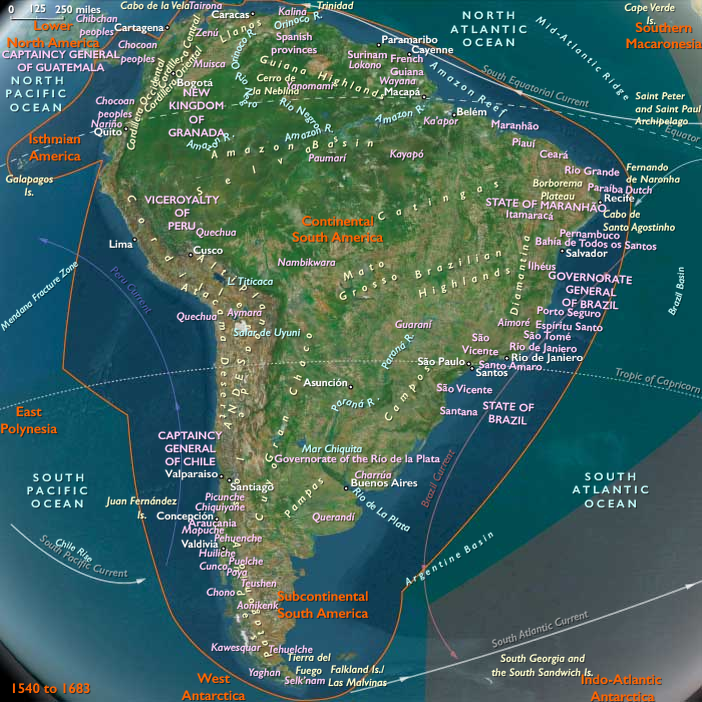
The Chilean government plays a significant role …
Years: 1540 - 1683
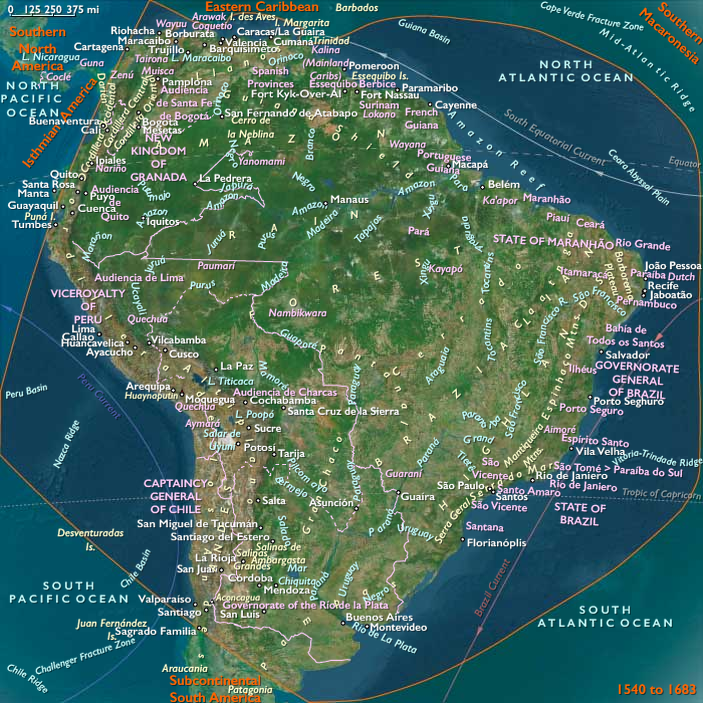
The Chilean government plays a significant role in the colonial economy.
It regulates and allocates labor, distributes land, grants monopolies, sets prices, licenses industries, concedes mining rights, creates public enterprises, authorizes guilds, channels exports, collects taxes, and provides subsidies.
Outside the capital city, however, colonists often ignore or circumvent royal laws.
In the countryside and on the frontier, local landowners and military officers frequently establish and enforce their own rules.
The economy expands under Spanish rule, but some criollos complain about royal taxes and limitations on trade and production.
Although the crown requires that most Chilean commerce be with Peru, smugglers manage to sustain some illegal trade with other American colonies and with Spain itself.
Chile exports to Lima small amounts of gold, silver, copper, wheat, tallow, hides, flour, wine, clothing, tools, ships, and furniture.
Merchants, manufacturers, and artisans become increasingly important to the Chilean economy.
Mining is significant, although the volume of gold and silver extracted in Chile is far less than the output of Peru or Mexico.
The conquerors appropriate mines and washings from the native people and coerce them into extracting the precious metal for the new owners.
The crown claims one-fifth of all the gold produced, but the miners frequently cheat the treasury.
By the seventeenth century, depleted supplies and the conflict with the Araucanians reduce the quantity of gold mined in Chile.
It regulates and allocates labor, distributes land, grants monopolies, sets prices, licenses industries, concedes mining rights, creates public enterprises, authorizes guilds, channels exports, collects taxes, and provides subsidies.
Outside the capital city, however, colonists often ignore or circumvent royal laws.
In the countryside and on the frontier, local landowners and military officers frequently establish and enforce their own rules.
The economy expands under Spanish rule, but some criollos complain about royal taxes and limitations on trade and production.
Although the crown requires that most Chilean commerce be with Peru, smugglers manage to sustain some illegal trade with other American colonies and with Spain itself.
Chile exports to Lima small amounts of gold, silver, copper, wheat, tallow, hides, flour, wine, clothing, tools, ships, and furniture.
Merchants, manufacturers, and artisans become increasingly important to the Chilean economy.
Mining is significant, although the volume of gold and silver extracted in Chile is far less than the output of Peru or Mexico.
The conquerors appropriate mines and washings from the native people and coerce them into extracting the precious metal for the new owners.
The crown claims one-fifth of all the gold produced, but the miners frequently cheat the treasury.
By the seventeenth century, depleted supplies and the conflict with the Araucanians reduce the quantity of gold mined in Chile.
Locations
Groups
- Mapuche (Amerind tribe)
- Christians, Roman Catholic
- Spain, Habsburg Kingdom of
- Spaniards (Latins)
- Jesuits, or Order of the Society of Jesus
- Chile (Spanish colony)
- Peru, Viceroyalty of
- Spain, Habsburg Kingdom of
Topics
Commodoties
Subjects
Regions
Subregions
Years: 1540 - 1683
Locations
Groups
- Mapuche (Amerind tribe)
- Christians, Roman Catholic
- Spain, Habsburg Kingdom of
- Spaniards (Latins)
- Jesuits, or Order of the Society of Jesus
- Chile (Spanish colony)
- Peru, Viceroyalty of
- Spain, Habsburg Kingdom of
Topics
Commodoties
Subjects
Regions
Subregions