
… Dalmatia, and …
27 BCE
… Dalmatia, and …
People
Commodities
Subjects
Regions
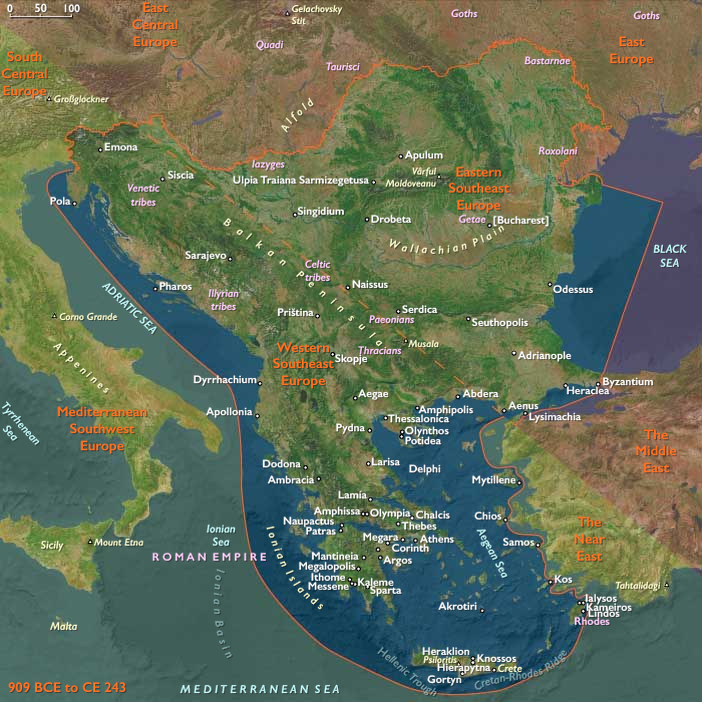
Southeast Europe
View →Subregions
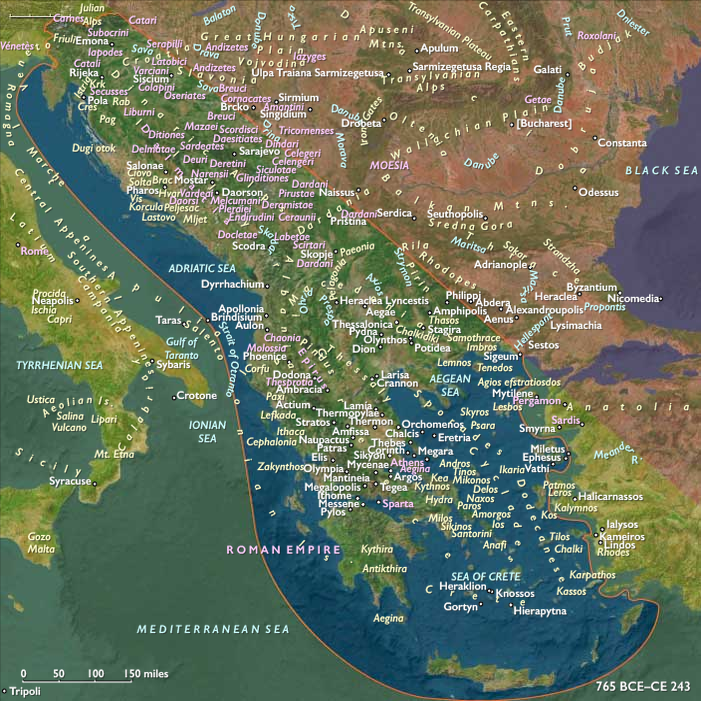
Western Southeast Europe
View →Related Events
Showing 9 events out of 9 total
Atlantic West Europe (1720–1731): Financial Crisis, Economic Resilience, and Enlightenment Expansion
From 1720 to 1731, Atlantic West Europe—including northern France, the Low Countries (modern Belgium, Netherlands, Luxembourg), and the Atlantic and Channel coasts—faced significant economic turbulence exemplified by financial crises, yet continued its broader trajectory toward intellectual, cultural, and social development shaped by Enlightenment thought and stabilized political structures. The period underscored the resilience of regional economies and fostered deepening intellectual exchanges across Europe.
Political and Military Developments
Stability under Bourbon and Habsburg Rule
-
Under the regency (1715–1723) and then reign of Louis XV (r. 1715–1774), France enjoyed relative internal peace, allowing a focus on domestic economic and administrative reforms despite ongoing fiscal challenges.
-
The Austrian Netherlands (Belgium and Luxembourg), governed under Habsburg rule, enjoyed stable yet conservative administration, maintaining internal order while gradually integrating into wider European economic networks.
Diplomatic Stability and Limited Warfare
-
European diplomatic conditions were generally peaceful, guided by balance-of-power diplomacy, especially after the significant territorial realignments resulting from the Treaty of Utrecht (1713). Atlantic West Europe benefited from a respite from widespread conflict, despite occasional diplomatic friction.
Economic Developments: Crisis and Recovery
The Financial Bubble Crisis (1720)
-
The early 1720s were dominated by financial instability exemplified by the infamous Mississippi Bubble in France and the contemporaneous South Sea Bubble in Britain.
-
In France, John Law’s Mississippi Company, heavily tied to colonial speculation in North America, collapsed spectacularly in 1720, devastating public finances, eroding trust in government-backed financial schemes, and causing widespread economic disruption across France, particularly affecting Paris and the northern trading cities.
-
Amsterdam and other Dutch cities faced ripple effects from these speculative crashes, temporarily disrupting financial markets, though the robust Dutch banking system proved resilient, recovering more swiftly than France.
Regional Economic Resilience and Recovery
-
Despite initial disruption, northern French cities (Bordeaux, Nantes, and Rouen) and the Low Countries (Amsterdam, Antwerp, Brussels) demonstrated resilience, recovering through diverse trade networks, maritime commerce, and robust agricultural productivity.
-
Dutch commerce, particularly trade in luxury goods, textiles, and colonial commodities, rapidly resumed strength, maintaining Amsterdam’s position as a pivotal commercial hub and financial capital.
Industrial and Agricultural Expansion
-
The Low Countries saw continued growth in industries such as textiles (Flanders) and ceramics (Delft and Brussels), while French Atlantic ports expanded commerce with the Americas, notably in wine, sugar, tobacco, and manufactured goods.
-
Agricultural improvements continued steadily across northern France, increasing productivity and facilitating demographic growth.
Intellectual and Religious Developments
Continued Enlightenment Expansion
-
Enlightenment ideas increasingly permeated intellectual and cultural life across Atlantic West Europe, prominently through French philosophes like Montesquieu, whose seminal work Persian Letters (1721) offered critical yet engaging commentary on French society, politics, and culture, profoundly influencing political thought.
-
Universities and academies in the Low Countries, especially Leiden University and the University of Louvain, continued intellectual dynamism, attracting scholars and disseminating Enlightenment ideals broadly.
Religious Moderation and Debates
-
Religious toleration advanced modestly, notably in the Dutch Republic, where Calvinist orthodoxy gradually softened, facilitating greater intellectual openness and more liberal religious discourse, exemplified by theologians like Jean Leclerc in Amsterdam.
Cultural and Artistic Flourishing
Continued Rococo Expansion
-
Rococo style flourished, particularly in France and the Austrian Netherlands. The aesthetic reached new heights in decorative arts, architecture, and painting, emphasizing ornate elegance, pastel colors, and playful themes. Paris, Brussels, and Antwerp became vibrant centers of artistic innovation.
-
The French court under Louis XV patronized artists such as François Boucher, who began his influential career during this period, becoming emblematic of Rococo aesthetics.
Literary and Philosophical Innovations
-
Literary life thrived, reflected in the growing popularity of satirical works, social critiques, and emerging novelistic forms. Writers and satirists addressed societal issues such as corruption, wealth disparities, and moral decadence, echoing Enlightenment ideals.
-
Salons and literary circles, especially in Paris, flourished as platforms for intellectual exchange, significantly shaping public discourse and cultural production.
Social and Urban Developments
Urban Growth and Commercial Expansion
-
Atlantic port cities—Bordeaux, Nantes, La Rochelle, Amsterdam, Rotterdam—experienced notable population and commercial growth, fueled by transatlantic trade and expanding colonial markets.
-
Brussels and Antwerp stabilized economically, benefiting from peaceful governance, strengthened trade networks, and improved urban infrastructure.
Societal Shifts and Social Mobility
-
Increased commercial prosperity in port cities boosted the social status and influence of merchant and bourgeois classes, reshaping social structures and fostering greater urban civic engagement and cultural patronage.
-
Economic turbulence temporarily heightened social tensions, particularly after the financial bubble crises, fueling criticism of aristocratic privileges and governmental corruption—foreshadowing later Enlightenment and revolutionary critiques.
Legacy and Significance
The period 1720–1731 represented both vulnerability and resilience in Atlantic West Europe’s trajectory:
-
The financial crises of 1720 exposed the fragility of speculative economic schemes, reshaping European financial practices and spurring more prudent economic governance.
-
The subsequent economic recovery underscored regional resilience, emphasizing the importance of diverse trade networks, agricultural productivity, and manufacturing capabilities as foundations for lasting prosperity.
-
Enlightenment intellectuals deepened their critiques of political and social structures, laying crucial ideological groundwork for future revolutionary movements.
-
Cultural and artistic achievements during this period solidified Rococo aesthetics and literary innovations as enduring components of European cultural heritage.
Overall, this era reinforced Atlantic West Europe's enduring capacity for economic recovery and intellectual vitality, positioning it firmly on the path toward modernity and global influence.
Atlantic West Europe (1732–1743): Economic Stability, Enlightenment Progress, and Diplomatic Realignment
Between 1732 and 1743, Atlantic West Europe—including northern France, the Low Countries (Belgium, Netherlands, Luxembourg), and regions facing the Atlantic and English Channel—experienced sustained economic recovery, strengthened diplomatic realignments, continued Enlightenment advancements, and vibrant cultural productivity. This period marked a gradual stabilization after earlier financial shocks and laid critical foundations for future political shifts and intellectual revolutions.
Political and Military Developments
Stability Under Louis XV and the Habsburgs
-
In France, Louis XV (r.1715–1774) continued his peaceful rule, stabilizing internal governance despite growing criticism of court extravagance and administrative inefficiency. His influential chief minister, Cardinal Fleury (1726–1743), managed diplomatic affairs skillfully, maintaining general European peace while avoiding costly wars.
-
The Austrian Netherlands under Maria Theresa’s rule (1740–1780) maintained internal stability and administrative efficiency. The region prospered economically and culturally, despite ongoing diplomatic tensions related to the War of the Austrian Succession (beginning in 1740).
The War of the Austrian Succession (1740–1748)
-
The death of Emperor Charles VI in 1740 triggered succession disputes across Europe, leading to the War of the Austrian Succession (1740–1748). Though this conflict primarily impacted central Europe initially, Atlantic West Europe was drawn into diplomatic realignments and military preparations.
-
France aligned against Maria Theresa's Austrian claims, allying initially with Prussia under Frederick II. Military preparations in northern France and the Low Countries intensified, though direct fighting remained limited at this stage.
Economic Developments: Stability and Growth
Continued Recovery and Prosperity
-
After the financial instability of the early 1720s, Atlantic West Europe experienced notable economic stability. French cities like Bordeaux, Nantes, and La Rochelle thrived, driven by expanding Atlantic commerce in wine, sugar, and manufactured goods.
-
Antwerp, Amsterdam, and Brussels saw renewed trade vigor, bolstered by maritime commerce, colonial products, and strong financial institutions that regained trust after earlier crises.
Industrial Innovation and Expansion
-
Textile manufacturing in Flanders and Brabant continued to expand significantly, becoming highly efficient and increasingly mechanized. These developments positioned the region as a leading center of European textile production.
-
Shipbuilding and maritime industries along the Atlantic coast, particularly in French port cities and Dutch maritime towns, flourished, fueling broader economic prosperity and maritime dominance.
Agricultural Advancements
-
Agricultural reforms and innovations continued to spread across northern France and the Low Countries, enhancing productivity and stabilizing regional economies. Improved crop rotations, drainage methods, and livestock breeding yielded higher agricultural output, reducing periodic famines.
Intellectual and Cultural Developments
Enlightenment Ideals and Intellectual Progress
-
Enlightenment thought reached new heights. In France, figures such as Voltaire published pivotal works (Letters Concerning the English Nation, 1733), critiquing French absolutism and promoting ideals of freedom, reason, and tolerance.
-
The Low Countries became prominent intellectual hubs, with Amsterdam and Leiden continuing to attract leading thinkers, philosophers, and scientists from across Europe.
The Expansion of Scientific Inquiry
-
Scientific academies, including the Académie des Sciences in Paris and societies in Amsterdam and Brussels, sponsored research in mathematics, astronomy, chemistry, and medicine, significantly advancing European scientific knowledge.
-
Eminent scientists, including French mathematician Pierre Louis Maupertuis, significantly contributed to debates about Earth's shape through geodesic expeditions, underscoring the region’s intellectual vitality.
Religious Developments and Tolerance
Gradual Religious Moderation
-
Religious toleration continued gradual expansion, particularly in the Dutch Republic, where a relatively liberal atmosphere fostered intellectual openness. Calvinist orthodoxy softened somewhat, allowing freer exchanges of ideas.
-
In France, while formal Catholic dominance remained firm, intellectual circles increasingly criticized intolerance and superstition, advocating Enlightenment ideals of religious tolerance, as illustrated by Voltaire’s critical writings.
Cultural and Artistic Flourishing
Rococo Art and Architectural Grandeur
-
Rococo style remained culturally dominant, characterized by elaborate decoration, playful themes, and delicate aesthetics. Paris, Brussels, and Antwerp notably embraced this style, influencing architecture, interior decoration, painting, and sculpture.
-
French painters like François Boucher gained significant acclaim during this period, setting aesthetic standards for European art that emphasized opulence, elegance, and courtly sophistication.
Literary and Philosophical Influence
-
French literary circles thrived, fostering intense intellectual discourse within prominent Parisian salons hosted by figures such as Madame Geoffrin and Madame du Deffand, where Enlightenment ideals circulated widely.
-
The literary scene in the Low Countries similarly flourished, especially in Amsterdam and Brussels, featuring lively publishing and distribution networks promoting both local and international works.
Social and Urban Developments
Urban Expansion and Commercial Vitality
-
Port cities such as Amsterdam, Rotterdam, Bordeaux, and Nantes experienced significant urban expansion, reflecting prosperous maritime trade and economic buoyancy.
-
Increased wealth contributed to improved urban infrastructure, including the construction of public buildings, canals, and marketplaces, facilitating commerce and enhancing quality of life.
Rise of the Merchant Class and Social Shifts
-
The merchant and bourgeois classes in Atlantic cities became increasingly influential, gaining political leverage and fostering social mobility. Urban commercial elites invested in civic improvements, education, and cultural patronage, significantly shaping urban identities.
Continued Social Critique and Debate
-
Despite economic prosperity, Enlightenment intellectuals sharply critiqued societal inequities, aristocratic privilege, and governmental corruption. Public debates fostered awareness of social injustice, laying intellectual groundwork for future revolutionary sentiments.
Legacy and Historical Significance
The period 1732–1743 solidified the resilient economic and intellectual foundations of Atlantic West Europe, contributing decisively toward its subsequent historical trajectory:
-
Politically, this era demonstrated effective governance, diplomatic pragmatism, and preparedness for emerging European conflicts.
-
Economically, sustained recovery and industrial advancements reaffirmed the region’s economic prominence, laying groundwork for future prosperity and global commercial influence.
-
Intellectually, Enlightenment thought deepened its influence, setting crucial precedents for modern European society, politics, and culture.
-
Socially and culturally, the rise of urban merchant classes, vigorous artistic production, and intellectual vibrancy shaped urban identity and future societal developments.
Ultimately, this era reinforced Atlantic West Europe's enduring position as a leading cultural, intellectual, and economic powerhouse on the European and global stages.
François Boucher, born in Paris, the son of a lace designer Nicolas Boucher, is perhaps the most celebrated decorative artist of the eighteenth century, with most of his work reflecting the Rococo style.
Boucher at the age of seventeen had been apprenticed by his father to François Lemoyne, but after only three months had gone to work for the engraver Jean-François Cars.
Within three years, Boucher had already won the elite Grand Prix de Rome, although he did not take up the consequential opportunity to study in Italy until four years later.
On his return in 1731 from studying in Italy, he was admitted to the Académie de peinture et de sculpture as a historical painter, and in 1734 became a faculty member.
He had in 1733 married Marie-Jeanne Buzeau, with whom he will have three children.
Along with his painting, Boucher also designs theater costumes and sets, and the ardent intrigues of the comic operas of Favart (1710–1792) closely parallel his own style of painting.
Tapestry design is also a concern.
For the Beauvais tapestry workshops, he had first designed a series of Fêtes italiennes ("Italian festivals") in 1736, which proved to be very successful and will often be rewoven over the years, then, commissioned in 1737, a suite of the story of Cupid and Psyche.
Boucher's early work, reflecting inspiration gained from the artists Watteau and Rubens, Bcelebrates the idyllic and tranquil, portraying nature and landscape with great élan.
His art, however, typically forgoes traditional rural innocence to portray scenes with a definitive style of eroticism, and his mythological scenes are passionate and intimately amorous rather than traditionally epic.
Marquise de Pompadour (mistress of King Louis XV), whose name becomes synonymous with Rococo art, is a great fan of Boucher's, and has the painter under her protection: it is particularly in his portraits of her that this style is clearly exemplified.
Paintings such as The Breakfast of 1739, a family scene, also show Boucher as a master of the genre scene, as he regularly uses his own wife and family as models.
Boucher's early work, reflecting inspiration gained from the artists Watteau and Rubens, celebrates the idyllic and tranquil, portraying nature and landscape with great élan.
However, his art typically forgoes traditional rural innocence to portray scenes with a definitive style of eroticism, and his mythological scenes are passionate and intimately amorous rather than traditionally epic.
Atlantic West Europe (1744–1755): Conflict, Enlightenment Critique, and Emerging Structural Reforms
From 1744 to 1755, Atlantic West Europe—encompassing northern France, the Low Countries (modern Belgium, Netherlands, Luxembourg), and regions along the Atlantic and English Channel—experienced heightened military tensions, economic strains from ongoing warfare, robust Enlightenment critiques of governance and society, and intensified efforts at structural reform. This era was marked primarily by the latter stages of the War of the Austrian Succession and the initial developments leading into the broader global conflict of the Seven Years’ War.
Political and Military Developments
War of the Austrian Succession (1740–1748): Impact and Resolution
-
Between 1744 and 1748, Atlantic West Europe bore the brunt of escalating warfare, particularly in the Austrian Netherlands, as French armies invaded and occupied several key cities, including Brussels and Antwerp. Fighting and occupation severely disrupted regional economies and civilian life.
-
In 1745, Louis XV’s forces achieved notable victories, including the Battle of Fontenoy (1745), a major triumph over a British-Dutch-Austrian coalition. This bolstered French military prestige but exhausted national finances.
-
The war concluded with the Treaty of Aix-la-Chapelle (1748), restoring territories to their pre-war boundaries. While this treaty temporarily stabilized regional politics, underlying rivalries persisted, sowing seeds for future conflicts.
Preparations for Renewed Conflict
-
In the aftermath of peace, both France and Britain strengthened their naval capabilities and colonial military resources, anticipating further confrontation, reflecting the persistent Franco-British rivalry that would soon culminate in the Seven Years’ War (1756–1763).
-
Northern French ports such as Brest, Rochefort, and Nantes notably expanded military dockyards and naval fortifications, preparing strategically for renewed maritime confrontations.
Economic Developments: War, Recovery, and Structural Changes
Economic Strains and Postwar Recovery
-
Continuous warfare (1744–1748) severely strained the region's economies, disrupting trade routes and commerce, particularly affecting the textile and maritime industries in Flanders and Brabant.
-
After 1748, economic recovery became a priority. Ports such as Bordeaux, Nantes, Antwerp, and Amsterdam gradually resumed prosperous maritime trade, though the region faced ongoing challenges from British naval dominance and competition.
Agricultural and Industrial Reforms
-
Postwar economic reforms accelerated, particularly under French Minister of Finance, Jean-Baptiste de Machault d’Arnouville, who pursued tax and administrative reforms (1749–1754) aimed at strengthening royal finances and stimulating agricultural and industrial production.
-
Agricultural modernization efforts, inspired by Enlightenment ideals, increased productivity through crop diversification, improved farming techniques, and irrigation systems, especially evident in northern France and the southern Netherlands.
Intellectual and Cultural Developments
Enlightenment Critique and Calls for Reform
-
Intellectual critique intensified markedly during this era, with Enlightenment thinkers such as Montesquieu, whose landmark The Spirit of the Laws (1748) profoundly influenced political philosophy by advocating the separation of powers and critiquing absolute monarchy.
-
Criticism of governmental inefficiency, corruption, and excessive taxation became increasingly common in Enlightenment discourse, fostering widespread intellectual dissatisfaction with absolutist governance.
Scientific and Philosophical Progress
-
Scientific advancements continued apace. The French mathematician and astronomer Pierre-Louis Maupertuis famously published findings from the Arctic geodesic expedition, solidifying Enlightenment principles of empirical inquiry and global scientific collaboration.
-
Universities and scientific societies across Paris, Amsterdam, Brussels, and Antwerp maintained vibrant intellectual activity, nurturing an atmosphere of rigorous scholarly debate and innovation.
Religious and Social Developments
Continued Religious Moderation and Secularization
-
Gradual religious moderation and secularization deepened, particularly evident in urban centers like Amsterdam and Brussels, where Calvinist orthodoxy became more tolerant of intellectual dissent and religious plurality.
-
In France, although Catholicism remained dominant, critical Enlightenment perspectives increasingly questioned the church's influence over education, governance, and social policy.
Growing Social Critique and Calls for Justice
-
Enlightenment intellectuals vigorously attacked aristocratic privilege, corruption, and social injustice, reflecting growing dissatisfaction among urban merchant classes and educated bourgeoisie in cities like Paris, Brussels, Antwerp, and Amsterdam.
-
Salons and cafés throughout Atlantic West Europe served as influential platforms for spreading Enlightenment ideas, fostering civic debate, and encouraging public critique of established authority.
Cultural and Artistic Flourishing
Rococo and Early Neoclassical Transitions
-
Rococo style continued its cultural dominance, though signs of an emerging Neoclassical aesthetic began to appear, emphasizing clarity, rationality, and classical forms, particularly in French and Low Countries' architecture and painting.
-
Artistic patronage by affluent merchant elites and royal courts facilitated a vibrant cultural atmosphere, exemplified by artists like François Boucher and early works of Jean-Baptiste Greuze.
Literary and Musical Developments
-
Literary production flourished, particularly influenced by Enlightenment writers such as Montesquieu and Voltaire, whose philosophical novels and critiques of society significantly impacted intellectual life.
-
Musical life in the region thrived, with significant activity in cities like Paris and Brussels, where composers and musicians contributed to an expanding European musical tradition, bridging Baroque styles toward early Classical forms.
Urban and Social Transformations
Urban Growth and Commercial Vitality
-
Despite wartime disruptions, urban centers in Atlantic West Europe, including Amsterdam, Brussels, Bordeaux, and Nantes, continued urban expansion and infrastructure improvements. Economic recovery efforts significantly enhanced commercial vitality and trade activity.
-
Urban merchant elites further consolidated their social influence, supporting public works, cultural patronage, and civic improvements, creating a foundation for sustained urban prosperity.
Increased Social Tensions and Emerging Reform Movements
-
Social tensions escalated amid critiques of social inequities, aristocratic privileges, and tax burdens. Emerging reform movements advocated for fiscal fairness, government accountability, and enhanced civic participation, particularly among educated urban populations.
Legacy and Historical Significance
The period 1744–1755 proved critical in shaping the trajectory of Atlantic West Europe toward modernity:
-
Politically, the conclusion of the War of the Austrian Succession temporarily stabilized the region yet intensified preparations for future global conflicts, setting the stage for the Seven Years’ War.
-
Economically, postwar recovery, structural reforms, and agricultural modernization laid the groundwork for future growth and industrial development.
-
Intellectually, Enlightenment ideals profoundly impacted governance, philosophy, and scientific inquiry, fueling demands for political and social reform that anticipated later revolutionary movements.
-
Culturally and socially, heightened artistic production, intellectual critique, and urban transformation strengthened civic identities and broadened public participation in political discourse.
Ultimately, this era reinforced Atlantic West Europe's dynamic role as a leading economic, cultural, and intellectual hub, preparing the ground for the transformative challenges of the late 18th and early 19th centuries.
Soon thereare libels published called poissonnades, a pun on Pompadour's family name, Poisson, which means "fish" in French.
Despite her critics, the Marquise de Pompadour has an undeniable influence on the flourishing of French arts during the reign of Louis XV, a reign that is often considered to represent the pinnacle of French architecture and interior design.
A patron of the arts, the Marquise is amassing a considerable amount of furniture andobjets d'artat her various estates.
She is responsible for the tremendous growth of the porcelain manufacturing in Sèvres, which has become one of the most famous porcelain manufacturers in Europe, and her commissions ensure the living of artists and families of craftsmen for many years.
She is also a prominent patron of architecture, responsible for the building of the Place Louis XV (now called the Place de la Concorde) and the École Militaire in Paris, both designed by her protégé Ange-Jacques Gabriel.
Her efforts to establish the École Militaire demonstrate her commitment to the training of officers from poor families of the aristocracy.
The Marquise is a political liberal at heart, and she steadily defends the Encyclopédie against the attacks from the Church.
She is also a supporter of Enlightenment philosophy and has tried to win the king over to its new ideas, albeit not quite as successfully as she hoped.
She is criticized for the lavish display of luxury at her various estates, although her wealthy family of financiers in many instances has given money to the government and saved the monarchy from bankruptcy. She has bequeathed all her estates to the state; they will revert to the crown at her death.
The Marquise de Pompadour is officially settled on the third floor (second story) of the Palace of Versailles in small but comfortable apartments that can still be visited today.
The atmosphere in these private quarters is so relaxed that the king is said to serve coffee during the suppers organized fro him by the Marquise.
Atlantic West Europe (1756–1767): The Seven Years' War, Colonial Rivalries, and Enlightenment Expansion
From 1756 to 1767, Atlantic West Europe—comprising northern France, the Low Countries (modern Belgium, Netherlands, Luxembourg), and regions along the Atlantic and English Channel coasts—underwent profound transformations due primarily to the Seven Years' War (1756–1763). This global conflict reshaped political alliances, inflicted severe economic strain, accelerated Enlightenment critiques of governance, and deepened social tensions, setting a critical foundation for subsequent revolutionary changes.
Political and Military Developments
Seven Years' War: European and Global Dimensions
-
The Seven Years' War commenced in 1756, involving a far-reaching coalition conflict: France allied with Austria and Russia against Britain and Prussia. Northern France, as a primary combatant, invested heavily in military resources, contributing significantly to battles across Europe, America, and India.
-
Critical battles and French defeats in colonial theaters, notably the fall of Quebec (1759) and Montreal (1760), substantially reduced French colonial possessions in North America, profoundly altering the geopolitical balance.
-
Despite fighting largely outside mainland France and the Low Countries, coastal cities—particularly Brest, Rochefort, Nantes, and Bordeaux—endured heavy military expenditures and naval losses, weakening regional maritime power.
Treaty of Paris (1763) and Geopolitical Realignment
-
The war concluded with the Treaty of Paris (1763), resulting in devastating territorial losses for France. Britain gained control of Canada, India, and significant Caribbean holdings, marking a sharp decline in French colonial influence.
-
The treaty profoundly impacted French national pride, intensifying internal criticism of royal leadership, military strategies, and governmental corruption, fueling later revolutionary discontent.
Economic Developments: Strain, Recovery, and Restructuring
Economic Consequences of Warfare
-
Wartime expenses severely strained national finances, increasing state debt substantially. Economic disruptions particularly affected Atlantic ports such as Nantes and Bordeaux, reducing maritime commerce due to British naval blockades and disrupted Atlantic trade routes.
-
Loss of Canadian territories severely affected the fur and fishing trades, diminishing economic prospects for merchants in northern French and Flemish cities dependent on Atlantic commerce.
Postwar Recovery and Industrial Development
-
Following 1763, postwar recovery gradually began. Northern French regions and the Low Countries invested in revitalizing agriculture, textile industries, and maritime trade. Ports such as Antwerp, Bordeaux, and Amsterdam saw cautious recovery driven by renewed colonial and international trade networks.
-
Encouraged by Enlightenment ideals of economic reform, new fiscal and industrial policies sought modernization and efficiency, albeit hindered by structural debts and conservative interests.
Intellectual and Cultural Developments
Enlightenment Expansion and Critical Inquiry
-
Intellectual activity intensified dramatically during this period. Enlightenment philosophers, notably Voltaire, Jean-Jacques Rousseau, and Denis Diderot, significantly shaped public discourse through influential writings challenging absolutism, advocating social reform, and questioning traditional authority.
-
The publication of Diderot's Encyclopédie (1751–1772) reached its apex in this era, widely disseminating scientific knowledge, critical thinking, and secular values, influencing educated elites and urban middle classes.
Scientific Progress and Educational Reform
-
Scientific advances continued robustly, particularly in fields like natural history, chemistry, and physics. Figures such as French chemist Antoine Lavoisier emerged as leading intellectuals, pioneering experimental methods that laid the groundwork for modern chemistry.
-
Universities and learned societies in Paris, Brussels, Amsterdam, and Leiden expanded significantly, embracing Enlightenment rationalism and experimental methods, solidifying the region’s intellectual leadership in Europe.
Religious and Social Developments
Religious Tolerance and Secularization
-
Gradual secularization and increasing religious tolerance became notable, especially in the Low Countries. In cities like Amsterdam, growing religious pluralism encouraged intellectual freedom and social diversity.
-
In France, despite the persistence of strong Catholic traditions, Enlightenment critiques further weakened ecclesiastical authority, fostering subtle but growing secularization among urban and educated populations.
Social Criticism and Rising Tensions
-
Social critiques by Enlightenment thinkers intensified, addressing stark social inequalities, taxation abuses, corruption, and aristocratic privilege. Rousseau’s influential work, notably The Social Contract (1762), criticized established social hierarchies, profoundly influencing reformist and revolutionary thought.
-
Urban centers, including Paris, Bordeaux, Brussels, and Amsterdam, became vibrant hubs for public discussion and debate, driven by salons, cafés, and intellectual societies fostering active civic participation.
Cultural and Artistic Flourishing
Rococo to Neoclassical Transition
-
Rococo remained influential, but increasingly gave way to a more restrained Neoclassicism, emphasizing rationality, order, and classical inspiration, reflecting Enlightenment ideals. Architectural and artistic patronage by urban elites and enlightened aristocracy flourished, with notable works arising in Paris, Brussels, Antwerp, and Bordeaux.
-
Artists such as François Boucher and emerging talents like Jean-Honoré Fragonard bridged Rococo’s elegance with nascent Neoclassicism, enriching cultural life across Atlantic West Europe.
Literary and Musical Developments
-
Literature thrived, marked by Voltaire's satirical critiques and Rousseau’s powerful philosophical treatises. These intellectual giants significantly influenced European thought and set cultural trends embraced by urban elites.
-
Musical culture flourished, particularly in Paris and Brussels, where Baroque musical traditions transitioned into early Classical forms, creating vibrant cultural scenes with increasingly sophisticated public concerts and musical societies.
Urban and Social Transformations
Urban Resilience and Commercial Vitality
-
Despite wartime disruptions, major urban centers in Atlantic West Europe exhibited resilience. Antwerp, Amsterdam, Nantes, and Bordeaux actively revived commercial networks, facilitated by infrastructure improvements such as road and canal expansions, port enhancements, and institutional support for commerce.
-
Increased economic recovery after 1763 bolstered merchant classes, enabling further investment in public infrastructure and cultural patronage, laying the foundations for future industrial and urban growth.
Social Dynamics and Reform Movements
-
Social tensions intensified due to widespread dissatisfaction with heavy taxation, fiscal mismanagement, and rigid social hierarchies. Urban populations, particularly educated middle classes, became increasingly vocal in demanding administrative reforms, fairer taxation, and greater political representation.
-
Enlightenment ideas permeated public discourse, setting the stage for emerging reformist movements advocating political modernization and social justice.
Legacy and Historical Significance
The period 1756–1767 significantly shaped the historical trajectory of Atlantic West Europe:
-
Politically, the Seven Years’ War profoundly reshaped regional and global geopolitical landscapes, decisively weakening France’s overseas empire and fostering intensified British maritime dominance.
-
Economically, wartime strains prompted structural reforms, recovery initiatives, and critical reassessment of fiscal policies, laying groundwork for later industrial developments.
-
Intellectually, vibrant Enlightenment critique deeply impacted political, social, and scientific thought, fueling the revolutionary currents that would profoundly shape subsequent decades.
-
Culturally and socially, heightened artistic production, intellectual discourse, and social activism strengthened urban civic identities, significantly influencing future reformist and revolutionary movements.
Ultimately, this era positioned Atlantic West Europe as a dynamic center of intellectual, cultural, and political change, decisively shaping its modern historical trajectory.
Born into a prosperous family in Paris on August 30, 1748, when he was about nine his father was killed in a duel and his mother had left him with his well-off architect uncles.
They had seen to it that he received an excellent education at the Collège des Quatre-Nations, University of Paris, but he was never a good student: he has a facial tumor that impedes his speech, and he was always preoccupied with drawing.
He had covered his notebooks with drawings, and he once said, "I was always hiding behind the instructor's chair, drawing for the duration of the class".
Soon, he desired to be a painter, but his uncles and mother wanted him to be an architect.
He overcame the opposition, and had gone to learn from François Boucher (1703–1770), the leading painter of the time, who was also a distant relative.
Boucher was a Rococo painter, but tastes were changing, and the fashion for Rococo was giving way to a more classical style.
Boucher decided that instead of taking over David's tutelage, he would send David to his friend, Joseph-Marie Vien (1716–1809), a painter who embraced the classical reaction to Rococo.
There David attended the Royal Academy, based in what is now the Louvre.
Each year the Academy awards an outstanding student the prestigious Prix de Rome, which funds a three- to five-year stay in the Eternal City.
The culmination of the Academy's educational program, the Rome trip provides its winners the opportunity to study the remains of classical antiquity and the works of the Italian Renaissance masters at first hand.
Each pensionnaire is lodged in the French Academy's Roman outpost, which from the years 1737 to 1793 is the Palazzo Mancini in the Via del Corso.
David had competed for, and failed to win, the prize for three consecutive years (with Minerva Fighting Mars, Diana and Apollo Killing Niobe's Children and The Death of Seneca), each failure contributing to his lifelong grudge against the institution.
After his second loss in 1772, David had gone on a hunger strike, which lasted two and a half days before the faculty encouraged him to continue painting.
Confident he now had the support and backing needed to win the prize, he had resumed his studies with great zeal—only to fail to win the Prix de Rome again the following year.
Finally, in 1774, David is awarded the Prix de Rome on the strength of his painting of Erasistratus Discovering the Cause of Antiochus' Disease, a subject set by the judges.
In October 1775 he makes the journey to Italy with his mentor, Joseph-Marie Vien, who had just been appointed director of the French Academy at Rome.
While in Italy, David especially studies the works of seventeenth-century masters such as Poussin, Caravaggio, and the Carracci.
Although he declares, "the Antique will not seduce me, it lacks animation, it does not move", David fills twelve sketchbooks with drawings that he and his studio will use as model books for the rest of his life.
He is introduced to the painter Raphael Mengs (1728–1779), who opposea the tendency in Rococo painting to sweeten and trivialize ancient subjects, advocating instead the rigorous study of classical sources and close adherence to ancient models.
Mengs' principled, historicizing approach to the representation of classical subjects profoundly influences David's pre-revolutionary painting, such as The Vestal Virgin, probably from the 1780s.
Mengs also introduces David to the theoretical writings on ancient sculpture by Johann Joachim Winckelmann (1717–1768), the German scholar held to be the founder of modern art history.
In 1779, David tours the newly excavated ruins of Pompeii, which deepens his belief that the persistence of classical culture is an index of its eternal conceptual and formal power.
While in Rome, David also assiduously studies the High Renaissance painters, Raphael making a profound and lasting impression on the young French artist.
Atlantic West Europe (1768–1779): Enlightenment Reforms, Economic Revival, and Rising Revolutionary Sentiment
From 1768 to 1779, Atlantic West Europe—spanning northern France, the Low Countries (Belgium, Netherlands, Luxembourg), and regions along the Atlantic and English Channel coasts—experienced a crucial period of intellectual vibrancy, economic recovery, administrative reform, and escalating revolutionary ideas. This era set important foundations for the profound social and political transformations that would soon follow.
Political and Administrative Developments
Bourbon Reforms and Administrative Centralization
-
Under King Louis XV (r.1715–1774) and then Louis XVI (r.1774–1792), France pursued administrative reforms inspired by Enlightenment rationalism, attempting to streamline government efficiency, reduce corruption, and stabilize the economy.
-
Ministers such as Anne Robert Jacques Turgot (Controller-General from 1774–1776) enacted policies aimed at fiscal restructuring, reducing noble privileges, and rationalizing trade and agriculture, although conservative opposition severely limited their effectiveness.
The Low Countries under Habsburg Rule: Reforms of Maria Theresa
-
Austrian-controlled Belgium and Luxembourg experienced significant administrative and economic reforms under Empress Maria Theresa (r.1740–1780). Efforts to modernize infrastructure, education, and fiscal policy enhanced efficiency and prosperity, particularly in cities like Brussels, Antwerp, and Ghent.
-
Joseph II, Maria Theresa’s co-regent from 1765, began introducing Enlightenment-inspired reforms—religious toleration, judicial modernization, and reduced censorship—paving the way for tensions between progressive ideals and conservative institutions.
Dutch Republic: Political Stagnation and Economic Revival
-
The Dutch Republic entered a period of relative political stagnation, marked by tensions between Orangists (supporters of the House of Orange) and Republican factions. Yet economic recovery began to stabilize following earlier setbacks from Anglo-Dutch rivalries, aided by renewed international trade and finance in cities such as Amsterdam and Rotterdam.
Economic Developments: Recovery and Innovation
Maritime Trade Revival and Colonial Commerce
-
Post-war economic recovery gained momentum, particularly in northern French ports like Bordeaux and Nantes, which revitalized trade networks, notably in wine, textiles, sugar, and Atlantic fisheries. Bordeaux emerged as a premier wine-exporting hub, particularly to Britain, significantly enhancing regional prosperity.
-
Antwerp and Amsterdam regained importance as international trade and financial centers, benefiting from colonial commerce and innovative financial institutions, such as enhanced banking and insurance systems, reinforcing their global economic influence.
Agricultural and Industrial Innovations
-
Enlightenment-era agricultural reforms in northern France and the Low Countries aimed at increasing productivity, introducing crop rotation, land reclamation, and improved cultivation techniques. These developments significantly enhanced food production and rural prosperity.
-
Proto-industrialization advanced markedly, especially in the textile industries of Flanders, northern France, and Brabant. Cities like Ghent, Lille, and Bruges saw significant growth in linen and wool manufacturing, employing rural labor and fueling urban economic expansion.
Intellectual and Cultural Developments
Enlightenment Expansion: Philosophy and Critique
-
Enlightenment ideas flourished through philosophers like Voltaire, Rousseau, Condorcet, and Beaumarchais, whose works openly criticized aristocratic privilege, religious intolerance, and absolutist governance.
-
Rousseau's writings—particularly his influential novel Émile (1762) and Confessions (1770–1778)—inspired profound introspection about education, individual liberty, and social justice, shaping public consciousness in France and beyond.
Scientific and Educational Advances
-
Significant progress in sciences continued with figures like Antoine Lavoisier revolutionizing chemistry and fostering empirical methods. Universities in Paris, Leiden, and Louvain reinforced scientific rationalism, disseminating Enlightenment principles widely.
-
Educational reforms broadened public access to learning, supported by initiatives to establish schools, academies, and scientific societies, significantly raising literacy and critical inquiry across the region.
Religious and Social Developments
Religious Toleration and Secular Trends
-
Toleration advanced markedly in the Low Countries, especially in urban centers such as Amsterdam and Brussels, enabling diverse religious and intellectual communities—Catholic, Calvinist, Jewish, and freethinking—to coexist productively, fostering cosmopolitan cultural vitality.
-
In France, despite state-supported Catholic orthodoxy, Enlightenment critiques increasingly challenged church authority, fueling secular tendencies and religious skepticism among urban intellectual elites.
Social Criticism and Emerging Revolutionary Sentiment
-
Social inequalities, excessive taxation, and political abuses provoked escalating criticism. Urban intellectuals, merchants, and the emerging bourgeoisie openly challenged feudal privileges, advocating principles of meritocracy, civil equality, and representative governance.
-
Salons, cafés, and reading societies proliferated in Paris, Brussels, and Amsterdam, becoming vibrant forums for revolutionary debate and civic participation, profoundly influencing public opinion and social consciousness.
Cultural and Artistic Flourishing
Transition from Rococo to Neoclassicism
-
Artistic expression in this period shifted decisively toward Neoclassicism, reflecting Enlightenment ideals of reason, symmetry, and classical harmony. Prominent artists like Jacques-Louis David emerged in Paris, while influential architects and sculptors transformed the urban landscape in Brussels, Amsterdam, and Antwerp with elegant, classically inspired designs.
-
Decorative arts flourished, notably French porcelain production at Sèvres, setting European tastes through sophisticated craftsmanship and refined aesthetics.
Literary and Musical Innovations
-
Literary culture thrived with socially critical writers like Voltaire and playwright Pierre Beaumarchais (Le Barbier de Séville, 1775), whose satirical works sharply critiqued societal injustices and aristocratic corruption.
-
Musical culture saw continued growth, with burgeoning concert life in Paris, Brussels, and Amsterdam. Composers and performers introduced new styles bridging late Baroque and early Classical forms, enriching urban cultural life.
Urban and Social Transformations
Urban Growth and Merchant Prosperity
-
Economic recovery facilitated substantial urban expansion. Northern French ports such as Bordeaux, Nantes, and Rouen expanded trade infrastructure, growing economically prosperous merchant and artisan communities.
-
Amsterdam and Antwerp regained economic vitality, reinforcing their global trade prominence, contributing significantly to urban modernization, enhanced civic institutions, and improved public infrastructure.
Social Dynamics and Reformist Movements
-
Increasing urban social mobility allowed merchant and bourgeois classes greater political influence, intensifying demands for representation, administrative efficiency, and reduced privileges for traditional aristocratic elites.
-
Heightened social awareness, driven by Enlightenment ideals, fostered civic engagement, municipal reforms, and strengthened communal identities, particularly evident in urban centers across Atlantic West Europe.
Legacy and Historical Significance
The period 1768–1779 critically influenced Atlantic West Europe's historical trajectory:
-
Politically, Bourbon and Habsburg administrative reforms, though limited, demonstrated early attempts at modern governance, highlighting tensions between Enlightenment ideals and entrenched conservative resistance.
-
Economically, significant recovery, maritime expansion, and industrial innovation positioned the region favorably for future industrialization and global economic integration.
-
Intellectually and culturally, the era deepened Enlightenment influences, promoting revolutionary ideas that would profoundly shape subsequent political transformations.
-
Socially, urban growth, merchant prosperity, and rising civic activism fostered demands for reform and greater political participation, establishing conditions ripe for revolutionary upheaval.
Ultimately, the era significantly set the stage for the Atlantic revolutions and profound changes that would redefine the region’s social and political landscape in the decades ahead.