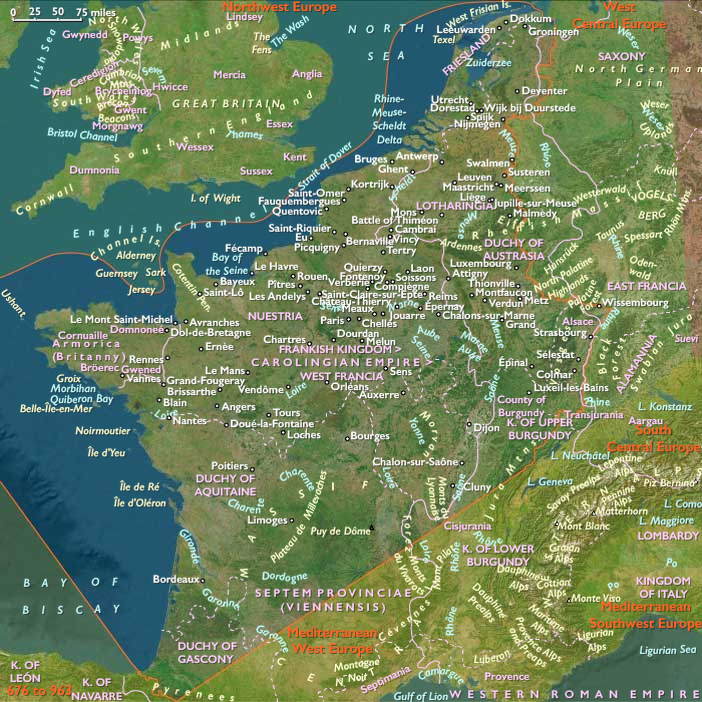
Danish Vikings Establish Beachheads in Frisia (834):…
834 CE
Danish Vikings Establish Beachheads in Frisia (834): The Beginning of Large-Scale Norse Raids
In 834, Danish Viking raiders make their first recorded appearance in Frisia, particularly targeting Dorestad, a wealthy Carolingian trading hub. This marks the beginning of a sustained Norse presence in the weakened Frankish Empire, as Vikings exploit political instability to establish beachheads along the North Sea coast.
Why Frisia and Dorestad?
- Dorestad is one of the most prosperous trade centers in the Carolingian world, making it a prime target for plunder.
- The Frankish kingdom, weakened by dynastic conflicts following the deposition and restoration of Louis the Pious (833–834), is less capable of mounting a defense.
- The Frisian coastline, with its inlets and riverways, provides ideal Viking landing sites for raids and eventual settlement.
Viking Strategy: From Raiding to Occupation
- The Vikings initially raid and withdraw, seizing silver, goods, and captives for ransom or sale.
- Over time, they begin to overwinter in Frisia, establishing semi-permanent bases from which to launch further inland incursions.
- The Franks, unable to consistently defend their coastlines, resort to paying tribute (Danegeld) or granting land in exchange for Viking loyalty—a tactic that will later be repeated in England and Normandy.
Impact on the Frankish Empire
- The Norse raids destabilize Frankish trade, leading to the decline of Dorestad as a commercial center.
- Viking incursions contribute to the weakening of Carolingian authority, particularly in Frisia and Lower Lotharingia.
- The Norse presence in Frisia paves the way for later Viking-controlled territories, culminating in figures like Rorik of Dorestad (850s), who will rule Frisia as a Frankish vassal.
The Start of a Century-Long Conflict
The 834 raids on Frisia mark the beginning of nearly a century of Viking attacks on the Carolingian Empire, culminating in:
- The sacking of Paris (845, 885–886).
- Further incursions along the Rhine, Loire, and Seine Rivers.
- The eventual integration of Viking leaders into Frankish nobility, as seen in the granting of Normandy to Rollo in 911.
The Viking incursions into Frisia and Dorestad in 834 represent a turning point in Norse expansion, as they transition from raiders to rulers, exploiting the Carolingian Empire’s fragmentation to establish their first permanent footholds in Western Europe.
Locations
Groups
Commodities
Subjects
Regions
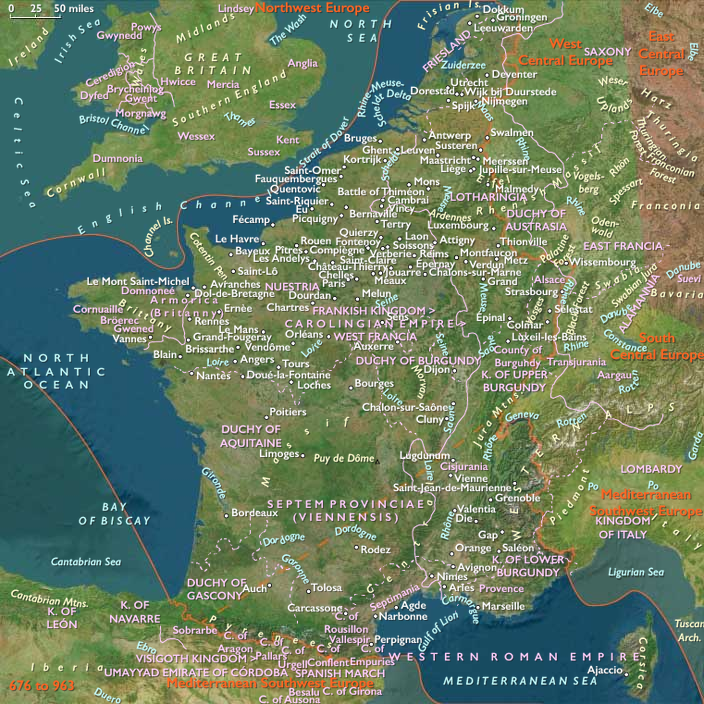
West Europe
View →Subregions