Thomas Aquinas and His Views on Jewish…
1271 CE
Thomas Aquinas and His Views on Jewish Servitude (1270–1271)
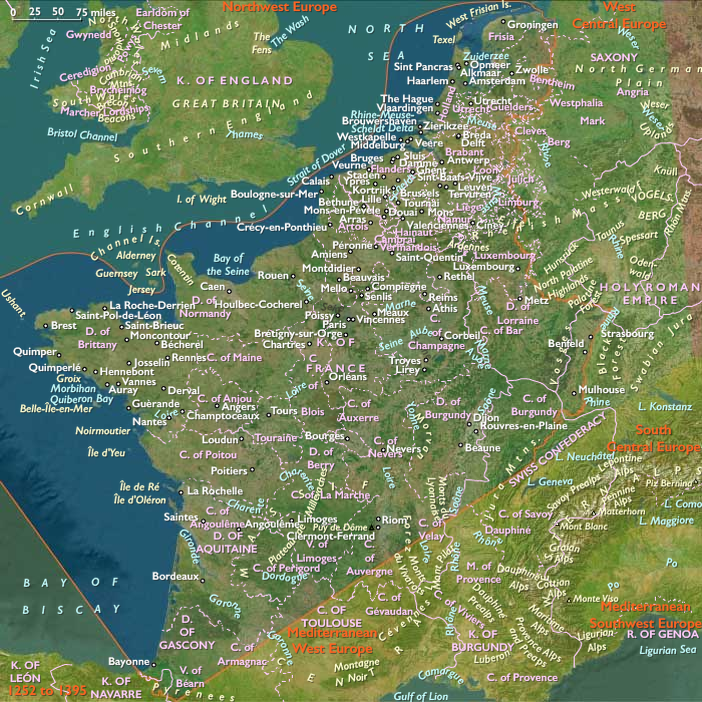
In his treatise De regimine Judaeorum ad Ducissam Brabantiae (On the Governance of the Jews, to the Duchess of Brabant), written circa 1270–1271, Thomas Aquinas, the leading Scholastic theologian of his age, expressed the view that Jews should be held in perpetual servitude due to their perceived role in the crucifixion of Jesus.
Context and Interpretation of Aquinas’s Position
- Aquinas’s stance reflected long-standing medieval Christian beliefs, which held that Jews should live in a state of subjugation as a form of divine punishment.
- He argued that historical custom justified Jewish servitude, in line with the broader Augustinian doctrine of Jewish marginalization, which maintained that Jews should be tolerated but subordinated within Christian society.
- While not advocating for their extermination or forced conversion, Aquinas upheld the prevailing feudal and theological framework, which justified restricting Jewish economic and social freedoms.
Impact and Influence
- Aquinas’s views contributed to the intellectual and theological justification for Jewish restrictions in medieval Christian Europe, reinforcing policies of segregation, taxation, and legal discrimination.
- His perspective was aligned with papal and royal decrees of the time, such as Louis IX’s 1269 decree requiring Jews to wear a yellow badge and earlier papal mandates restricting Jewish economic activity.
- Although later Christian thinkers would challenge such perspectives, Aquinas’s work remained influential in shaping medieval Church attitudes toward Jewish communities.
Historical Legacy
Aquinas’s position in De regimine Judaeorum reflects the broader institutionalized anti-Judaism of medieval Europe, where theological arguments were often used to justify legal and social restrictions. His writings on Jews, while less extreme than those of some contemporaries, nonetheless reinforced the subordinate status of Jewish communities in Christendom.
Locations
People
Subjects
Regions
West Europe
View →Subregions