Drusus, despite a violent temper, shows promise …
Years: 13 - 13
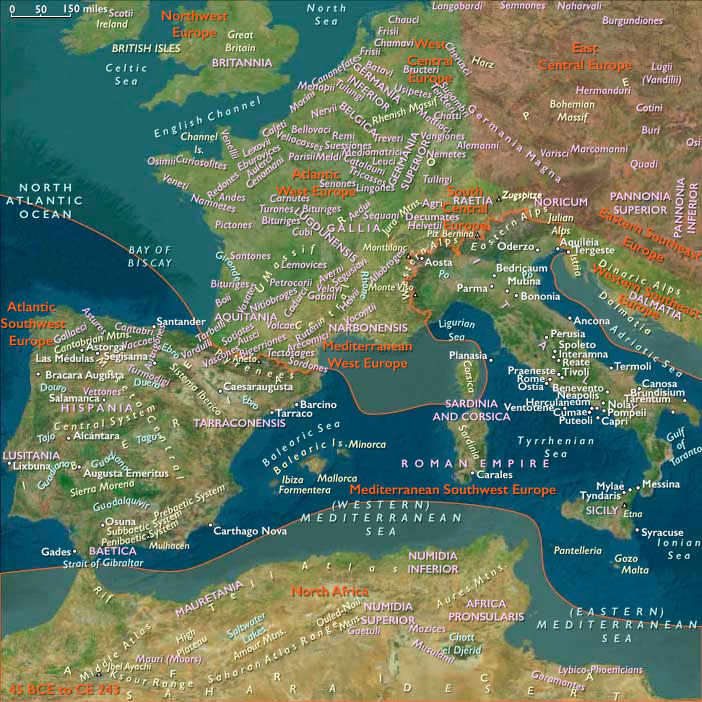
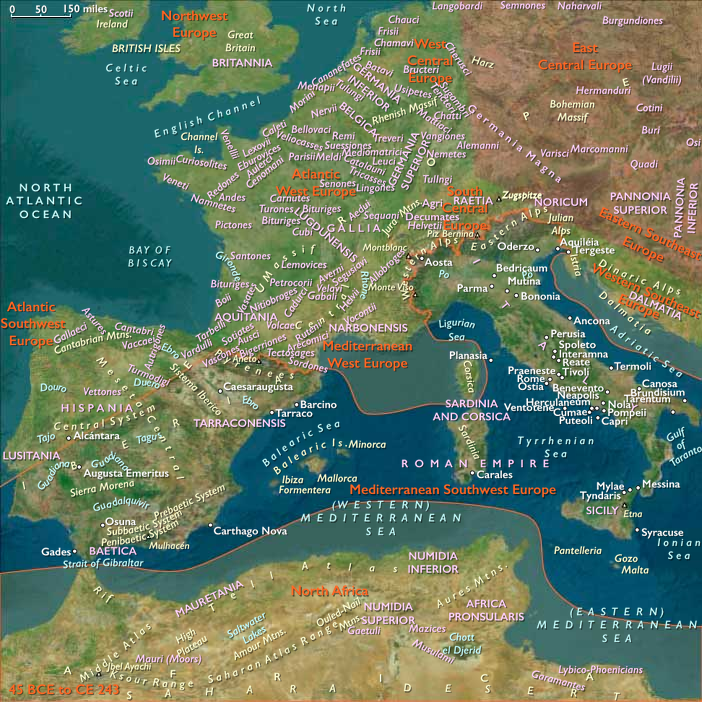
Drusus, despite a violent temper, shows promise with both military and politics.
In 13 CE, he is made a permanent member of the Senate committee Augustus has founded to draw up the Senate's daily business.
Germanicus, who had become consul to Emperor Augustus in 12 BCE, is in 13 given command of twelve legions in Germany and Gaul.
Locations
People
Groups
Topics
Commodoties
Subjects
Regions
Subregions
Related Events
Filter results
Showing 6 events out of 6 total
Upper South Asia (1948–1959 CE): Consolidation, Conflict, and New Beginnings
Post-Independence Challenges and Nation-Building
From 1948 to 1959 CE, Upper South Asia experienced profound geopolitical and social realignments as the newly formed nations of India and Pakistan grappled with internal consolidation and external tensions following the Partition of 1947. Bangladesh, still East Pakistan, faced unique challenges related to cultural identity and geographic isolation from West Pakistan.
Indo-Pakistani Relations: Early Conflicts and Kashmir Dispute
The first decade following independence was dominated by tensions over Jammu and Kashmir, resulting from its disputed accession to India. The First Indo-Pakistani War (1947–1948) concluded with a United Nations-mediated ceasefire in 1949, establishing the Line of Control (LoC) that divided Kashmir between Pakistani- and Indian-administered regions. Pakistan administered Azad Kashmir and Gilgit-Baltistan, while India retained control over Jammu, Kashmir Valley, and Ladakh. Despite the ceasefire, Kashmir remained a volatile point of contention.
Political and Economic Consolidation in India
Under Prime Minister Jawaharlal Nehru, India pursued democratic governance and secular policies, laying a solid foundation for parliamentary democracy. The Indian Constitution, adopted on January 26, 1950, established India as a federal republic committed to democratic values, secularism, and social equality. The nation embarked on ambitious economic and industrial initiatives under its first Five-Year Plan (1951–1956), focusing on agricultural improvements, industrialization, and infrastructure development.
Political Dynamics and Military Influence in Pakistan
In contrast, Pakistan confronted significant internal political instability and identity challenges. The death of its founder, Muhammad Ali Jinnah, in 1948 and assassination of Prime Minister Liaquat Ali Khan in 1951 intensified political uncertainty. Debates over the role of Islam, language, and federalism strained relations between West Pakistan and East Pakistan, exacerbating regional grievances. Military influence progressively increased, culminating in 1958, when General Ayub Khan declared martial law, establishing Pakistan’s first military dictatorship.
Afghanistan: Stability, Neutrality, and Development
Afghanistan remained under the relatively stable rule of King Mohammed Zahir Shah (1933–1973), who emphasized neutrality during Cold War geopolitics. The country sought economic and technical aid from both Soviet and Western powers without aligning explicitly. Infrastructure projects expanded, notably with Soviet support, including road construction and modernization initiatives. Afghanistan’s modernization was cautious yet steady, although ethnic tensions, especially involving Pashtun dominance over minorities like the Hazara, persisted.
Himalayan Region: Transformations in Nepal and Bhutan
In Nepal, popular dissatisfaction with the autocratic Rana regime led to significant political transformations. The Nepalese Revolution of 1951, supported by India, abolished the Rana dynasty’s rule and reestablished the monarchy’s power under King Tribhuvan Bir Bikram Shah, who sought to initiate democratic governance. Nepal began its slow journey toward modernization and political pluralism, introducing limited constitutional frameworks and parliamentary reforms.
Bhutan maintained internal stability under King Jigme Dorji Wangchuck (r. 1952–1972), who introduced cautious modernization. Bhutan established formal diplomatic ties with independent India, affirming its national sovereignty and independence, while progressively opening up to limited external influences, particularly Indian assistance in development projects, notably infrastructure and education.
Ethnic and Regional Tensions: Pashtuns, Baloch, and Bengalis
In Pakistan, ethnic and regional tensions intensified. The Pashtuns in the North-West Frontier Province (now Khyber Pakhtunkhwa) sought greater autonomy, and the Baloch people in Balochistan began expressing grievances against central authority. In East Pakistan, the Bengali language movement (1952) challenged the imposition of Urdu as the sole national language, setting the stage for future conflicts culminating in the independence of Bangladesh in 1971.
Socioeconomic and Cultural Developments
Across Northern South Asia, cultural and social developments flourished amid political turmoil. In India, institutions like the Indian Institutes of Technology (IITs) were established (starting in 1951 at Kharagpur), fostering technical expertise and innovation. Pakistan emphasized the development of higher education and scientific research, notably establishing the Pakistan Atomic Energy Commission (PAEC) in 1956.
Culturally, literary and cinematic industries blossomed, reflecting contemporary concerns. In India, the Hindi film industry (Bollywood) and regional cinemas expanded dramatically, becoming integral to the cultural fabric. Similarly, in Pakistan, Urdu-language cinema and poetry remained vibrant, with poets such as Faiz Ahmed Faiz reflecting on national identity and societal challenges.
Legacy of the Era
The period from 1948 to 1959 CE set critical political, economic, and cultural foundations for the contemporary nations of Upper South Asia. While India solidified its democratic and secular identity, Pakistan grappled with political instability leading to military rule. Afghanistan navigated Cold War neutrality amid cautious modernization, and Nepal and Bhutan initiated significant political transformations. Regional tensions and unresolved territorial disputes—particularly over Kashmir—continued shaping geopolitical realities for decades to come.
Upper South Asia (1960–1971 CE): Wars, Division, and National Transformations
India: Democracy and Development
From 1960 to 1971, India continued strengthening its democratic institutions under Prime Ministers Jawaharlal Nehru (until his death in 1964), Lal Bahadur Shastri (1964–1966), and Indira Gandhi (1966–1977). Economic and agricultural reforms, particularly the Green Revolution, significantly boosted food production, addressing chronic shortages and reducing dependence on imports.
Indira Gandhi consolidated power and pursued assertive domestic and foreign policies, notably nationalizing banks and abolishing princely privileges, reinforcing a strong centralized state.
Indo-Pakistani Wars and Continued Kashmir Conflict
The longstanding dispute over Jammu and Kashmir erupted into conflict again during the Indo-Pakistani War of 1965, sparked by Pakistani attempts to ignite an insurgency in Kashmir (Operation Gibraltar). Intense fighting spread along international borders, notably in Punjab, Kashmir, and Rajasthan. The war concluded with a ceasefire brokered by the Soviet Union at the Tashkent Declaration (1966), restoring pre-war boundaries without resolving underlying disputes.
Pakistan: Political Instability and Military Rule
General Muhammad Ayub Khan’s regime (1958–1969) attempted modernization through centralized economic policies, industrialization, and infrastructure projects, especially around Karachi, Lahore, and Rawalpindi. However, growing regional disparities between East and West Pakistan, coupled with limited political freedoms, intensified resentment.
In 1969, Ayub Khan resigned amid widespread protests. General Yahya Khan assumed power, promising democratic reforms and free elections, held in 1970. These elections amplified divisions, as the Awami League, led by Sheikh Mujibur Rahman, swept East Pakistan, while the Pakistan Peoples Party (PPP), led by Zulfikar Ali Bhutto, dominated in West Pakistan. The military's refusal to transfer power to Mujibur Rahman led to a catastrophic crisis.
Bangladesh Liberation War (1971): Birth of Bangladesh
In 1971, the political stalemate escalated into civil war and genocide when the Pakistani military launched Operation Searchlight (March 25, 1971), violently suppressing Bengali political and cultural activists in East Pakistan. Millions fled into neighboring India, creating a humanitarian crisis.
India intervened militarily in December 1971, swiftly defeating Pakistani forces in the Indo-Pakistani War of 1971. On December 16, 1971, Pakistan surrendered in Dhaka, leading to the creation of an independent Bangladesh. Sheikh Mujibur Rahman returned from imprisonment in Pakistan to become Bangladesh’s first Prime Minister, while Zulfikar Ali Bhutto assumed leadership in Pakistan after the fall of Yahya Khan’s regime.
Afghanistan: Stability Amid Internal Struggles
Afghanistan, under King Mohammed Zahir Shah (1933–1973), maintained a cautious policy of neutrality. Economic and infrastructural projects continued, particularly with Soviet and American aid, but ethnic divisions remained challenging, especially regarding minority groups like the Hazara, who continued facing marginalization under Pashtun-dominated governance. Kabul remained a cultural hub, reflecting tensions between modernization and conservative traditionalism.
Nepal: Monarchy and Democratic Challenges
In Nepal, King Mahendra Bir Bikram Shah (r. 1955–1972) dismissed the elected government in 1960 and established the Panchayat System, an autocratic governance structure emphasizing direct royal control. Although modernization continued through foreign aid and infrastructure projects, political freedoms were severely curtailed, laying seeds for future democratic movements.
Bhutan: Gradual Modernization and International Engagement
In Bhutan, King Jigme Dorji Wangchuck (r. 1952–1972) guided cautious modernization. Infrastructure development and educational reform expanded, notably through assistance from India. Bhutan maintained its independence by signing formal agreements, such as the 1960 Treaty of Friendship with India, ensuring Bhutanese sovereignty alongside robust economic cooperation.
Cultural Developments and Regional Identities
Cultural expression flourished, reflecting rapid changes and political upheavals. In India, cinema continued its ascendancy with notable filmmakers like Satyajit Ray, whose work received international acclaim. Urdu and Bengali literature thrived in Pakistan and Bangladesh, capturing the social and political turmoil. Afghanistan continued its literary and artistic traditions, albeit under increasingly complex political dynamics.
Ethnic and Regional Dynamics
Ethnic nationalism intensified throughout the region. In Pakistan, the suppression of Bengali identity and language provoked violent resistance and ultimately national independence. Meanwhile, Pashtun and Baloch nationalist movements sought greater autonomy, creating persistent domestic instability.
Legacy of the Age
The period from 1960 to 1971 was transformative, reshaping Upper South Asia profoundly. India's democratic resilience contrasted sharply with Pakistan's political fragmentation. The emergence of Bangladesh significantly altered regional geopolitics. Afghanistan maintained relative stability but faced internal tensions. Nepal and Bhutan navigated carefully between tradition and modernization. The events of this era continue shaping contemporary regional dynamics, identities, and international relations.

In 1960, the elected members of the union councils vote to confirm Ayub Khan's presidency.
The ban on political parties is operational at the time of the first elections to the National Assembly and provincial legislative assemblies in January 1960, as is the prohibition on “EBDO” politicians.
Many of those elected are new and merge into factions whose bases are personal or provincial loyalties.
Despite the ban, political parties function outside the legislative bodies as vehicles of criticism and formers of opinion.
The Basic Democrats are at once asked to endorse Ayub's presidency and to give him a mandate to frame a constitution.
Of the 80,000 Basic Democrats, 75,283 affirm their support for Ayub in a referendum in February 1960.
Later that month, an eleven-member constitutional commission was established to advise on a suitable form of government.
The commission's recommendations for direct elections, strong legislative and judicial organs, free political parties, and defined limitations on presidential authority go against Ayub Khan's philosophy of government, so he orders other committees to make revisions.
Ayub accepts some of the proposals and substitutes some of his own, aiming, he says, for “a blending of democracy with discipline.” The Press and Publications Ordinance is amended in 1960 to specify broad conditions under which newspapers and other publications can be commandeered or closed down.
Trade organizations, unions, and student groups are closely monitored and cautioned to avoid political activity, and imams at mosques are warned against including political matters in sermons.
Other than ideology and Kashmir, the main source of friction between Pakistan and India is the distribution of the waters of the Indus River system.
As the upper riparian power, India controls the headworks of the pre-partition irrigation canals.
After independence India had, in addition, constructed several multipurpose projects on the eastern tributaries of the Indus.
Pakistan fears that India might repeat the 1948 incident that curtailed the water supply as a means of coercion.
A compromise that appeared to meet the needs of both countries was reached during the 1950s; it is not until 1960 that a solution finally finds favor with Ayub Khan and Jawaharlal Nehru.
The World Bank and the United States back the Indus Waters Treaty of 1960.
Broadly speaking, the agreement allocates use of the three western Indus rivers (the Indus itself and its tributaries, the Jhelum and the Chenab) to Pakistan and the three eastern Indus tributaries (the Ravi, Beas, and Sutlej) to India.
The basis of the plan is that irrigation canals in Pakistan that have been supplied by the eastern rivers will begin to draw water from the western Indus rivers through a system of barrages and link canals.
The agreement also details transitional arrangements, new irrigation and hydroelectric power works, and the waterlogging and salinity problems in Pakistan's Punjab.
The Indus Basin Development Fund is established and financed by the World Bank, the major contributors to the Aid-to-Pakistan Consortium, and India.
Ayub Khan seeks to retain certain aspects of his dominant authority in a new constitution, promulgated in 1962, which ends 44 months of martial law.
Under the newly created presidential system, the traditional powers of the chief executive are augmented by control of the legislature, the power to issue ordinances, the right of appeal to referendum, protection from impeachment, control over the budget, and special emergency powers, which include the power to suspend civil rights.
The document also provides for the election of the president and national and provincial assemblies by an electoral college composed of members of local councils.
Although a federal form of government is retained, the assemblies have little power, which is, in effect, centralized through the authority of governors acting under the president.
The 1962 constitution relaxes martial law limitations on personal freedom and makes fundamental rights justiciable.
The courts continue their traditional function of protecting the rights of individual citizens against encroachment by the government, but the government makes it clear that the exercise of claims based on fundamental rights will not be permitted to nullify its previous progressive legislation on land reforms and family laws.
The 1956 constitution had prescribed the use of English for official purposes for 20 years; the 1962 constitution makes the period indefinite.
The 1962 constitution retains some aspects of the Islamic nature of the republic but omits the word Islamic in its original version; amid protests, Ayub Khan adds that word later.
The president will be a Muslim, and the Advisory Council of Islamic Ideology and the Islamic Research Institute are established to assist the government in reconciling all legislation with the tenets of the Quran and the sunna.
Their functions are advisory and their members appointed by the president, so the ulama has no real power base.
The Muslim League, which had spearheaded the Pakistan movement under Mohammed Ali Jinnah, splinters into two parts, the Pakistan Muslim League and the Council Muslim League.
An entente between Pakistan and China evolves in inverse ratio to Sino-Indian hostility, which climaxes in a Chinese incursion into Ladakh in October 1962.
Following the Chinese assault, a series of conferences on Kashmir is held between India and Pakistan, beginning in December.
In late 1962, political parties are again legalized and factions crystallize into government and opposition groups.
Ayub Khan combines fragments of the old Muslim League and creates the Pakistan Muslim League (PML) as the official government party.
The September cease-fire in Kashmir is followed by an agreement signed by India and Pakistan at Tashkent (Uzbekistan) in early January 1966, in which they resolve to try to end the dispute by peaceful means.
The Tashkent Declaration sponsored by the USSSR and signed by Ayub Khan and India's prime minister Lal Bahadur Shastri formally ends hostilities and calls for a mutual withdrawal of forces.
Despite the accord, however, the basic dispute over Kashmir remains unsettled.
In February, a national conference is held in Lahore, where all the opposition parties convene to discuss their differences and their common interests.
The central issue discussed is the Tashkent Declaration, which most of the assembled politicians characterize as Ayub Khan's unnecessary capitulation to India.
More significant, perhaps, is the noticeable underrepresentation of politicians from the East Wing.
About 700 persons attend the conference, but only twenty-one are from the East Wing.
Their leader, Sheikh Mujibur Rahman (known as Mujib) of the Awami League, presents his controversial six-point political and economic program for East Pakistani provincial autonomy.
The six points consist of the following demands: that the government be federal and parliamentary in nature, its members elected by universal adult suffrage with legislative representation on the basis of distribution of population; that the federal government have principal responsibility for foreign affairs and defense only; that each wing have its own currency and separate fiscal accounts; that taxation occur at the provincial level, with a federal government funded by constitutionally guaranteed grants; that each federal unit control its own earnings of foreign exchange; and that each unit raise its own militia or paramilitary forces.