Event
East Asia (964–1107 CE): Song Transformation, Liao…
East Asia (964–1107 CE): Song Transformation, Liao Ascendancy, and the Buddhist Revival
Geographic and Environmental Context
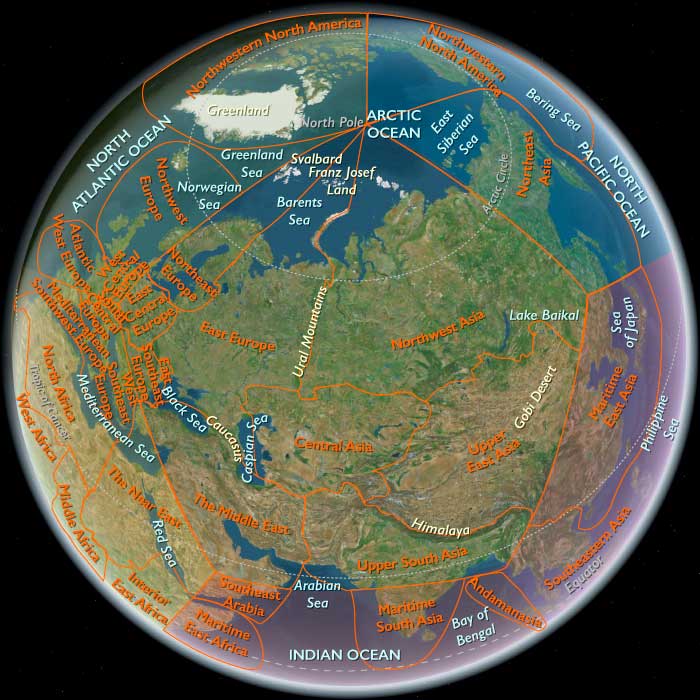
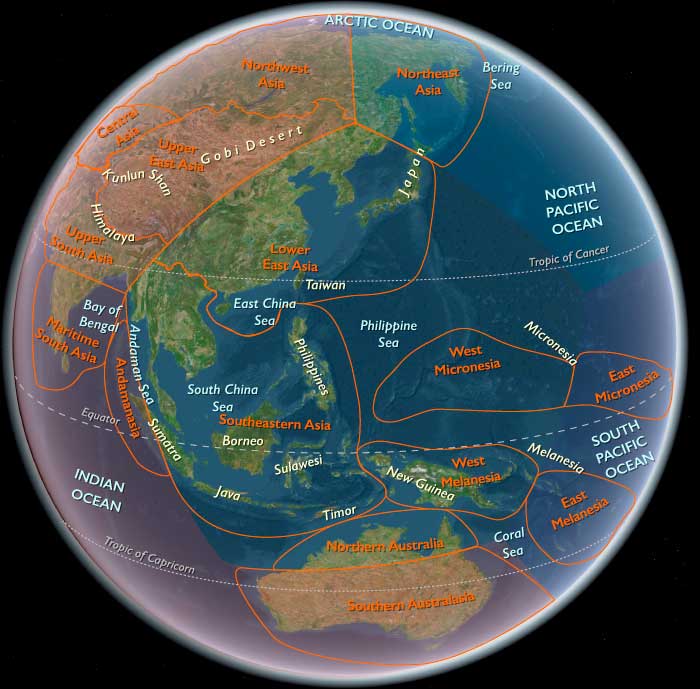
East Asia between 964 and 1107 CE extended from the monsoon coasts and river basins of China, Korea, Japan, and Taiwan to the grasslands, deserts, mountain corridors, and high plateaus of Mongolia, Xinjiang, Gansu, Qinghai, and Tibet.
It divided naturally into two great zones:
- Maritime East Asia, encompassing eastern and southern China, Korea, Japan, Taiwan, and the adjacent seas, where irrigated agriculture, urban markets, and maritime commerce expanded rapidly.
- Upper East Asia, including Tibet, Mongolia, Xinjiang, Qinghai, Gansu, Ningxia, and the western and northern highlands of China, where pastoral mobility, oasis irrigation, caravan exchange, and monastic networks shaped life.
The age witnessed the reunification of most of China under the Song Dynasty, the consolidation of the Khitan Liao Empire, the emergence of the Tangut Western Xia, the stabilization of Goryeo Korea, the height of Fujiwara influence in Heian Japan, and the renewal of Buddhist institutions across Tibet and the Silk Road.
Climate and Environmental Shifts
The Medieval Warm Period brought generally favorable conditions to much of East Asia, though floods, droughts, severe winters, and storms remained disruptive:
- In southern China, warm monsoon conditions supported intensified rice agriculture across the Yangtze basin, Sichuan, Fujian, and Guangdong.
- The Yellow River basin remained vulnerable to flooding, sediment accumulation, and shifting channels.
- Korea and Japan experienced productive growing seasons interrupted by typhoons, droughts, floods, and localized famine.
- The Tibetan Plateau remained cold and arid, but sheltered valleys supported barley cultivation, yak herding, and expanding monastic settlements.
- Mongolia’s grasslands sustained large herds of horses, sheep, goats, cattle, and camels, though drought and severe winters periodically caused migration and conflict.
- Tarim Basin oases depended upon rivers, wells, canals, and underground irrigation systems fed by mountain snowmelt.
Environmental diversity encouraged specialization and exchange among rice-growing plains, fishing coasts, pastoral steppes, mountain valleys, and irrigated oasis settlements.
Societies and Political Developments
Maritime East Asia: Song Reunification and Commercial Transformation
- China (Song, 960–1279): The Northern Song reunited most of China after the Five Dynasties and Ten Kingdoms period, completing the conquest of the principal southern states by 979.
- Song rulers reduced the independence of provincial military governors, expanded civilian administration, strengthened the examination system, and concentrated taxation and military authority under the court.
- The dynasty did not recover the Sixteen Prefectures around modern Beijing, which remained under Khitan Liao control.
- The Chanyuan settlement of 1005 stabilized relations between Song and Liao through diplomacy and annual Song payments of silk and silver.
- Repeated warfare with the Tangut Western Xia produced fortified frontiers and negotiated settlements rather than complete Song expansion.
- Southern China, the Yangtze delta, and the Sichuan Basin became increasingly important centers of rice production, manufacturing, urban life, and commerce.
- Dali Kingdom (937–1253): Yunnan remained independent of the Song.
- The Dali kings governed productive valleys and upland trade routes connecting China, Tibet, and mainland Southeast Asia.
- Buddhism supported royal legitimacy, monasteries, scholarship, and artistic patronage.
- Horse breeding, salt, agriculture, and caravan exchange sustained the kingdom’s economy.
- Korea (Goryeo, 918–1392): Goryeo consolidated royal authority while aristocratic families and Buddhist monasteries retained extensive land and influence.
- Khitan Liao forces invaded in 993, 1010, and 1018–1019.
- Goryeo survived through military resistance, diplomacy, fortified northern defenses, and negotiated accommodation.
- After the wars, the kingdom entered a period of comparative stability and maintained diplomatic and commercial relations with both Song China and the Liao.
- Buddhism became central to royal legitimacy, education, printing, artistic patronage, and social welfare.
- Japan (Heian, 794–1185): The Fujiwara clan reached the height of its influence through marriage alliances with the imperial family and control of the regency.
- Heian-kyō remained the center of aristocratic literature, poetry, ritual, painting, and court ceremony.
- Works such as The Tale of Genji and The Pillow Book reflected the cultivated world of the court.
- Private estates, or shōen, expanded under court families, temples, shrines, provincial officials, and local landholders.
- Provincial warriors, including emerging Minamoto and Taira lineages, gained influence as estate protectors, tax enforcers, and military intermediaries.
- Retired-emperor government began under Emperor Shirakawa in 1086, creating an additional center of political authority.
- Taiwan: Austronesian-speaking communities remained organized through villages, kin groups, and local alliances rather than centralized states.
- Communities practiced millet and root-crop horticulture, hunting, river gathering, coastal fishing, and shellfish collection.
- Seasonal exchange linked parts of Taiwan with Fujian, the Ryukyus, and the northern Philippines.
Upper East Asia: Liao Dominion, Tangut Statehood, and Tibetan Renewal
- Khitan Liao Dynasty (907–1125): The Liao ruled a broad realm extending across Manchuria, eastern Mongolia, Inner Mongolia, and parts of northern China.
- Khitan rulers governed pastoral and agricultural populations through parallel administrative systems.
- They preserved steppe political traditions while adopting Chinese forms of taxation, writing, urban government, and court ritual.
- Liao power rested upon cavalry, livestock, agricultural revenues, tribute, frontier markets, and control of routes linking China, Korea, Mongolia, and Central Asia.
- Mongolia and the Northern Steppes: Turkic and Mongolic peoples lived in shifting confederations beyond or within the wider Liao sphere.
- Pastoral communities moved seasonally with horses, sheep, goats, cattle, and camels.
- Trade, tribute, intermarriage, raiding, and military service linked them to the Liao, Western Xia, Central Asian states, and Chinese frontier markets.
- No single Mongolian empire yet dominated the steppe; authority remained distributed among regional and tribal leaders.
- Western Xia (1038–1227): The Tanguts established an independent state across Ningxia, Gansu, the Ordos region, and the eastern approaches to the Hexi Corridor.
- Western Xia blended Tangut, Tibetan, Chinese, and steppe institutions.
- Its rulers created a distinctive script, patronized Buddhism, supported irrigation, and developed fortified cities along caravan routes.
- Repeated warfare with the Song ended in negotiated settlements and tribute arrangements rather than conquest.
- Tibet: The Tibetan Plateau remained politically fragmented among regional rulers, aristocratic houses, monasteries, and fortified valley communities.
- The western Tibetan kingdoms of Guge and Purang sponsored Buddhist translation, temple construction, and renewed contact with Kashmir and northern India.
- The Indian teacher Atiśa arrived in western Tibet in 1042 and helped strengthen the Later Diffusion of Buddhism.
- The Kadam tradition emerged during the eleventh century, emphasizing disciplined monasticism, ethical instruction, and scholarship.
- Central and eastern Tibet remained politically divided, but monasteries increasingly linked communities through pilgrimage, teaching, landholding, and trade.
- Xinjiang and the Tarim Basin: The oasis world remained divided among Buddhist and Islamic states.
- The Uyghur Kingdom of Qocho controlled Turfan and neighboring oases, sustaining Buddhist monasteries, manuscript production, irrigated agriculture, and caravan commerce.
- The Muslim Kara-Khanids expanded into the western and southern Tarim Basin and conquered the Buddhist kingdom of Khotan around the beginning of the eleventh century.
- Islam spread through court patronage, trade, scholarship, and gradual conversion, while Buddhist, Manichaean, and Christian communities persisted elsewhere.
- Dunhuang and sections of the Hexi Corridor passed under Tangut influence during the eleventh century.
Economy and Trade
- Agrarian transformation: Early-ripening rice, improved irrigation, embankments, fertilizers, and intensified cultivation increased production in southern China.
- Song markets: Rural market towns, commercial cities, workshops, transport depots, and merchant associations linked village producers to regional and imperial exchange.
- Money and finance: Copper coinage circulated widely, while merchants in Sichuan developed paper instruments that contributed to the emergence of government-issued paper money.
- Korean production: Goryeo villages produced rice, barley, millet, fish, salt, textiles, and metal goods; celadon manufacture began developing toward its later technical refinement.
- Japanese estates: Shōen landscapes combined rice paddies, dry fields, forests, fisheries, salt works, workshops, and village labor.
- Maritime commerce: Chinese vessels carried ceramics, silk, tea, metal goods, paper, and coins toward Korea, Japan, Southeast Asia, and the Indian Ocean.
- Pastoral economies: Horses, sheep, goats, cattle, yaks, and camels supported the Liao realm, Mongolian grasslands, Tibet, and the Tangut frontier.
- Oasis economies: Turfan, Khotan, Kashgar, and other oasis settlements produced wheat, barley, grapes, melons, cotton, wine, textiles, and crafted goods through maintained irrigation systems.
- Overland exchange: Silk, tea, ceramics, paper, and metal goods moved westward, while horses, jade, wool, livestock, medicines, glassware, and Central Asian commodities moved eastward.
Political rivalry did not prevent commerce. Song, Liao, Western Xia, Goryeo, Dali, Tibetan rulers, and oasis states all sought revenue from markets, tribute, and long-distance exchange.
Subsistence and Technology
- Wet-rice agriculture expanded through the Yangtze basin, Sichuan, southern China, Korea, and suitable Japanese plains.
- Wheat, millet, barley, sorghum, beans, and dry-field crops remained important in northern China, Korea, upland Japan, Gansu, and Ningxia.
- Tibetan communities combined barley cultivation with yak, sheep, and goat herding.
- Steppe peoples maintained seasonal migration and diversified herds to survive drought and severe winters.
- Oasis farmers relied on river channels, wells, and underground irrigation systems to sustain cultivation along desert margins.
- Woodblock printing expanded the circulation of Buddhist scriptures, Confucian classics, calendars, dictionaries, and administrative texts.
- Bi Sheng experimented with movable type in the eleventh century, although woodblock printing remained more widespread.
- Gunpowder formulas, fire arrows, incendiaries, and early explosive devices developed within Song military practice.
- Iron production, water-powered machinery, ceramics, textiles, and paper manufacture expanded in specialized districts.
- Chinese shipbuilders refined watertight compartments, sternpost rudders, multiple sails, and large riverine and maritime hulls.
- Knowledge of magnetic direction advanced; Shen Kuo described the magnetized needle in the late eleventh century.
- Liao and steppe armies relied upon composite bows, cavalry mobility, remount networks, armor, and coordinated mounted warfare.
Technological vitality emerged from households, workshops, monasteries, courts, military institutions, and merchant communities rather than from a single imperial center.
Movement and Interaction Corridors
- Grand Canal and River Routes: The Grand Canal, Yangtze, Yellow River tributaries, and Sichuan waterways carried grain, officials, soldiers, taxes, and commercial goods across Song territory.
- Maritime Routes: Chinese, Korean, Japanese, Southeast Asian, Arab, and Persian merchants moved through the East China Sea, South China Sea, and Indian Ocean circuits.
- Korea–China Corridors: Goryeo embassies and merchants traveled to Song and Liao courts, while frontier markets connected Korea with Manchuria and northern China.
- Japanese Sea-Lanes: Private merchants, monks, and regional intermediaries linked western Japan with Korea and Song ports despite the absence of regular state embassies.
- Taiwan Strait and Island Routes: Austronesian seafarers, Fujian traders, fishers, and island communities maintained decentralized movement between Taiwan, the Ryukyus, and Luzon.
- Steppe Roads: Liao-controlled routes connected Mongolia and Manchuria with northern China, Korea, and Central Asian exchange systems.
- Hexi Corridor: Western Xia controlled the principal passage between northern China and the Tarim Basin, collecting revenue and regulating diplomatic and caravan traffic.
- Silk Road Oases: Routes through Turfan, Khotan, Kashgar, and Dunhuang linked Buddhist and Islamic communities with China and Central Asia.
- Tibetan Passes: Monks, pilgrims, translators, merchants, and artisans traveled between Tibet, Kashmir, Nepal, northern India, western China, and the Tarim Basin.
These corridors drew the maritime and continental halves of East Asia into denser interaction without dissolving their political or environmental differences.
Belief and Symbolism
- Song China: Confucian statecraft gained renewed authority through education and examinations, while Buddhism, Daoism, ancestral rites, and local cults remained deeply embedded in community life.
- Intellectual renewal: Thinkers including Zhou Dunyi, Cheng Hao, and Cheng Yi developed ideas that later contributed to the mature Neo-Confucian synthesis.
- Goryeo: Buddhism supported royal legitimacy, monastic landholding, ritual protection, printing, art, and pilgrimage.
- Japan: Esoteric Buddhism, Pure Land devotion, shrine worship, mountain asceticism, and aristocratic ritual coexisted. Anxiety about the decline of the Buddhist law encouraged new devotional movements.
- Tibet: The Later Diffusion restored monastic ordination, translation, scholastic traditions, and pilgrimage links with India.
- Liao and Western Xia: Buddhism received strong dynastic patronage, while Confucian, Daoist, ancestral, and steppe traditions continued alongside it.
- Uyghur Oases: Buddhism remained powerful in Qocho, while Manichaean and Christian traditions persisted among some communities.
- Kara-Khanid Territories: Islam expanded through court patronage, mosques, scholarship, trade, and gradual conversion.
- Mongolian Steppes: Sky worship, shamanic mediation, ancestral traditions, and sacred landscapes remained central.
- Taiwan: Ancestor veneration, agricultural rites, hunting ceremonies, and relations with territorial and maritime spirits continued within diverse Austronesian societies.
Religious life crossed political borders. Monasteries, courts, caravan towns, shrines, sacred mountains, and household rites formed overlapping fields of belief.
Adaptation and Resilience
- Song China adapted to restricted northern frontiers by strengthening administration, markets, river transport, southern agriculture, and maritime commerce.
- The Liao maintained power by governing pastoral and agrarian populations through different but coordinated institutions.
- Western Xia converted its position between steppe, plateau, oasis, and Chinese agrarian worlds into military and commercial strength.
- Goryeo survived repeated Khitan invasions through fortification, diplomacy, military resistance, and negotiated coexistence.
- Heian Japan absorbed political decentralization through estate institutions, temple networks, provincial administration, and the growing service of warrior households.
- Tibetan communities sustained continuity through agro-pastoral production, monastery building, translation networks, and regional patronage.
- Oasis societies maintained canals, wells, orchards, caravan facilities, and fortified settlements despite conquest and fluctuating water supplies.
- Steppe communities relied upon migration, herd diversity, kinship alliances, and trade to survive environmental volatility.
- Taiwanese Austronesian societies balanced horticulture, hunting, river use, fishing, and maritime exchange across varied ecological zones.
Long-Term Significance
By 1107 CE, East Asia had entered an age of durable multipolar order and accelerating integration:
- Song China had created a highly administered and increasingly commercial agrarian state, but remained territorially constrained by the Liao and Western Xia.
- The Khitan Liao had become a major imperial power linking the Chinese frontier with Mongolia, Manchuria, Korea, and the steppe.
- Western Xia controlled the Hexi approaches and developed a distinctive Tangut Buddhist state.
- Goryeo had survived the Khitan wars and consolidated a stable Buddhist monarchy.
- Heian Japan reached a cultural height while estate society and provincial warrior networks steadily expanded.
- Tibet’s political fragmentation coexisted with a powerful Buddhist revival that rebuilt monastic and trans-Himalayan connections.
- Uyghur Buddhist states and Muslim Kara-Khanid rulers transformed the religious and political geography of Xinjiang.
- Taiwan’s Austronesian communities maintained independent horticultural and maritime worlds within the wider western Pacific.
From Song river markets and Goryeo monasteries to Liao frontier courts, Tangut caravan gates, Tibetan translation centers, and Uyghur oasis towns, this was an age of coordination without unity. Maritime commerce, monastic networks, pastoral diplomacy, and regulated frontier exchange created the prosperous but contested East Asian world into which the Jurchen and Mongol powers would soon rise.
-
{# Image navigates to the detail page; the magnifying-glass chip is the only Fancybox lightbox trigger (kept a separate sibling — anchors can't nest). #}
 The Great Crossroads
World
-
{# Image navigates to the detail page; the magnifying-glass chip is the only Fancybox lightbox trigger (kept a separate sibling — anchors can't nest). #}
 The Far East
World
-
{# Image navigates to the detail page; the magnifying-glass chip is the only Fancybox lightbox trigger (kept a separate sibling — anchors can't nest). #}
 East Asia
Region
-
{# Image navigates to the detail page; the magnifying-glass chip is the only Fancybox lightbox trigger (kept a separate sibling — anchors can't nest). #}
 Maritime East Asia
Subregion
-
{# Image navigates to the detail page; the magnifying-glass chip is the only Fancybox lightbox trigger (kept a separate sibling — anchors can't nest). #}
 Upper East Asia
Subregion