
East Central Europe (45 BCE–99 CE): Roman …
Years: 45BCE - 99
East Central Europe (45 BCE–99 CE): Roman Expansion, Germanic Migrations, and Cultural Transitions
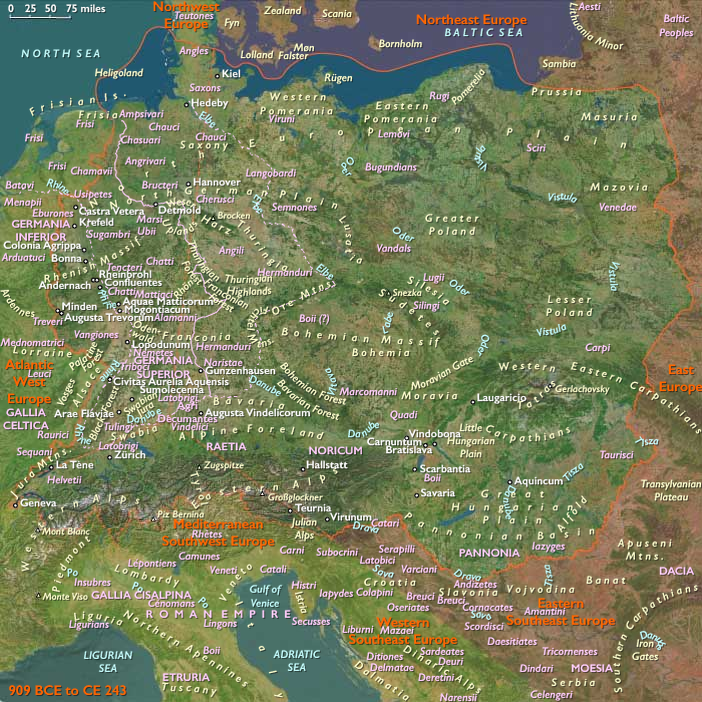
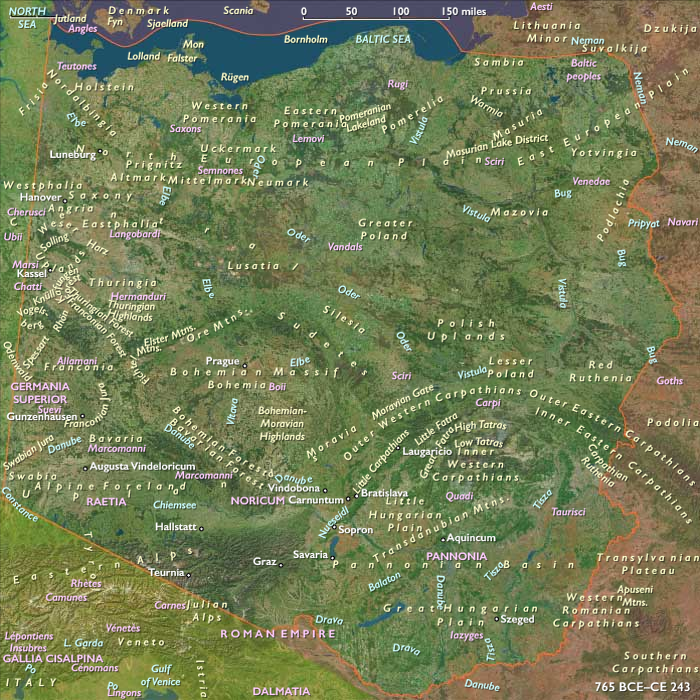
Between 45 BCE and 99 CE, East Central Europe—encompassing Poland, Czechia, Slovakia, Hungary, and those portions of Germany and Austria lying east of 10°E and north of a line stretching from roughly 48.2°N at 10°E southeastward to the Austro-Slovenian border near 46.7°N, 15.4°E—experienced significant shifts shaped by increased Roman political, economic, and cultural influence, alongside notable migrations of Germanic tribes. This age marked the final decline of the Celtic La Tène civilization and the emergence of new regional identities, profoundly altering East Central Europe's social, political, and economic dynamics.
Political and Military Developments
Expansion and Influence of the Roman Empire
The Roman Empire significantly expanded its influence into neighboring regions, profoundly impacting East Central Europe’s southern and western fringes:
-
Under emperors Augustus (27 BCE–14 CE) and subsequent Julio-Claudian rulers, the Roman Empire established the provinces of Noricum and Pannonia, directly influencing territories that now include eastern Austria and western Hungary.
-
Roman military presence and fortified frontier networks (limes) reshaped regional political alliances, trade routes, and security dynamics.
Decline and Fragmentation of Celtic Power
The remaining Celtic political structures, weakened by internal strife and external pressures, declined rapidly during this age:
-
Celtic oppida lost prominence as political and economic centers, as Roman influence reshaped regional trade patterns and political alliances.
-
Many Celtic communities were gradually integrated into Roman provincial frameworks or displaced by Germanic groups moving southward and westward.
Arrival and Settlement of Early Germanic Tribes
Early Germanic migrations brought new populations, significantly altering the region’s demographic and political landscape:
-
Germanic groups, including early tribes such as the Suebi, Marcomanni, and Quadi, settled widely across East Central Europe, establishing powerful tribal confederations.
-
These Germanic tribes interacted frequently—through both conflict and trade—with Roman territories, influencing regional political dynamics.
Economic and Technological Developments
Roman Economic Integration and Influence
East Central Europe became increasingly integrated into the Roman economic sphere:
-
Trade networks linking the region to the Roman Mediterranean intensified significantly, promoting exchanges of luxury items, agricultural products, metals, and pottery.
-
Roman coinage circulated more extensively, influencing local economies and facilitating broader monetization and trade standardization.
Technological Adaptations and Innovations
Iron metallurgy remained advanced and widespread, increasingly influenced by Roman techniques and innovations. Roman infrastructure, including roads, bridges, and fortifications, influenced settlement and trade patterns.
Cultural and Artistic Developments
Decline of La Tène and Rise of Roman Provincial Styles
The traditional La Tène Celtic artistic style declined, gradually replaced by Roman-influenced provincial art, architecture, and craftsmanship:
-
Roman-style ceramics, coinage, jewelry, and decorative arts became increasingly prevalent, reflecting cultural hybridization and integration into Roman cultural spheres.
Germanic Artistic and Cultural Influences
Germanic tribes introduced distinct cultural traditions and artistic styles, including new pottery forms, jewelry styles, weaponry, and burial customs. These Germanic elements combined with surviving Celtic and new Roman influences, creating diverse cultural landscapes.
Settlement and Urban Development
Decline of Celtic Oppida and Rise of Roman Frontier Settlements
Many Celtic oppida declined or disappeared, replaced by Roman provincial towns, military camps, and trade settlements along frontier zones. These Roman-influenced settlements featured planned layouts, fortifications, administrative buildings, and marketplaces.
Shifting Settlement Patterns under Germanic Influence
Germanic tribes introduced new settlement patterns, characterized by smaller-scale agricultural villages, dispersed rural communities, and temporary fortified sites, reflecting their semi-nomadic and agricultural lifestyles.
Social and Religious Developments
Romanization and Cultural Syncretism
Societies in border areas experienced significant Romanization, adopting Roman religious practices, administrative structures, and social customs. The cultural synthesis between Roman, Celtic, and Germanic traditions reshaped regional identities and belief systems.
Germanic Social Structures and Religious Beliefs
Germanic tribes maintained distinct social hierarchies based on warrior elites and kinship groups, alongside unique religious practices and rituals emphasizing sacred groves, nature worship, and ancestral traditions. These customs influenced the region’s cultural and social landscape.
Long-Term Consequences and Historical Significance
The age from 45 BCE to 99 CE marked critical transformations for East Central Europe, characterized by profound cultural, political, and economic shifts. Roman expansion significantly reshaped southern and western portions, integrating these territories into the broader Mediterranean economic and political spheres. Celtic societies declined, displaced by Roman provincial structures and new Germanic populations. These Germanic migrations laid crucial foundations for subsequent historical periods, fundamentally reshaping regional identities, cultural practices, and settlement patterns. The complex interplay of Roman, Celtic, and Germanic influences established enduring historical legacies, profoundly impacting East Central Europe’s future trajectory.
People
Groups
- Celts
- Roman Republic
- La Tène culture
- Marcomanni (Germanic tribe)
- Suebi (Germanic tribe)
- Roman Principate (Rome)
- Quadi (Germanic tribe)
- Germans
- Roman Empire (Rome): Julio-Claudian dynasty
- Roman Empire (Rome): Flavian dynasty
- Roman Empire (Rome): Nerva-Antonine dynasty
Topics
Commodoties
Subjects
Regions
Subregions
Years: 45BCE - 99
People
Groups
- Celts
- Roman Republic
- La Tène culture
- Marcomanni (Germanic tribe)
- Suebi (Germanic tribe)
- Roman Principate (Rome)
- Quadi (Germanic tribe)
- Germans
- Roman Empire (Rome): Julio-Claudian dynasty
- Roman Empire (Rome): Flavian dynasty
- Roman Empire (Rome): Nerva-Antonine dynasty
Topics
Commodoties
Subjects
Regions
Subregions