
East Central Europe (1912–1923 CE): World War …
Years: 1912 - 1923
East Central Europe (1912–1923 CE): World War I, Imperial Collapse, and the Rise of New Nations
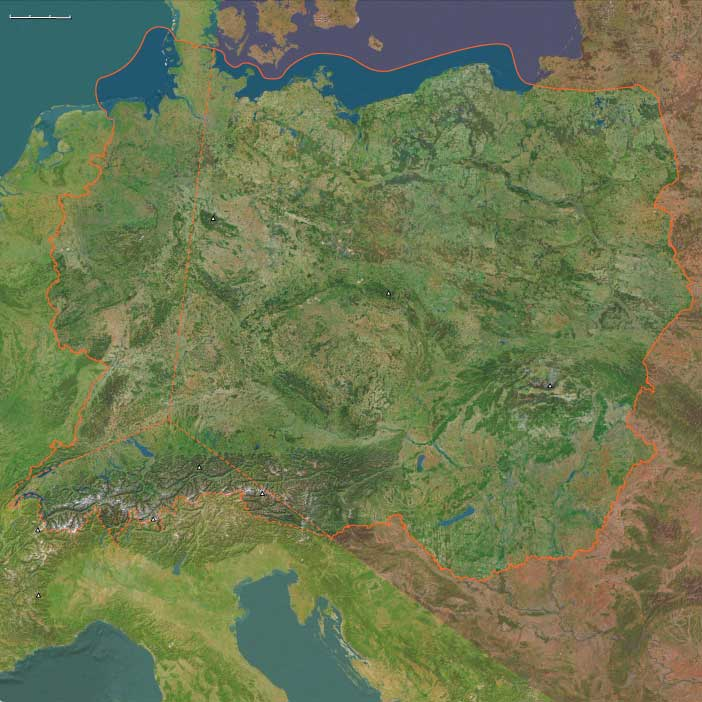
Between 1912 and 1923, East Central Europe—covering modern-day Poland, Czechia, Slovakia, Hungary, and eastern Germany and Austria east of 10°E and northeast of the defined boundary—endured revolutionary transformations. This era encompassed the devastating impacts of World War I (1914–1918), the collapse of the Austro-Hungarian, German, and Russian empires, and the consequent formation of new, independent nation-states. The period ended with the reconfiguration of the region's political landscape, dramatically reshaping its future.
Political and Military Developments
World War I and its Aftermath (1914–1918)
-
East Central Europe became a crucial battleground in World War I, suffering immense human losses, destruction, and economic disruption.
-
Germany and Austria-Hungary (the Central Powers) faced sustained military pressure and resource depletion by late 1917, while civilian hardship deepened.
Collapse of Empires and Independence Movements (1918–1919)
-
The Austro-Hungarian Empire collapsed in late 1918, dissolving into successor states including the newly independent Czechoslovakia, re-established Poland, and a reduced Hungary.
-
Germany faced defeat and revolution in November 1918, leading to the abdication of Kaiser Wilhelm II and establishment of the Weimar Republic.
-
In 1918, Poland regained independence after 123 years of partition and foreign domination, under the leadership of Józef Piłsudski.
Creation of Czechoslovakia (1918)
-
Czechoslovakia emerged in October 1918, uniting Czech lands, Slovakia, and Ruthenian territories, under the leadership of President Tomáš Garrigue Masaryk.
-
The new state quickly stabilized, adopting democratic governance, and gained international recognition at the 1919 Paris Peace Conference.
Treaty of Trianon and Hungarian Losses (1920)
-
Hungary’s territorial losses were formalized in the Treaty of Trianon (1920), significantly reducing its borders and population, sparking national resentment and revisionism.
German Territorial Changes and Social Unrest
-
Germany’s defeat in World War I resulted in territorial losses, including East Central European border adjustments. Eastern German provinces like Silesia witnessed significant political unrest and conflict, notably the Silesian Uprisings (1919–1921), as Polish and German factions contested borderlands.
Polish-Soviet War (1919–1921)
-
Poland fought Soviet Russia to secure its eastern borders, culminating in the decisive Polish victory at the Battle of Warsaw (1920). The Peace of Riga (1921) stabilized Poland’s eastern frontiers and secured its sovereignty.
Economic and Technological Developments
Post-War Economic Disruption and Reconstruction
-
East Central Europe’s economies suffered significantly from wartime devastation, disrupted trade, hyperinflation, and industrial damage. Extensive rebuilding and economic stabilization programs began in the early 1920s.
Industrial and Agricultural Recovery
-
Poland, Czechoslovakia, and Germany pursued aggressive industrial recovery, expanding coal mining, steel production, and manufacturing. Agricultural productivity gradually stabilized, aided by land reforms, particularly in Czechoslovakia and Poland.
Cultural and Artistic Developments
National Cultural Revival
-
Newly independent nations fostered vibrant cultural revivals to strengthen national identities. In Poland and Czechoslovakia, literature, theater, film, and arts emphasized themes of national resilience, patriotism, and historical memory.
Modernist Movements in Weimar Germany and Czechoslovakia
-
German and Czech cities, particularly Berlin, Dresden, and Prague, became vibrant hubs for modernist and avant-garde cultural movements, including Expressionism, Bauhaus design, and Dadaist experimentation.
Settlement and Urban Development
Post-War Urban Reconstruction
-
Cities severely damaged during the war—such as Warsaw, Kraków, Prague, Vienna, and Budapest—began ambitious rebuilding and modernization programs. Infrastructure renewal and urban expansion reshaped regional landscapes significantly.
Social and Religious Developments
Democratic and Socialist Movements
-
Democratic governance took root firmly in Czechoslovakia and initially in Poland and Germany, reflecting aspirations for political liberty and social reforms. Socialist and communist movements gained momentum, though facing strong opposition from conservative and nationalist forces.
Religious and Ethnic Tensions
-
Despite new democratic frameworks, East Central Europe faced deep-rooted ethnic and religious tensions. Minority populations—including Germans in Czechoslovakia and Poland, and Jews across the region—experienced varying degrees of inclusion, discrimination, or conflict.
Long-Term Consequences and Historical Significance
The years from 1912 to 1923 dramatically reshaped East Central Europe’s political and social landscape. The collapse of centuries-old imperial orders—Austro-Hungarian, German, and Russian—led to the emergence of independent nation-states, significantly altering regional geopolitics. Post-war economic reconstruction, national cultural revivals, and experiments with democratic governance deeply influenced regional identities and trajectories. The unresolved tensions from this transformative era, however, left the region vulnerable to future instability and crises, ultimately laying the groundwork for political upheaval and the rise of authoritarianism in subsequent decades.
People
Groups
- Hungarian people
- Slavs, South
- Poles (West Slavs)
- Czechs [formerly Bohemians] (West Slavs)
- Slovaks (West Slavs)
- Christians, Roman Catholic
- Austria, Archduchy of
- Protestantism
- Hungary, Kingdom of
- Bohemia, Kingdom of
- Moravian Margravate
- Prussia, Kingdom of
- Russian Empire
- Galicia and Lodomeria, Kingdom of
- Austrian Empire
- Saxony, Kingdom of
- Bavaria, Kingdom of
- Poland, Congress Kingdom of
- Zollverein (German Customs Union)
- Austria-Hungary
- German Empire (“Second Reich”)
- Poland, (Regency) Kingdom of
- Hungary, Democratic Republic of
- Poland, Second Republic of
- Czechoslovakia
- Germany, Weimar Republic of
- Hungary, Kingdom of
Topics
- World War, First (World War I)
- First World War on the Eastern front
- Polish-Soviet War
- Silesian Uprisings
- Warsaw, Battle of
Subjects
Regions
Subregions
Years: 1912 - 1923
People
Groups
- Hungarian people
- Slavs, South
- Poles (West Slavs)
- Czechs [formerly Bohemians] (West Slavs)
- Slovaks (West Slavs)
- Christians, Roman Catholic
- Austria, Archduchy of
- Protestantism
- Hungary, Kingdom of
- Bohemia, Kingdom of
- Moravian Margravate
- Prussia, Kingdom of
- Russian Empire
- Galicia and Lodomeria, Kingdom of
- Austrian Empire
- Saxony, Kingdom of
- Bavaria, Kingdom of
- Poland, Congress Kingdom of
- Zollverein (German Customs Union)
- Austria-Hungary
- German Empire (“Second Reich”)
- Poland, (Regency) Kingdom of
- Hungary, Democratic Republic of
- Poland, Second Republic of
- Czechoslovakia
- Germany, Weimar Republic of
- Hungary, Kingdom of
Topics
- World War, First (World War I)
- First World War on the Eastern front
- Polish-Soviet War
- Silesian Uprisings
- Warsaw, Battle of
Subjects
Regions
Subregions