
East Central Europe (1996–2007 CE): Expansion of …
Years: 1996 - 2007
East Central Europe (1996–2007 CE): Expansion of the EU and NATO, Economic Growth, and Democratic Consolidation
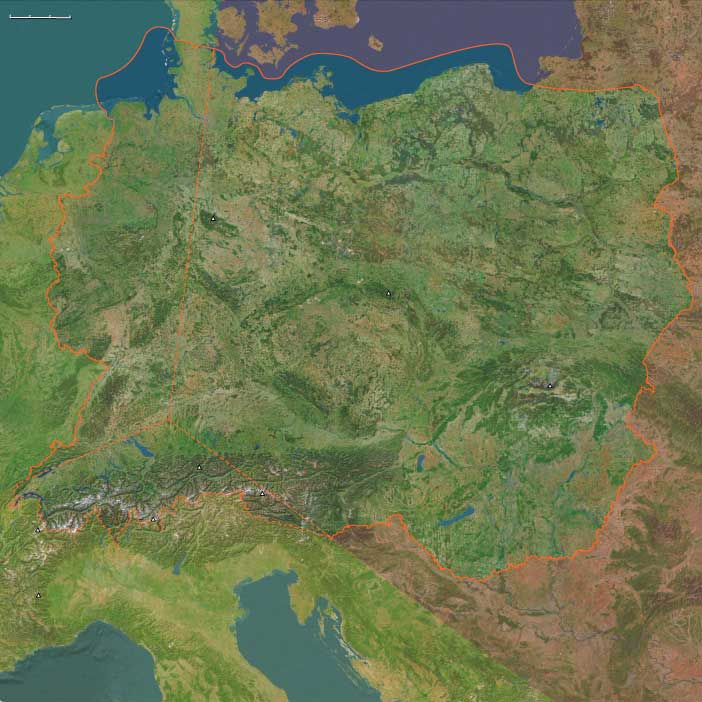
Between 1996 and 2007, East Central Europe—including Poland, Czechia, Slovakia, Hungary, and eastern Germany and Austria east of 10°E and north of a boundary from approximately 48.2°N at 10°E to 46.7°N, 15.4°E—experienced rapid political, economic, and social transformations. The period was defined by the region’s deepening integration into Western institutions, robust economic growth, democratic maturation, and significant realignment of geopolitical orientation.
Political and Military Developments
-
EU Accession (2004): Poland, Czechia, Slovakia, and Hungary joined the European Union in May 2004, significantly reshaping political alignment, trade relationships, and institutional frameworks.
-
NATO Membership (1999–2004): Poland, Czechia, and Hungary joined NATO in 1999, while Slovakia followed in 2004, aligning firmly with Western defense and security structures.
-
Germany and Austria: Eastern Germany saw sustained economic and infrastructural investments following reunification, increasingly integrating economically and culturally with the broader German state. Austria’s eastern regions (including Vienna and Lower Austria) prospered within the EU's single market.
Economic and Technological Developments
-
Rapid Economic Expansion: East Central European countries experienced significant GDP growth, driven by foreign investment, EU structural funds, and expanding export markets, notably in manufacturing (automotive, electronics), finance, and IT sectors.
-
Infrastructure Modernization: Substantial EU-backed investments transformed transportation, communication, and energy infrastructures, significantly narrowing the development gap with Western Europe.
Cultural and Social Developments
-
Cultural Integration and Globalization: Increased mobility and cultural exchanges within the EU promoted vibrant urban cultures, particularly in capitals like Prague, Budapest, Warsaw, and Bratislava, facilitating a blending of local traditions with global influences.
-
Educational Expansion: Universities and research institutes expanded and internationalized, significantly raising education standards and scholarly visibility across the region.
Long-term Consequences
The period from 1996 to 2007 saw East Central Europe firmly anchored within Western European economic, political, and security frameworks. This era laid the foundation for stability, prosperity, and deeper European integration, decisively distancing the region from its Cold War legacy and redefining its role in contemporary Europe.
Groups
- Christians, Roman Catholic
- Hungary, Republic of
- NATO (North Atlantic Treaty Organization)
- Austria, (Second) Republic of
- Czechoslovak Socialist Republic
- Germany, Federal Republic of
- Poland, Republic of
- Russian Federation
- EU (European Union)
- Slovakia (Second Slovak Republic)
- Czech Republic
Subjects
Regions
Subregions
Years: 1996 - 2007
Groups
- Christians, Roman Catholic
- Hungary, Republic of
- NATO (North Atlantic Treaty Organization)
- Austria, (Second) Republic of
- Czechoslovak Socialist Republic
- Germany, Federal Republic of
- Poland, Republic of
- Russian Federation
- EU (European Union)
- Slovakia (Second Slovak Republic)
- Czech Republic
Subjects
Regions
Subregions