
Event
East Central Europe (7,821–6,094 BCE): Forest Lakes,…
East Central Europe (7,821–6,094 BCE): Forest Lakes, River Foragers, and the Approaching Farming Frontier.
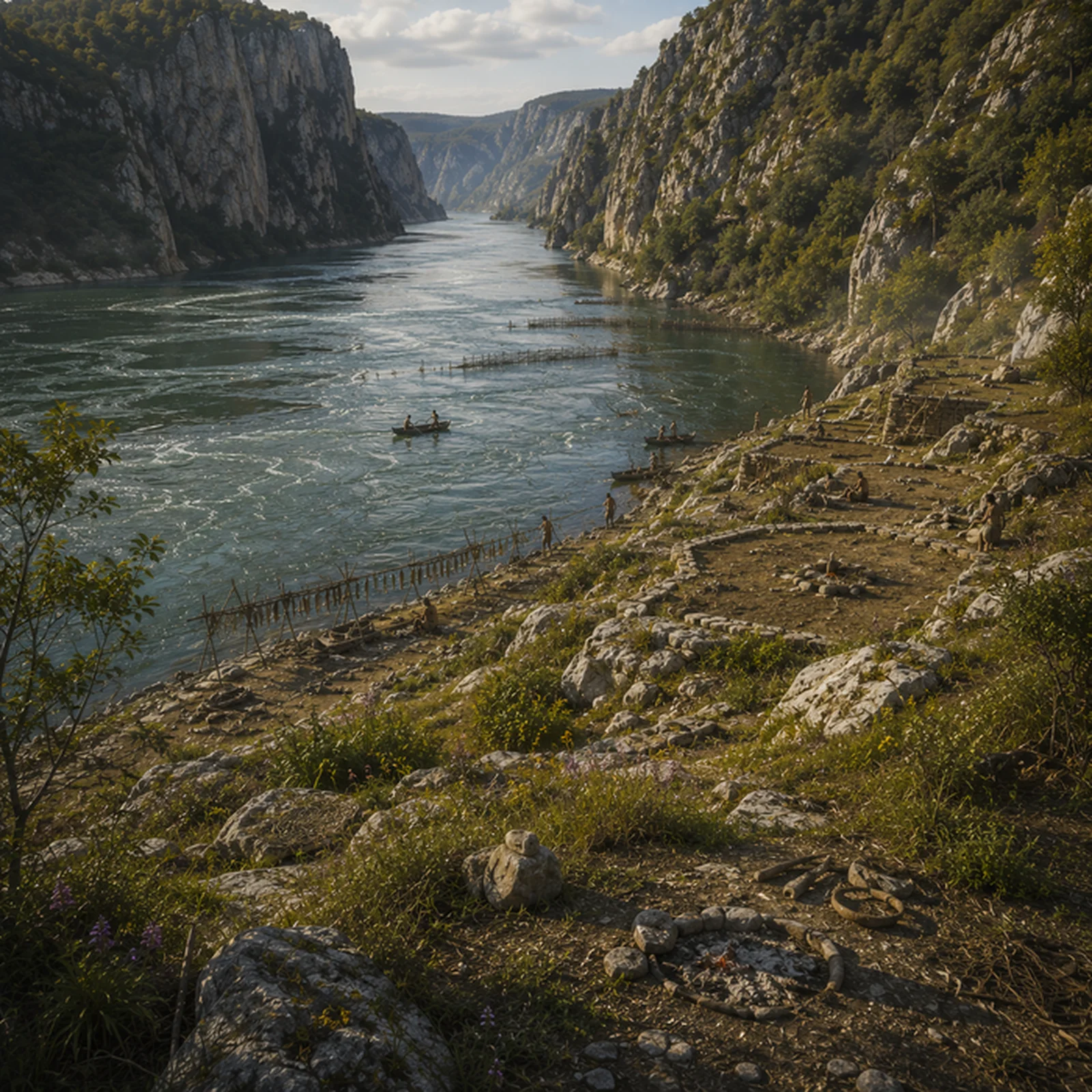
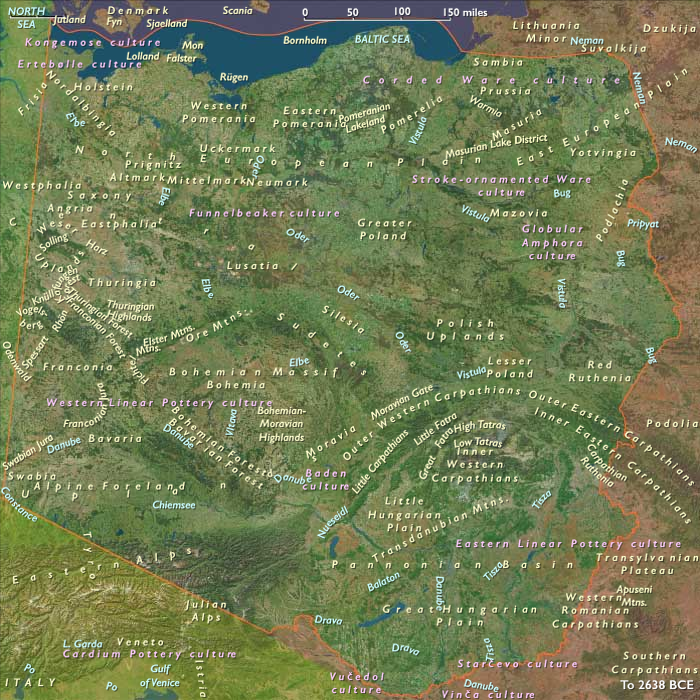
During the Early Holocene, East Central Europe extended across the plains and uplands of Germany and Poland, the Bohemian and Moravian basins, Slovakia, the Carpathian arc, Hungary and northeastern Austria. Human communities remained overwhelmingly hunters, fishers and gatherers. Their landscapes were transformed by expanding mixed forests, rising groundwater, maturing river systems and the numerous lakes and wetlands left by the retreat of the northern ice.
Across the North European Plain, birch and pine woodland became increasingly mixed with hazel, elm, oak and other temperate trees. Lakes, marshes, peatlands and river valleys interrupted the expanding forest, while sandy uplands and drier soils retained more open vegetation. Red deer, roe deer, wild boar and aurochs occupied the woodlands and forest edges, while elk remained important in wetter northern districts.
In Poland, Mesolithic communities repeatedly used lake margins, river terraces and wetland islands. Fishing, hunting, birding and gathering were combined according to local season and habitat. Elk antler, bone, flint and wood formed important parts of everyday technology, and some favored locations were revisited over many generations without developing into permanent villages.
Northeastern Polish lake districts shared close ecological connections with the wider Baltic forest world. Birch-pine woodland surrounded extensive postglacial lakes, while streams and marshes offered fish, waterfowl and wetland plants. Farther west and south, mixed deciduous forests became increasingly important as Early Holocene warmth continued.
Across Germany, dense woodland similarly concentrated movement along rivers, lake shores and wetland corridors. Camps often occupied places where forest and water met. Deer, wild boar and other terrestrial game were hunted alongside fishing and gathering, while rivers such as the Elbe, Oder and their tributaries provided natural routes through otherwise heavily wooded terrain.
Bohemia and Moravia formed basins and river corridors enclosed by forested uplands. Human groups moved through these environments in small and flexible communities, using stone raw materials from known sources and returning repeatedly to productive valleys and springs. Slovakia and the Carpathian foothills offered comparable combinations of woodland, rivers, upland passes and locally open ground.
The Carpathian Basin presented a different lowland ecology. The Danube, Tisza and their tributaries shifted across broad alluvial plains, creating backwaters, oxbow lakes, marshes and seasonally flooded grasslands. Mesolithic remains are comparatively sparse, but human communities occupied these landscapes before the arrival of agriculture, exploiting fish, waterfowl, wild plants, deer, wild boar and aurochs.
These lowland communities remained mobile or seasonally persistent rather than permanently settled. Floodplain resources could support repeated occupation of productive localities, while upland margins and river corridors connected the basin to neighboring regions. Stone, bone and antler technologies remained dominant, and pottery had not yet become part of ordinary life.
During the final centuries of the age, the southern Carpathian Basin approached a major cultural frontier. Farming communities belonging to the Starčevo–Körös–Criș world were expanding northward through the Balkans and toward Hungary. Within the Hungarian plain itself, however, the securely established settlements of these first farmers belong mainly to the centuries immediately following 6,094 BCE.
Agricultural systems therefore remained outside the dominant East Central European landscape. There were no widespread cereal fields, domestic cattle herds, sheep or goat flocks, or permanent farming villages. The longhouse settlements and Linearbandkeramik traditions that would later transform central Europe remained several centuries in the future.
Near the close of the period, the abrupt climatic disturbance around 6,200 BCE briefly interrupted the broader Early Holocene warming. Forest and lake systems responded unevenly, but mobile hunter-gatherer communities continued to exploit diverse resources across woodland, river and wetland environments.
Legacy of the Age
By 6,094 BCE, East Central Europe had become a heavily forested Mesolithic world structured by rivers, lakes and wetlands. Hunter-gatherer communities occupied the German and Polish plains, Bohemian and Moravian basins, Carpathian foothills and Hungarian lowlands through flexible patterns of movement and repeated use of productive localities. Mixed woodland had expanded widely, while floodplains and postglacial lake districts supported increasingly diverse fishing, hunting and gathering economies. Along the southern edge of the Carpathian Basin, the first Balkan farming communities were approaching, but established agriculture had not yet transformed the region. The defining history of the age was therefore the maturation of forest-and-water foraging systems immediately before the first food-producing societies entered East Central Europe from the southeast.
-
{# Image navigates to the detail page; the magnifying-glass chip is the only Fancybox lightbox trigger (kept a separate sibling — anchors can't nest). #}
 The Great Crossroads
World
-
{# Image navigates to the detail page; the magnifying-glass chip is the only Fancybox lightbox trigger (kept a separate sibling — anchors can't nest). #}
 Central Europe
Region
-
{# Image navigates to the detail page; the magnifying-glass chip is the only Fancybox lightbox trigger (kept a separate sibling — anchors can't nest). #}
 East Central Europe
Subregion
