
East Central Europe (508–519 CE): Gepid Consolidation, …
Years: 508 - 519
East Central Europe (508–519 CE): Gepid Consolidation, Lombard Presence, and Regional Stabilization
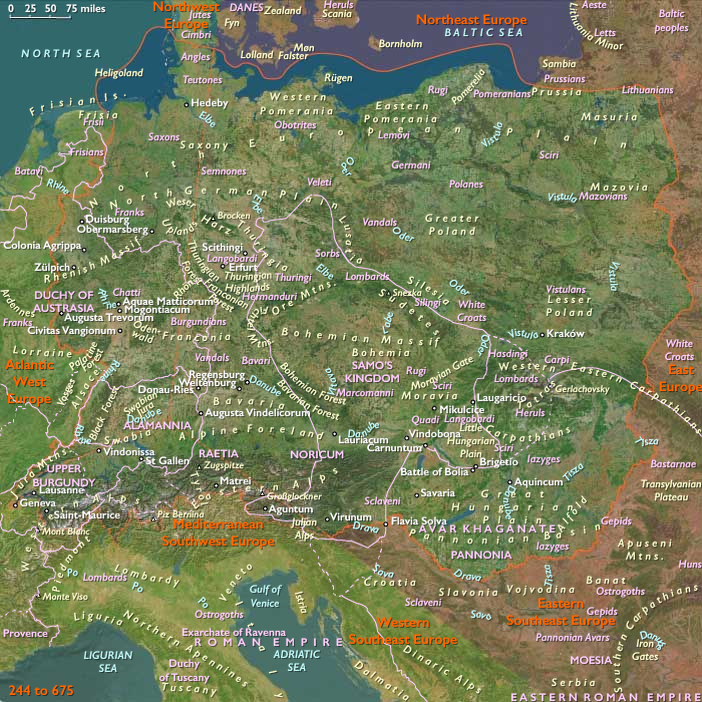
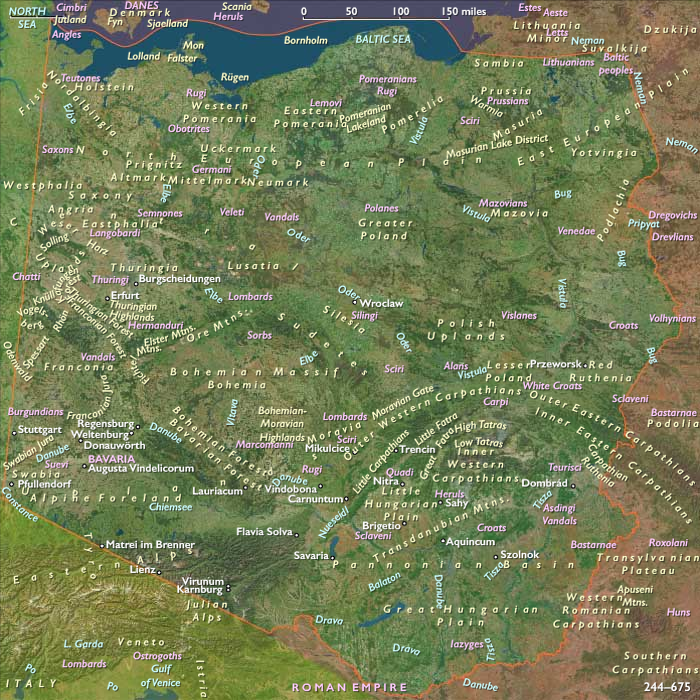
Between 508 and 519 CE, East Central Europe—including Poland, Czechia, Slovakia, Hungary, and those portions of Germany and Austria lying east of 10°E and north of a line stretching from roughly 48.2°N at 10°E southeastward to the Austro-Slovenian border near 46.7°N, 15.4°E—experienced continuing consolidation of Gepid authority, increasingly challenged by the growing influence and territorial ambitions of the Lombards (Langobardi). This era, following the complete disappearance of Roman provincial control and the final collapse of Rugian autonomy, saw a stabilization of geopolitical boundaries as these two dominant Germanic powers negotiated their spheres of influence. Concurrently, proto-Slavic communities maintained steady internal cohesion, further solidifying their cultural continuity within the shifting political landscape.
Political and Military Developments
Continued Gepid Dominance
-
The Gepids solidified their control in the territories once forming Roman Pannonia, maintaining their dominance particularly in modern-day eastern Hungary and portions of Slovakia and Transylvania. Their political and military power provided significant stability, influencing regional dynamics and relationships.
Increasing Lombard Influence and Settlement
-
The Lombards (Langobardi) strengthened their presence in areas north and west of the Gepid heartlands, especially in regions corresponding to modern Austria, Czechia, and parts of southern Poland and eastern Germany. Their gradual southward migration and territorial expansion brought them into increasing contact—and occasional conflict—with Gepid-controlled areas.
Post-Rugian Geopolitical Realignment
-
The territories vacated by the Rugii, particularly along the upper Tisza, were absorbed predominantly into Gepid-controlled domains, although peripheral areas also saw increased Lombard settlement, reshaping the regional balance of power.
Economic and Technological Developments
Stabilized Local Economies under Gepid and Lombard Influence
-
Continued regional stability provided by Gepid authority, alongside growing Lombard presence, enabled localized economic growth, particularly in agricultural production, livestock raising, and village-based trade. Major settlements, including Augusta Vindelicorum (Augsburg), remained economically vibrant regional hubs.
Infrastructure Adaptation and Maintenance
-
Existing roads, fortifications, and communication networks continued receiving limited maintenance from Gepid and Lombard authorities, ensuring regional mobility, trade, and military security, though without significant new construction.
Cultural and Artistic Developments
Flourishing Gepid and Lombard Artistic Traditions
-
Gepid cultural traditions further flourished, producing distinctive metalwork, jewelry, pottery, and weaponry. Concurrently, emerging Lombard artistic styles increasingly influenced regional material culture, blending Germanic motifs with residual Roman and Gepid elements.
Proto-Slavic Cultural Continuity
-
Proto-Slavic communities continued to exhibit remarkable cultural resilience, maintaining traditional social structures, crafts, and religious practices, carefully integrating selective external influences.
Settlement and Urban Development
Continuing Importance of Major Urban Centers
-
Settlements like Augusta Vindelicorum (Augsburg) retained regional prominence, functioning as important nodes in trade, governance, and communications networks, supported by stable Gepid and emerging Lombard territorial structures.
-
Former Roman frontier settlements (Carnuntum, Vindobona, and Aquincum) persisted as modest fortified centers serving primarily local defensive and administrative functions under Gepid authority.
New Patterns of Lombard and Gepid Settlement
-
Gepid control solidified settlement patterns in eastern territories, while Lombard expansion increasingly established new settlements and social structures, especially west and northwest of the Gepid heartlands.
Social and Religious Developments
Strengthened Gepid and Lombard Tribal Structures
-
Both Gepid and Lombard societies solidified their hierarchical leadership structures, emphasizing traditional warrior elites and Germanic cultural practices to reinforce legitimacy, community identity, and internal stability.
Proto-Slavic Social Cohesion and Stability
-
Proto-Slavic communities maintained stable internal social hierarchies and communal structures, adapting cautiously and pragmatically to broader geopolitical shifts, and ensuring cultural continuity.
Long-Term Consequences and Historical Significance
The era 508–519 CE represented continued stabilization and regional consolidation under Gepid dominance, tempered by growing Lombard influence and territorial competition. Following the end of Roman provincial governance and Rugian autonomy, East Central Europe saw clear geopolitical realignment into distinct tribal spheres of influence. The continued cultural resilience of proto-Slavic communities and the strengthening of major regional settlements provided essential continuity and set the groundwork for lasting historical patterns, deeply influencing the region’s transition toward the early medieval world.
Groups
- Polytheism (“paganism”)
- Slavs, Proto-
- Lombards (West Germanic tribe)
- Gepids (East Germanic tribe)
- Goths (East Germanic tribe)
- Germans
- Ostrogoths, Realms of the
- Roman Empire, Western (Ravenna)
- Christianity, Chalcedonian
- Gepids, Kingdom of the
- Roman Empire, Eastern: Leonid dynasty
- Roman Empire, Eastern: Justinian dynasty
Topics
Commodoties
Subjects
Regions
Subregions
Related Events
Showing 10 events out of 58269 total
Years: 508 - 519
Groups
- Polytheism (“paganism”)
- Slavs, Proto-
- Lombards (West Germanic tribe)
- Gepids (East Germanic tribe)
- Goths (East Germanic tribe)
- Germans
- Ostrogoths, Realms of the
- Roman Empire, Western (Ravenna)
- Christianity, Chalcedonian
- Gepids, Kingdom of the
- Roman Empire, Eastern: Leonid dynasty
- Roman Empire, Eastern: Justinian dynasty
Topics
Commodoties
Subjects
Regions
Subregions