East Europe (1492–1503 CE): Muscovite Centralization and…
1492 CE to 1503 CE
East Europe (1492–1503 CE): Muscovite Centralization and Diplomatic Consolidation
Political and Military Developments
Territorial Integration and Governance
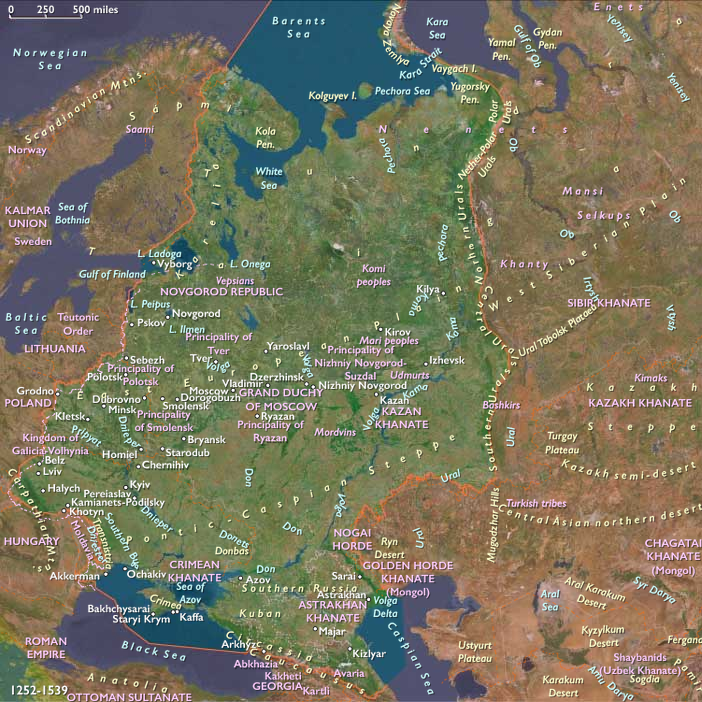
Between 1492 and 1503 CE, Muscovy further solidified its control, integrating newly acquired territories and enhancing centralized administration under Ivan III. Governance reforms improved political cohesion and efficiency across the expanding state.
Intensified Diplomacy with Regional Khanates
Diplomatic relations with the Khanates of Kazan, Crimea, and Astrakhan became increasingly sophisticated, involving alliances, negotiations, and occasional conflicts. Muscovy’s diplomatic strategy effectively secured its regional standing and minimized threats from Turkic neighbors.
Military Strengthening and Defense Strategy
Muscovy significantly strengthened its military capabilities, developing advanced fortifications, refining siege technologies, and upgrading cavalry and infantry tactics. These enhancements improved territorial defense and supported further expansion.
Economic and Technological Developments
Sustained Economic Expansion
Economic prosperity continued, driven by a robust internal market and extensive international commerce. Key urban centers, particularly Moscow, experienced significant economic growth, reflecting Muscovy’s strengthened regional influence.
Technological Innovations in Military and Infrastructure
Technological advancements persisted, particularly in military defense, infrastructure development, and fortification improvements, reinforcing regional security and administrative efficiency.
Cultural and Artistic Developments
Flourishing Artistic and Cultural Life
Muscovy’s cultural life flourished, marked by significant developments in architecture, religious art, and secular cultural expressions, bolstered by the patronage of Muscovite elites. These cultural achievements further solidified a unique Muscovite identity.
Intellectual and Literary Growth
Chroniclers and scholars continued documenting historical, religious, and cultural narratives, greatly contributing to intellectual productivity and reinforcing regional historical continuity and identity.
Settlement Patterns and Urban Development
Urban Growth and Infrastructure Enhancement
Urban centers expanded steadily, with Moscow at the forefront of demographic growth, infrastructure development, and effective urban management, significantly contributing to regional administrative coherence.
Advanced Urban Fortifications
Cities continued improving fortifications, reinforcing urban security and regional stability amid evolving political and military challenges.
Social and Religious Developments
Social Integration and Ethnic Diversity
Integration of diverse ethnic communities, including the Mari, Mordvins, Udmurts, Komi, and Vepsians, continued to enhance social cohesion and stability within Muscovite society.
Prominent Role of the Orthodox Church
The Orthodox Church maintained its central influence, shaping educational norms, cultural values, and community structures, significantly enhancing societal stability and continuity.
Long-Term Consequences and Historical Significance
The period from 1492 to 1503 CE marked continued centralization and diplomatic sophistication in Muscovy, significantly influencing the region's political structure and cultural identity. These developments set critical foundations for the emergence of a cohesive and robust Russian state.
People
Groups
Subjects
Regions
Northeastern Eurasia
View →Subregions