Event
Eastern East Antarctica (1252–1395 CE): Frozen Continuity…
Eastern East Antarctica (1252–1395 CE): Frozen Continuity and Southern-Ocean Exchange
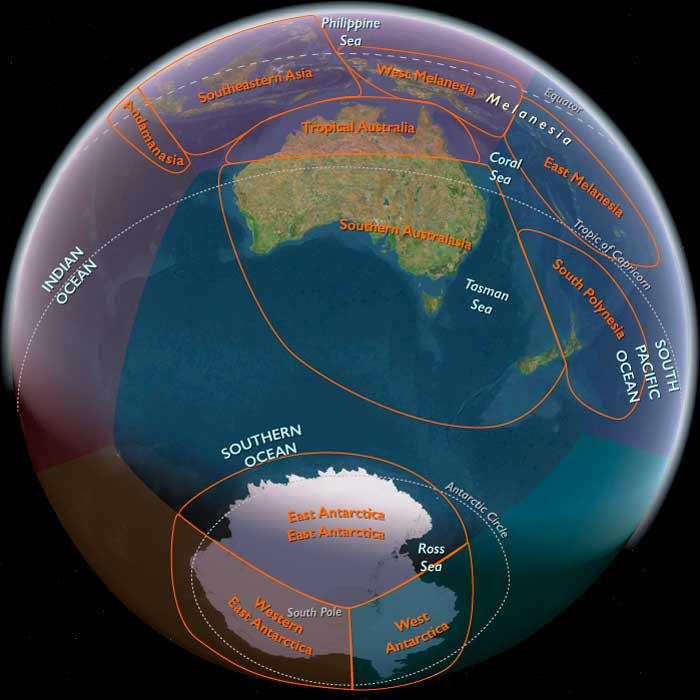
Geographic Parameters
The subregion continued from 70°E to 170°W, including both apparently stable high interior ice and coastal drainage sectors responsive to ocean and atmospheric conditions. Its landscape remained divided among plateau, glacier corridors, floating ice margins, limited rock exposures, fast ice, pack ice, and open Southern Ocean waters.
Environmental Continuity
This age retained the established ice–ocean system. Changes conventionally associated with the transition toward later medieval cooling were regionally uneven and cannot be translated into a simple continent-wide glacial advance. Persistent cold did not make the environment static. Snowfall, winds, polynyas, sea-ice duration, and coastal productivity continued to fluctuate.
Climate and Ice Dynamics
Some districts may have experienced longer sea-ice seasons or altered snowfall, while others retained recurring summer openings. Greater sea-ice duration could benefit ice-dependent organisms but hinder access between colonies and feeding grounds. Snow accumulation could reduce usable nesting terrain, and strong winds could either clear coastal surfaces or intensify exposure.
The East Antarctic Ice Sheet remained dominant, but outlet glaciers flowed continuously and shelves fractured and calved. Stability at continental scale coexisted with ceaseless local change.
Marine Ecologies
Adélie and emperor penguins occupied distinct but overlapping parts of the seasonal system. Adélies depended on exposed coastal nesting ground and summer feeding access; emperors required stable winter fast ice. Seals used floes, breathing holes, and coastal waters, while seabirds moved between Antarctic nesting sites and distant oceanic feeding areas.
Whales linked the subregion to lower latitudes through annual migration. These movements constituted the only long-distance exchange network operating through the region: biomass, nutrients, and living populations moved among ocean basins without human direction.
Human Knowledge and Symbolic Geography
No direct human association with the coast can be demonstrated. The actual continent remained unknown. Ideas about distant southern lands appearing in some geographical traditions should be treated as broad speculation rather than knowledge of Eastern East Antarctica.
The subregion therefore possessed no local belief system, political authority, material culture, or named landscape. Its geography existed outside human language except in the most abstract sense of an unknown southern world.
Adaptation and Resilience
Life remained concentrated around predictable but shifting ecological opportunities. Penguins moved nesting sites when snow, ice, or access changed. Seals adjusted haul-outs and feeding areas. Whales crossed entire ocean sectors to follow seasonal productivity. No single colony or polynya represented the whole coast; resilience lay in the distributed character of the wider system.
Legacy of the Age
By 1395 CE, Eastern East Antarctica remained an untouched continental and marine environment. Its connection to the wider planet occurred through ocean circulation, atmospheric movement, animal migration, and the storage of immense quantities of ice. Human history remained absent, while ecological exchange across the Southern Ocean continued on a continental scale.

-
{# Image navigates to the detail page; the magnifying-glass chip is the only Fancybox lightbox trigger (kept a separate sibling — anchors can't nest). #}
 Southern Oceania
World
-
{# Image navigates to the detail page; the magnifying-glass chip is the only Fancybox lightbox trigger (kept a separate sibling — anchors can't nest). #}
 Antarctica
Region
-
{# Image navigates to the detail page; the magnifying-glass chip is the only Fancybox lightbox trigger (kept a separate sibling — anchors can't nest). #}
 Eastern East Antarctica
Subregion