
Eastern Southeast Europe (1252 – 1395 CE): …
Years: 1252 - 1395
Eastern Southeast Europe (1252 – 1395 CE): Byzantium’s Twilight, Serbian Zenith, and Bulgarian Decline
Geographic and Environmental Context
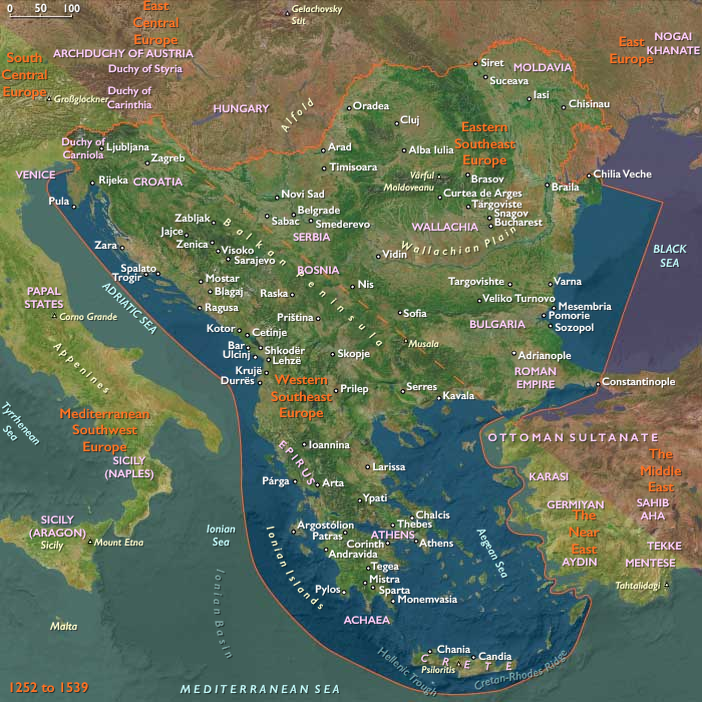
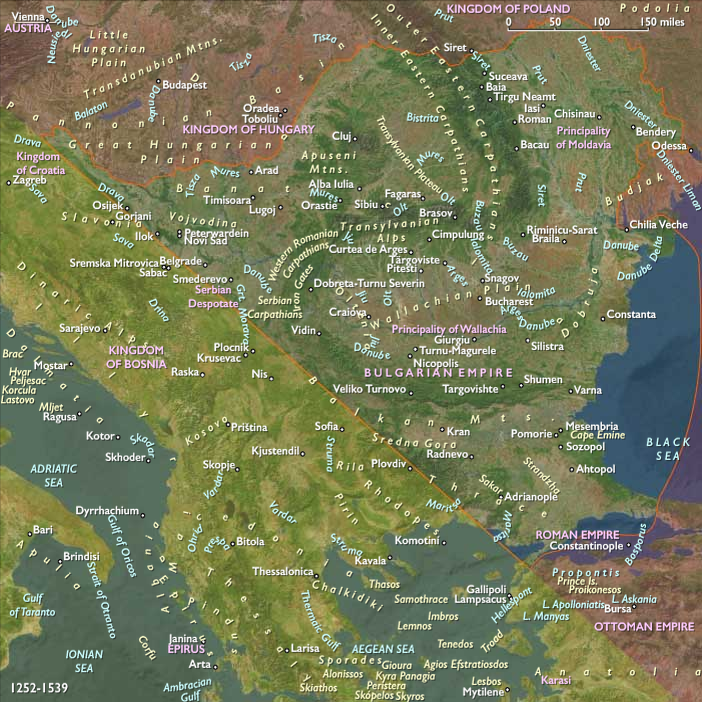
Eastern Southeast Europe includes Turkey-in-Europe, Thrace in Greece, all of Bulgaria except its southwest, modern-day Moldova and Romania, northeastern Serbia, northeastern Croatia, and extreme northeastern Bosnia and Herzegovina.
-
Anchors: the Danube corridor, the Thracian plain (Adrianople/Edirne), the Haemus (Balkan) mountains, and the Black Sea coast.
-
This subregion was the interface between Byzantium, rising Balkan kingdoms, nomadic steppe powers, and later the Ottomans.
Climate and Environmental Shifts
-
With the onset of the Little Ice Age (~1300), winters lengthened and summers cooled; agriculture in Thrace and the Danube plain faced shorter growing seasons.
-
Pastoralism and mixed farming buffered risk; Black Sea grain and fish routes underpinned urban subsistence.
Societies and Political Developments
-
Byzantine Empire (1259–1453 context):
-
The Empire of Nicaea retook Constantinople in 1261, restoring the Byzantine Empire.
-
From the late 13th century, civil wars (Andronikos II vs. III, 1320s; Kantakouzenos regency, 1340s) eroded stability.
-
Ottoman Turks crossed into Europe in 1354 (Gallipoli), capturing Adrianople (Edirne) in 1369; by 1395, most of Thrace was Ottoman.
-
-
Second Bulgarian Empire:
-
Zenith under Tsar Ivan Asen II (r. 1218–1241) faded; fragmentation marked the later 13th century.
-
Mongol–Tatar suzerainty from the Golden Horde in the late 13th century; frequent shifts of overlordship.
-
By the late 14th century Bulgaria was divided: Vidin under Ivan Sratsimir, Tarnovo under Ivan Shishman—both vassals or foes of the Ottomans.
-
-
Serbia (Nemanjid & Dušan’s Empire):
-
Serbia expanded spectacularly under Stefan Dušan (r. 1331–1355), who conquered Macedonia, Epirus, Thessaly, and Albania, and crowned himself “Emperor of Serbs and Greeks” (1346).
-
After his death, fragmentation and noble rivalries (Mrnjavčević, Lazarević) weakened unity; Prince Lazar fell at Kosovo Polje (1389) against the Ottomans.
-
-
Wallachia & Moldavia:
-
Wallachia emerged in the 14th century; Basarab I (r. 1310–1352) secured autonomy after victory at Posada (1330).
-
Moldavia consolidated under Bogdan I (r. 1359–1365), later under Petru I and Roman I.
-
Both principalities defended autonomy against Hungarian, Tatar, and Ottoman encroachment.
-
-
Croatia & Bosnia (northeastern margins):
-
Northeastern Croatia tied to Hungary; Bosnia expanded under Ban Tvrtko I (r. 1353–1391), reaching the Adriatic and asserting a royal crown in 1377.
-
Economy and Trade
-
Agriculture: mixed grain (wheat, barley, millet) in Thrace and the Danube basin; viticulture in Macedonia; sheep and cattle herding widespread.
-
Mines: Serbia’s silver mines (Novo Brdo, Rudnik) funded Dušan’s empire; Transylvanian and Moldavian mines fed Hungarian and Balkan coinage.
-
Trade routes:
-
Danube corridor moved grain, salt, and livestock north–south.
-
Via Egnatia linked Constantinople to Adriatic ports; Black Sea ports (Varna, Constanța) tied to Genoese and Venetian merchants.
-
Ragusan merchants (Dubrovnik) served Serbian and Bosnian markets.
-
-
Coinage: Venetian ducats, Serbian dinars, and Byzantine hyperpyra circulated; Ragusan silver coinage prominent in Balkan markets.
Subsistence and Technology
-
Farming: ox-drawn ploughs, vineyards, terrace farming in hills.
-
Mining technology: shaft mines with timbering; water mills and bellows for ore refining.
-
Fortifications: walled towns (Tarnovo, Belgrade, Skopje); stone castles defended noble domains.
-
Shipping: galleys of Genoa and Venice dominated Black Sea–Aegean routes.
Movement and Interaction Corridors
-
Danube–Black Sea axis: arteries of Bulgarian, Wallachian, and Moldavian commerce.
-
Via Egnatia: lifeline for Byzantine–Serbian exchanges; also corridor of Ottoman advance.
-
Adriatic–Ragusa trade web: integrated Balkan mines and markets into Mediterranean circuits.
-
Steppe routes: Tatars projected power across Moldavia and Bulgaria, exacting tribute in the 13th–14th centuries.
Belief and Symbolism
-
Orthodoxy: the core faith of Byzantium, Bulgaria, Serbia, Wallachia, Moldavia; monasteries like Rila, Dečani, and Mount Athos flourished with fresco cycles and Slavic translations.
-
Latin Christianity: Hungarian, Ragusan, and crusading presence along frontiers.
-
Heresy and reform: Bogomil and dualist traditions lingered in Bulgaria and Bosnia, often suppressed but influencing local piety.
-
Islam: Ottoman advance introduced mosques, garrisons, and Muslim settlers into Thrace by the late 14th century.
Adaptation and Resilience
-
Frontier states: Wallachia and Moldavia balanced Hungarian, Tatar, and Ottoman pressures with flexible diplomacy.
-
Mining economies: Serbian silver and Balkan salt underpinned coinage and mercenary service even amid political fragmentation.
-
Ecclesiastical resilience: Orthodox monasteries stabilized culture through translation, art, and agriculture.
-
Urban redundancy: Genoese and Venetian trade shifted between Black Sea, Adriatic, and overland routes when wars disrupted one corridor.
Long-Term Significance
By 1395, Eastern Southeast Europe was a contested frontier:
-
Byzantium shrank to Constantinople and environs, menaced by the Ottomans.
-
Serbia had reached imperial heights under Dušan but fractured by Kosovo (1389).
-
Bulgaria was divided and vassal to the Ottomans.
-
Wallachia and Moldavia stood as rising principalities, soon to become bulwarks of resistance.
-
Ottoman expansion across the Balkans set the stage for 15th-century domination, while Orthodox monasticism preserved cultural and spiritual continuity.
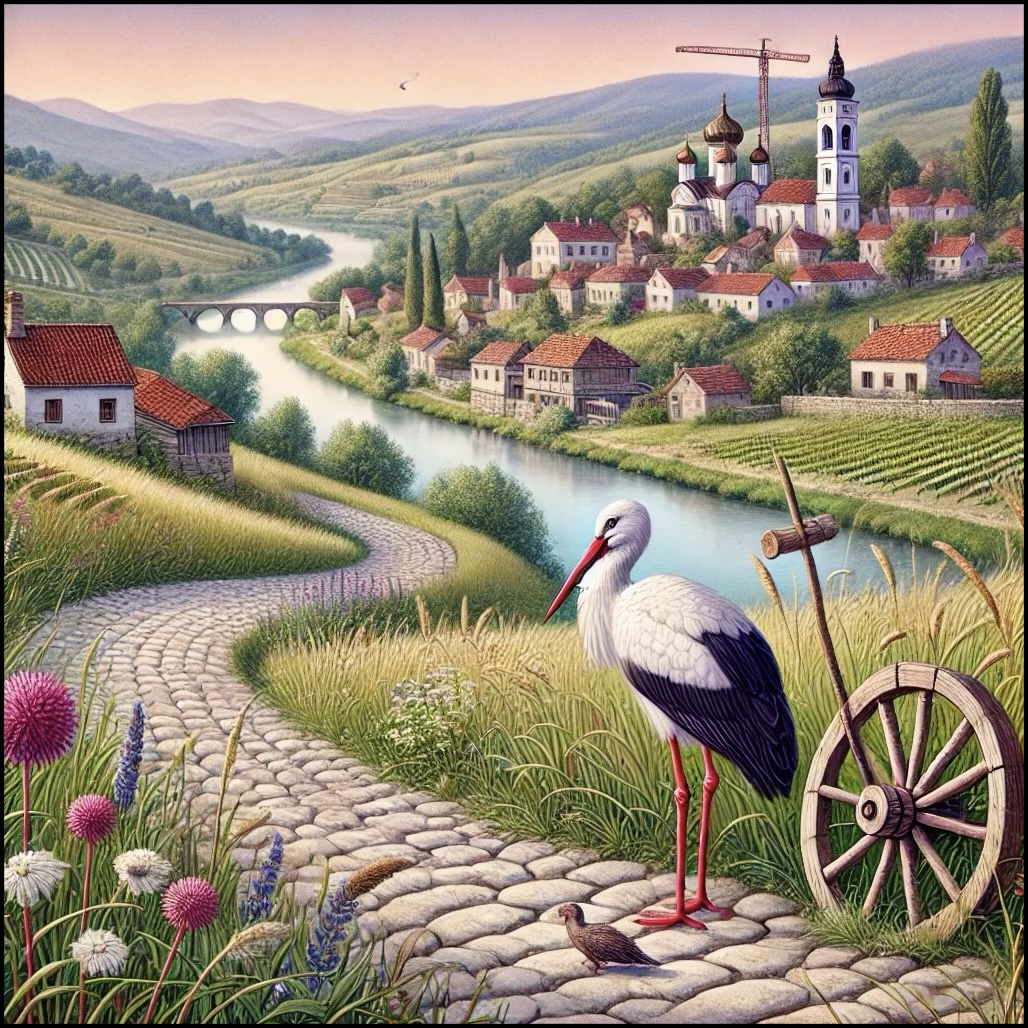
Eastern Southeast Europe (with civilization) ©2024-25 Electric Prism, Inc. All rights reserved.
People
- Andronikos II Palaiologos
- Andronikos III Palaiologos
- Basarab I
- Bogdan I of Moldavia
- Dragoș
- Ivan Shishman of Bulgaria
- Ivan Sratsimir
- Lazar of Serbia
- Murad I
- Peter I of Moldavia
- Roman I
- Stefan Uroš IV Dušan of Serbia
- Tvrtko I
Groups
- Slavonia region
- Islam
- Bulgarian Orthodox Church
- Romanians
- Genoa, (Most Serene) Republic of
- Christians, Roman Catholic
- Christians, Eastern Orthodox
- Croatia, Kingdom of
- Venice, (Most Serene) Republic of
- Bulgarian Empire (Second), or Empire of Vlachs and Bulgars
- Latin Empire of Constantinople (“Romania”)
- Nicaea, Empire of
- Serbia, Kingdom of
- Serbian Orthodox Church
- Blue Horde, Khanate of the
- Hungary, Kingdom of
- Roman Empire, Eastern: Palaiologan dynasty
- Moldavia, Hungarian province of
- Ottoman Emirate
- Ottoman Emirate
- Wallachia, Principality of
- Ottoman Empire
- Moldavia, Principality of
- Ragusa, Republic of
Topics
- Middle Subatlantic Period
- Little Ice Age, Warm Phase I
- Little Ice Age (LIA)
- Savoyard Crusade
- Kosovo, Battle of
Commodoties
Subjects
Regions
Subregions
Years: 1252 - 1395
Eastern Southeast Europe (with civilization) ©2024-25 Electric Prism, Inc. All rights reserved.
People
- Andronikos II Palaiologos
- Andronikos III Palaiologos
- Basarab I
- Bogdan I of Moldavia
- Dragoș
- Ivan Shishman of Bulgaria
- Ivan Sratsimir
- Lazar of Serbia
- Murad I
- Peter I of Moldavia
- Roman I
- Stefan Uroš IV Dušan of Serbia
- Tvrtko I
Groups
- Slavonia region
- Islam
- Bulgarian Orthodox Church
- Romanians
- Genoa, (Most Serene) Republic of
- Christians, Roman Catholic
- Christians, Eastern Orthodox
- Croatia, Kingdom of
- Venice, (Most Serene) Republic of
- Bulgarian Empire (Second), or Empire of Vlachs and Bulgars
- Latin Empire of Constantinople (“Romania”)
- Nicaea, Empire of
- Serbia, Kingdom of
- Serbian Orthodox Church
- Blue Horde, Khanate of the
- Hungary, Kingdom of
- Roman Empire, Eastern: Palaiologan dynasty
- Moldavia, Hungarian province of
- Ottoman Emirate
- Ottoman Emirate
- Wallachia, Principality of
- Ottoman Empire
- Moldavia, Principality of
- Ragusa, Republic of
Topics
- Middle Subatlantic Period
- Little Ice Age, Warm Phase I
- Little Ice Age (LIA)
- Savoyard Crusade
- Kosovo, Battle of
Commodoties
Subjects
Regions
Subregions