
Eastern Southeast Europe (1636–1647 CE): Internal Rivalries, …
Years: 1636 - 1647
Eastern Southeast Europe (1636–1647 CE): Internal Rivalries, Cultural Flourishing, and Shifting Alliances
Settlement and Migration Patterns
Shifts in Ottoman Administration in Bulgaria
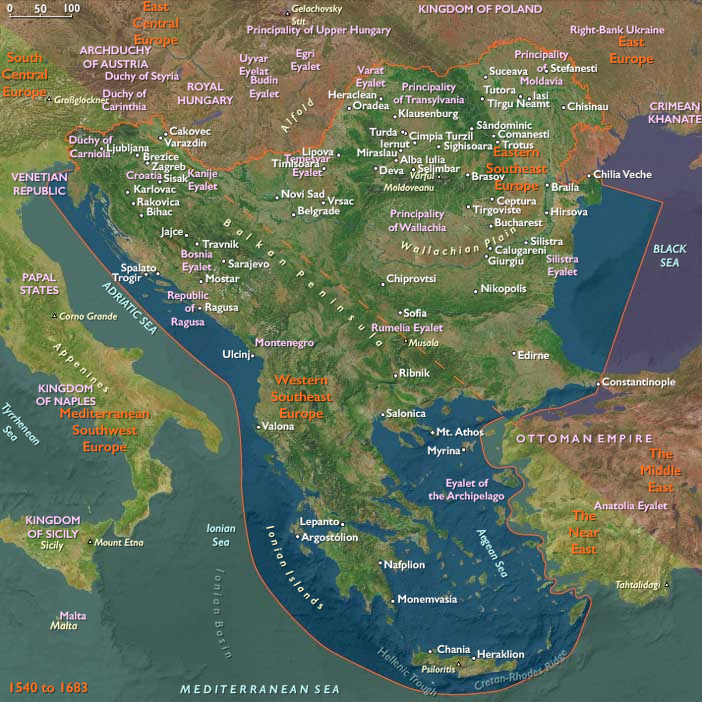
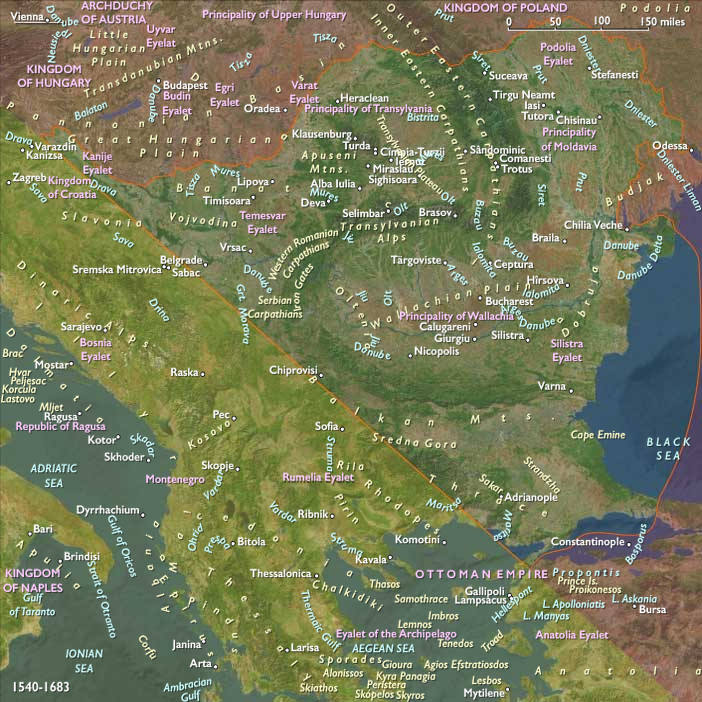
Between 1636 and 1647 CE, the Ottoman Empire strategically withdrew administrative oversight from parts of northwestern Bulgaria due to military preoccupations elsewhere—particularly their conflict with Venice over Crete. Regions such as Chiprovtsi, previously important for guarding Balkan passes and ore extraction, retained significant autonomy under the Christian Bulgarian aristocracy. These areas, historically outside direct Ottoman administration, experienced a unique cultural and political evolution during this period.
Political Dynamics and Regional Rivalries
Matei Basarab and Vasile Lupu: Rivalry and Conflict
The rivalry between Matei Basarab of Wallachia (1632–1654) and Vasile Lupu of Moldavia (1634–1653) deeply affected both principalities. Vasile Lupu, coveting the wealthier Wallachian throne, launched an invasion against Matei Basarab in the early 1640s. However, Wallachian forces decisively defeated the Moldavian army, significantly undermining Vasile's political authority. Following this defeat, Moldavian boyars capitalized on Vasile's weakened position to remove him from power.
Bulgarian Diplomatic Efforts and Western Alliances
In Bulgarian lands, a pro-Western noble circle in Chiprovtsi emerged, advocating for Catholicism as a means of securing Western support to restore Bulgarian sovereignty. Prominent Bulgarian Catholic diplomat Petar Parchevich undertook extensive diplomatic efforts (1630–1645), traveling alongside notable compatriots Petar Bogdan and Franchesko Soymirovich to the courts of key European powers. They met with Austrian Emperor Ferdinand II, Polish-Lithuanian kings Sigismund III Vasa and Władysław IV Vasa, and Wallachian Voivode Matei Basarab, seeking military and diplomatic backing against Ottoman control.
Economic and Technological Developments
Regional Economic Resilience and Autonomy
Chiprovtsi’s importance as an ore-mining region and its semi-autonomous status continued to support localized economic activity despite reduced Ottoman oversight. This autonomy facilitated local trade and enabled the region to cultivate economic links with Western and Central Europe, thus enhancing its strategic value during Ottoman military withdrawals.
Cultural and Artistic Developments
Patronage of Arts and Religion under Matei Basarab and Vasile Lupu
Both Matei Basarab and Vasile Lupu emerged as enlightened rulers and generous cultural patrons despite their political rivalry. They significantly advanced religious, literary, and legal scholarship by establishing printing presses and promoting religious publications. Vasile Lupu notably sponsored the construction of the Agapia Monastery (1642–1647) near Neamț, highlighting his investment in Moldavia’s cultural and religious life.
Social and Religious Developments
Bulgarian Catholic Movement and Western Engagement
The Catholic nobility of Chiprovtsi actively promoted religious and political alliances with the Catholic West to counter Ottoman domination. This period witnessed increased interactions between Bulgarian Catholic elites and influential European monarchies, reflecting broader shifts toward Western political and religious ideas as potential pathways for Bulgarian national revival.
Intensified Serfdom and Social Tensions
In Wallachia and Moldavia, intensified serfdom and increased economic burdens on peasants led to persistent social tensions. Boyars continued encroaching on peasant land, diminishing the rural population's welfare and increasing class disparities, further complicating internal stability in both principalities.
Key Historical Events and Developments
-
1630–1645: Petar Parchevich’s diplomatic campaign seeks Western support for Bulgarian autonomy.
-
Early 1640s: Vasile Lupu unsuccessfully attacks Wallachia; Matei Basarab secures a decisive victory.
-
1642–1647: Construction of Agapia Monastery under Vasile Lupu’s patronage.
-
1647: Ottoman military withdrawals from northwestern Bulgaria amid the ongoing war with Venice for Crete, significantly increasing regional autonomy.
Long-Term Consequences and Historical Significance
The period from 1636 to 1647 CE was defined by internal rivalries, strategic Ottoman withdrawals, and the emergence of pro-Western political movements within Bulgaria. The cultural patronage of Matei Basarab and Vasile Lupu contributed substantially to regional intellectual and religious life, while their rivalry underscored vulnerabilities within Wallachia and Moldavia. Concurrently, Bulgarian diplomatic overtures toward Western Europe illustrated evolving political strategies to address Ottoman domination. These developments profoundly influenced the socio-political dynamics and national consciousness in Eastern Southeast Europe, shaping future regional trajectories.
People
- Ferdinand II
- Matei Basarab
- Petar Bogdan
- Petar Parchevich
- Sigismund III Vasa
- Vasile Lupu of Moldavia
- Władysław IV Vasa
Groups
- Bulgarians (South Slavs)
- Serbs (South Slavs)
- Bulgarian Orthodox Church
- Romanians
- Christians, Roman Catholic
- Venice, (Most Serene) Republic of
- Ottoman Empire
- Bulgaria, Ottoman
- Wallachia (Ottoman vassal), Principality of
- Calvinists
- Moldavia (Ottoman vassal), Principality of
- Polish-Lithuanian Commonwealth (Commonwealth of the Two Nations)
- Habsburg Monarchy, or Empire
Topics
Commodoties
Subjects
- Commerce
- Language
- Labor and Service
- Decorative arts
- Conflict
- Faith
- Government
- Scholarship
- Custom and Law
Regions
Subregions
Years: 1636 - 1647
People
- Ferdinand II
- Matei Basarab
- Petar Bogdan
- Petar Parchevich
- Sigismund III Vasa
- Vasile Lupu of Moldavia
- Władysław IV Vasa
Groups
- Bulgarians (South Slavs)
- Serbs (South Slavs)
- Bulgarian Orthodox Church
- Romanians
- Christians, Roman Catholic
- Venice, (Most Serene) Republic of
- Ottoman Empire
- Bulgaria, Ottoman
- Wallachia (Ottoman vassal), Principality of
- Calvinists
- Moldavia (Ottoman vassal), Principality of
- Polish-Lithuanian Commonwealth (Commonwealth of the Two Nations)
- Habsburg Monarchy, or Empire
Topics
Commodoties
Subjects
- Commerce
- Language
- Labor and Service
- Decorative arts
- Conflict
- Faith
- Government
- Scholarship
- Custom and Law
Regions
Subregions