
Eastern Southeast Europe (1540–1683 CE): Ottoman Consolidation, …
Years: 1540 - 1683
Eastern Southeast Europe (1540–1683 CE): Ottoman Consolidation, Cultural Resilience, and Emerging National Identities
Settlement and Migration Patterns
Ottoman Settlement Policies
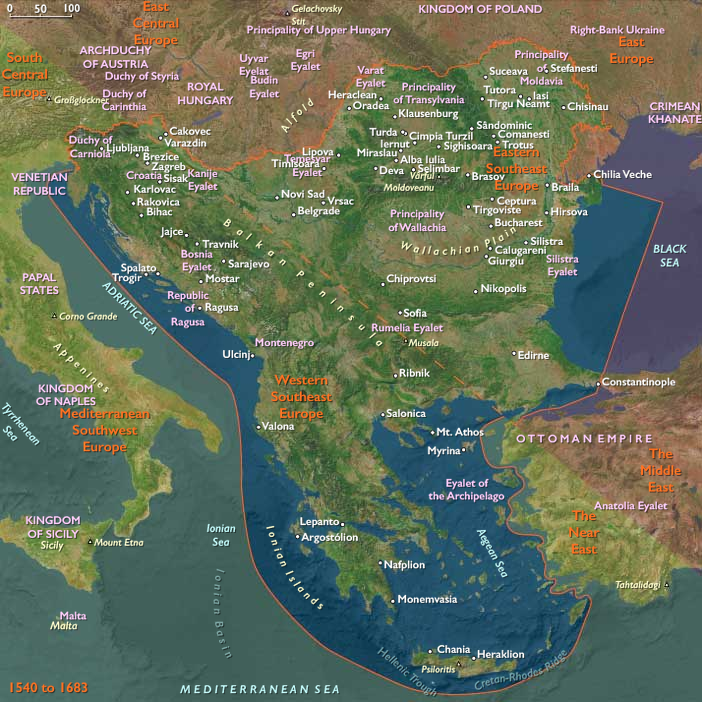
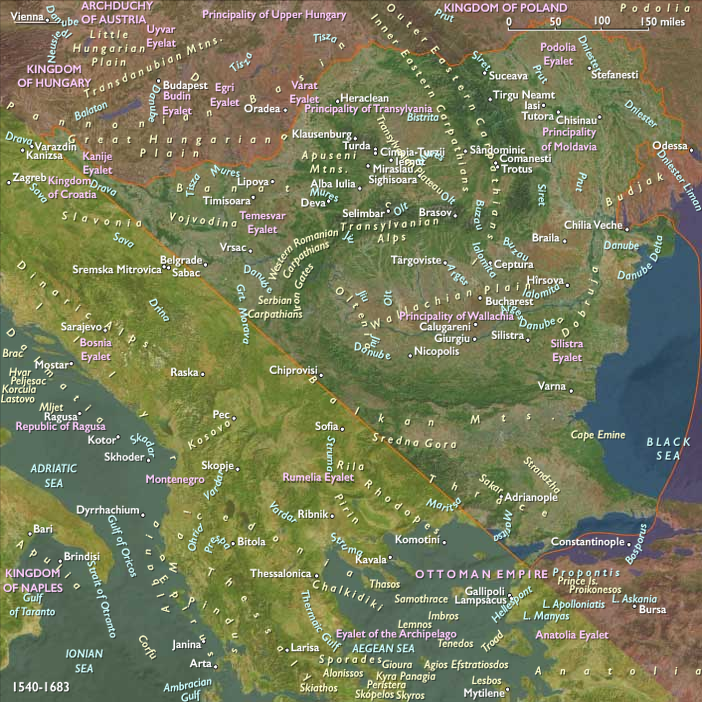
From 1540 to 1683, the Ottoman Empire pursued active demographic policies aimed at consolidating political control in the Balkans. Muslim populations from Anatolia were systematically settled in key regions such as Bulgaria, Thrace, and along the Danube, reinforcing Ottoman administrative presence and altering local demographics.
Persistence of Rural Communities
Despite these policies, rural communities, especially in regions of Bulgaria, Serbia, Wallachia, and Moldavia, maintained strong local identities and traditional cultures. Isolation, strong community structures, and religious institutions enabled these populations to retain a high degree of cultural autonomy, preserving a distinct identity within the larger Ottoman context.
Political Dynamics and Regional Rivalries
Administrative Centralization and Expansion (1540–1580)
During the reigns of Suleiman the Magnificent (until 1566) and his successors, the Ottomans significantly expanded and strengthened their administrative structures in the Balkans. Provincial administration through sanjaks and eyalets was consolidated, enforcing Ottoman rule through appointed pashas. This period also saw notable Ottoman victories, expanding their influence deeper into the Balkans.
Regional Resistance and Fragmentation (1580–1620)
By the late sixteenth century, local resistance emerged notably in Wallachia, under leaders like Michael the Brave (1593–1601). Michael temporarily unified Wallachia, Moldavia, and Transylvania (1599–1600), sparking early Romanian national consciousness. However, his alliance with the Habsburgs and conflicts with local nobility limited lasting political unity.
Internal Rivalries and Ottoman Decline (1620–1683)
Internal rivalries, exemplified by the conflicts between Wallachian prince Matei Basarab and Moldavian prince Vasile Lupu (1630s–1650s), weakened regional principalities. This coincided with increasing political corruption and administrative inefficiencies within the Ottoman system, resulting in growing dissatisfaction and vulnerability to external threats, particularly from the Habsburg Monarchy.
Economic and Technological Developments
Strengthened Trade Networks (1540–1600)
Economic activity thrived initially under stable Ottoman administration. Improved infrastructure, such as roads, bridges, caravanserais, and trade routes linking Constantinople and cities like Philippopolis (Plovdiv), fostered regional prosperity. Trade networks integrated Eastern Southeast Europe into broader Ottoman and Mediterranean economies.
Economic Strains and Agricultural Decline (1600–1683)
From the early seventeenth century onward, increased taxation, administrative corruption, and continuous warfare led to economic hardship, particularly in rural areas. Agricultural productivity declined, causing social distress and weakening local economies. Nevertheless, select towns like Chiprovtsi sustained artisanal crafts and commerce, supporting limited regional economic stability.
Cultural and Artistic Developments
Ottoman Cultural Patronage and Architectural Flourishing
The Ottomans significantly influenced regional culture through architectural projects, including mosques, medreses (educational institutions), caravanserais, and public buildings. Artistic expressions often blended Byzantine traditions with Islamic motifs, creating unique regional styles that continue to characterize Balkan cultural heritage.
Preservation and Revival of Local Traditions
Concurrent with Ottoman cultural policies, local populations actively preserved traditional folk customs, languages, and religious practices. Towns and villages, often isolated from direct Ottoman oversight, became repositories of Bulgarian, Serbian, and Romanian culture. Orthodox monasteries, such as the Agapia Monastery (built 1642–1647), served as vital cultural and educational centers.
Social and Religious Developments
Religious Autonomy and Diversity
Under the Ottoman millet system, significant religious autonomy was granted to Christian and Jewish communities. However, religious tensions persisted, particularly concerning forced conversions, Islamic settlement policies, and discrimination against Orthodox communities in certain regions, notably in Transylvania under Protestant dominance.
Emergence of Religious and National Identities
The sixteenth and seventeenth centuries saw growing connections between religious identity and emerging national consciousness, especially among Orthodox populations in Bulgaria, Serbia, and the Romanian principalities. The efforts of Franciscan missionaries promoting the Counter-Reformation also had an impact in certain Catholic enclaves.
Key Historical Events and Developments
-
1541: Ottoman administrative reforms solidify control over Balkan territories.
-
1571: Transylvanian Diet's landmark edict guaranteeing religious freedom for Catholics, Lutherans, Calvinists, and Unitarians (excluding Orthodox Christians).
-
1599–1600: Michael the Brave temporarily unites Wallachia, Moldavia, and Transylvania, fostering early Romanian nationalism.
-
1600–1630: Emergence of hajduk (bandit/outlaw) movements in Serbia and Bulgaria, symbolizing localized resistance to Ottoman authority.
-
1632–1654: Rule of Wallachian prince Matei Basarab and Moldavian prince Vasile Lupu, cultural patrons who fostered early modern literary and cultural revival despite political rivalries.
-
1640s–1660s: Catholic Bulgarian noble Petar Parchevich conducts diplomatic missions to seek Western support for Bulgarian liberation from Ottoman rule.
-
1670s–1683: Increased military preparations by Ottomans lead to intensified demographic pressures and set the stage for the Siege of Vienna (1683), marking the beginning of significant Ottoman retreat in Europe.
Long-Term Consequences and Historical Significance
The period 1540 to 1683 represented a critical phase in Eastern Southeast Europe's history, characterized by sustained Ottoman administrative consolidation, economic transformations, cultural resilience, and the gradual emergence of proto-national identities. While initial Ottoman rule brought stability and economic prosperity, later periods saw increased strain, internal division, and external threats. The impending Ottoman defeat at the Siege of Vienna (1683) ultimately marked a turning point, heralding the gradual decline of Ottoman power and the rise of local and national aspirations in Eastern Southeast Europe.
People
- Matei Basarab
- Michael the Brave
- Petar Parchevich
- Suleiman I “the Magnificent”
- Vasile Lupu of Moldavia
Groups
- Jews
- Bulgarians (South Slavs)
- Serbs (South Slavs)
- Bulgarian Orthodox Church
- Romanians
- Christians, Eastern Catholic (Uniate)
- Christians, Roman Catholic
- Franciscans, or Order of St. Francis
- Ottoman Empire
- Bulgaria, Ottoman
- Wallachia (Ottoman vassal), Principality of
- Turkish people
- Serbia, Ottoman
- Lutheranism
- Calvinists
- Moldavia (Ottoman vassal), Principality of
- Transylvania (Ottoman vassal), Principality of
- Habsburg Monarchy, or Empire
Topics
- Middle Subatlantic Period
- Counter-Reformation (also Catholic Reformation or Catholic Revival)
- Vienna, Battle of
Commodoties
Subjects
- Commerce
- Language
- Labor and Service
- Decorative arts
- Conflict
- Faith
- Government
- Scholarship
- Custom and Law
- Human Migration
Regions
Subregions
Years: 1540 - 1683
People
- Matei Basarab
- Michael the Brave
- Petar Parchevich
- Suleiman I “the Magnificent”
- Vasile Lupu of Moldavia
Groups
- Jews
- Bulgarians (South Slavs)
- Serbs (South Slavs)
- Bulgarian Orthodox Church
- Romanians
- Christians, Eastern Catholic (Uniate)
- Christians, Roman Catholic
- Franciscans, or Order of St. Francis
- Ottoman Empire
- Bulgaria, Ottoman
- Wallachia (Ottoman vassal), Principality of
- Turkish people
- Serbia, Ottoman
- Lutheranism
- Calvinists
- Moldavia (Ottoman vassal), Principality of
- Transylvania (Ottoman vassal), Principality of
- Habsburg Monarchy, or Empire
Topics
- Middle Subatlantic Period
- Counter-Reformation (also Catholic Reformation or Catholic Revival)
- Vienna, Battle of
Commodoties
Subjects
- Commerce
- Language
- Labor and Service
- Decorative arts
- Conflict
- Faith
- Government
- Scholarship
- Custom and Law
- Human Migration
Regions
Subregions