
Eastern Southeast Europe (1780–1791 CE): Enlightened Reforms, …
Years: 1780 - 1791
Eastern Southeast Europe (1780–1791 CE): Enlightened Reforms, National Awakening, and Rising Nationalism
Settlement and Migration Patterns
Persistent Importance of Border Communities
The strategic importance of border communities continued, particularly in areas such as the Austrian Military Frontier, where Serbs and other groups persisted in their roles as military settlers and frontier guards, protecting the Habsburg domains from potential Ottoman incursions.
Economic and Social Developments
Joseph II's Enlightened Reforms
Emperor Joseph II, influenced by Enlightenment principles, initiated sweeping reforms aimed at alleviating feudal burdens and modernizing administrative structures. His policies, such as serf emancipation and centralization of governance, sought to improve peasant conditions but often met fierce resistance from local nobles and clergy, particularly in Transylvania and Hungary.
Transylvanian Serf Revolt (1784)
Transylvanian serfs, inspired by Joseph II's promises of reform, revolted under the leadership of Vasile Ursu Nicola Horea in 1784. Although initially successful in challenging feudal abuses, the rebellion was harshly suppressed, resulting in severe punishments for its leaders. Despite this, Joseph implemented some reforms to mitigate the serfs' grievances, though resistance from the nobility limited their effectiveness.
Cultural and Artistic Developments
Cultural Awakening and Romanian Nationalism
The era witnessed a burgeoning Romanian national consciousness, significantly fostered by the Uniate Church. Transylvanian Uniate priests, educated in Rome and Vienna, promoted Romanian cultural identity through educational institutions, literary works, and religious texts. The Uniate seat in Blaj emerged as a vibrant center of Romanian culture.
Bulgarian Literary and Educational Revival
Sofronii Vrachanski (Stoyko Vladislavov), a Bulgarian cleric and scholar, actively promoted Bulgarian education and literature. His writings, influenced by Enlightenment ideals, significantly advanced Bulgarian national consciousness, particularly through the popularization of secular texts and the widespread dissemination of Father Paisi of Hilendar's seminal Slav-Bulgarian History.
Intellectual and Religious Developments
Enlightenment Influence and National Identity
Enlightenment ideals strongly influenced regional intellectuals, promoting reformist and nationalist sentiments. Romanian bishops petitioned Emperor Leopold II in 1791 for civil rights and political recognition based on their historical claims of Roman ancestry and indigenous status. Although largely unsuccessful politically, their efforts intensified nationalist awareness among Romanians.
Religious Tolerance and Orthodox Rights
Joseph II enacted policies promoting religious tolerance, granting civil rights to Orthodox Christians, although full religious equality was not fully realized. This policy shift represented a significant departure from earlier religious intolerance, influencing regional dynamics, particularly in Transylvania.
Political Dynamics and Regional Rivalries
Resistance to Centralization
Joseph II’s centralization efforts provoked strong opposition among Hungarian nobles, Catholic clergy, and other regional elites. The imposition of German as the official administrative language further fueled nationalist reactions, prompting widespread resistance and ultimately forcing Joseph to rescind some of his reforms.
Nationalist Movements and Diplomatic Complexities
Nationalist sentiments became increasingly pronounced in response to imperial centralization and forced assimilation policies. Hungarian calls for unification and Magyarization triggered defensive nationalist reactions among Romanians and other minorities, complicating diplomatic and internal political affairs within the Habsburg dominions.
Key Historical Events and Developments
-
Joseph II's enlightened reforms, including serf emancipation and religious tolerance.
-
The Transylvanian serf revolt of 1784, brutally suppressed but influential in prompting limited reforms.
-
Emergence of Romanian and Bulgarian nationalist movements, significantly influenced by Enlightenment ideas and religious institutions.
Long-Term Consequences and Historical Significance
The period from 1780 to 1791 CE marked a critical juncture characterized by Enlightenment-driven reforms, growing nationalist awareness, and significant social upheaval. Joseph II's reforms, though partially reversed, set precedents for future modernization and political transformation. The rising nationalist sentiments among Romanians and Bulgarians laid essential foundations for subsequent independence movements and shaped the region's evolving identity within the broader context of Eastern Southeast European history.
People
Groups
- Slavonia region
- Bulgarians (South Slavs)
- Serbs (South Slavs)
- Bulgarian Orthodox Church
- Romanians
- Albanians
- Christians, Roman Catholic
- Christians, Eastern Catholic (Uniate)
- Austria, Archduchy of
- Serbian Orthodox Church
- Ottoman Empire
- Bulgaria, Ottoman
- Wallachia (Ottoman vassal), Principality of
- Crimean Khanate
- Turkish people
- Serbia, Ottoman
- Cossacks, Zaporozhian
- Calvinists
- Jesuits, or Order of the Society of Jesus
- Russia, Tsardom of
- Slavonian Krajina (Military Frontier)
- Moldavia (Ottoman vassal), Principality of
- Polish-Lithuanian Commonwealth (Commonwealth of the Two Nations)
- Habsburg Monarchy, or Empire
- Transylvania, (Austrian) Principality of
Topics
Commodoties
Subjects
- Commerce
- Language
- Labor and Service
- Decorative arts
- Conflict
- Faith
- Government
- Scholarship
- Custom and Law
- Human Migration
Regions
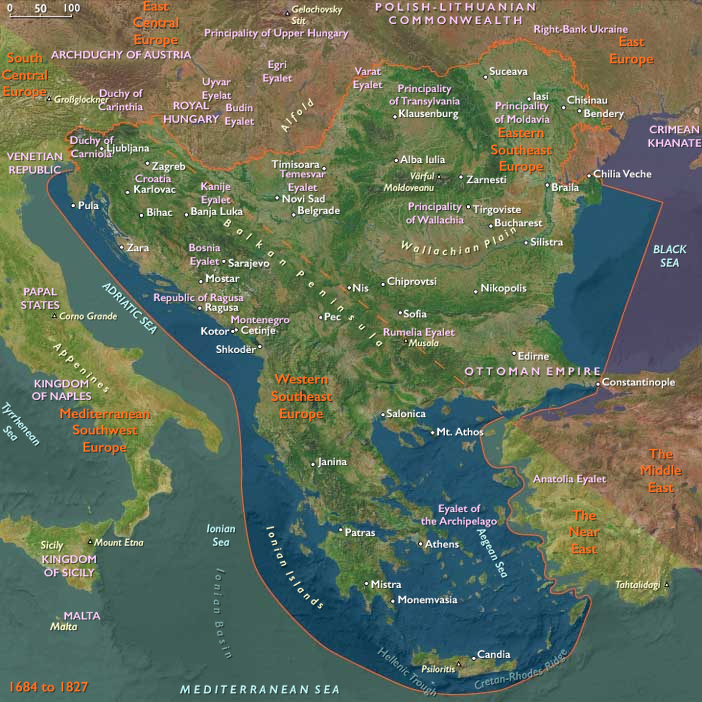
Subregions
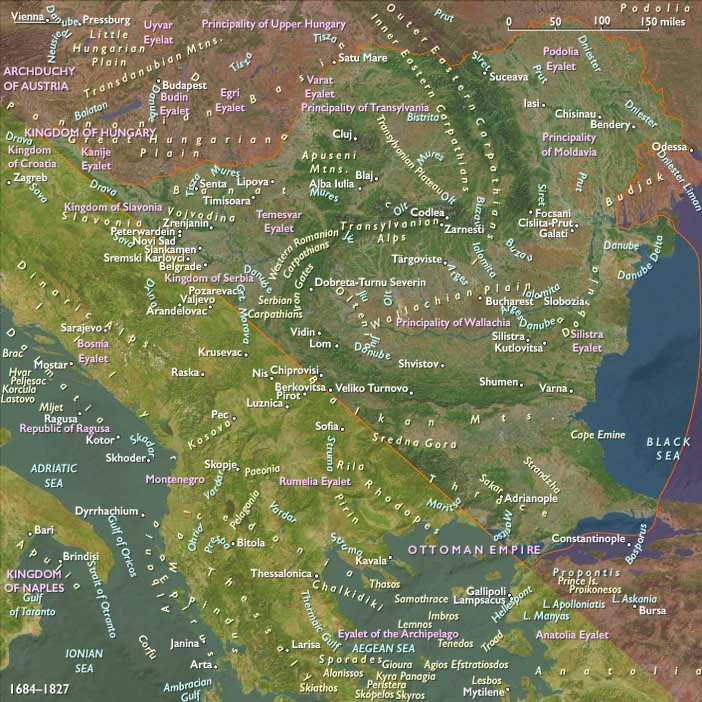
Related Events
Showing 10 events out of 25141 total
Years: 1780 - 1791
People
Groups
- Slavonia region
- Bulgarians (South Slavs)
- Serbs (South Slavs)
- Bulgarian Orthodox Church
- Romanians
- Albanians
- Christians, Roman Catholic
- Christians, Eastern Catholic (Uniate)
- Austria, Archduchy of
- Serbian Orthodox Church
- Ottoman Empire
- Bulgaria, Ottoman
- Wallachia (Ottoman vassal), Principality of
- Crimean Khanate
- Turkish people
- Serbia, Ottoman
- Cossacks, Zaporozhian
- Calvinists
- Jesuits, or Order of the Society of Jesus
- Russia, Tsardom of
- Slavonian Krajina (Military Frontier)
- Moldavia (Ottoman vassal), Principality of
- Polish-Lithuanian Commonwealth (Commonwealth of the Two Nations)
- Habsburg Monarchy, or Empire
- Transylvania, (Austrian) Principality of
Topics
Commodoties
Subjects
- Commerce
- Language
- Labor and Service
- Decorative arts
- Conflict
- Faith
- Government
- Scholarship
- Custom and Law
- Human Migration
Regions
Subregions