
Eastern Southeast Europe (1816–1827 CE): National Uprisings, …
Years: 1816 - 1827
Eastern Southeast Europe (1816–1827 CE): National Uprisings, Diplomatic Maneuvering, and Cultural Awakening
Settlement and Migration Patterns
Serbian Migrations and Military Resettlements
Continued unrest and harsh Ottoman reprisals in Serbia led to ongoing Serbian migrations into Austrian-controlled territories, particularly in Vojvodina and southern Hungary. These Serbian communities became vital centers of nationalist and cultural revival, reinforcing Serbian identity and Orthodox traditions.
Economic and Social Developments
Romanian Uprising and Greek Influence
In 1821, Tudor Vladimirescu, a Romanian military leader and nationalist, led an anti-Phanariot uprising in Wallachia, aiming to establish autonomous Romanian governance under Ottoman suzerainty. Vladimirescu was assassinated by Greek revolutionaries under Alexander Ypsilanti, leading to the collapse of the Romanian revolt and subsequent Ottoman retaliation. This period marked the end of the Phanariot regime in the Danubian Principalities and the restoration of native Romanian princes under greater Russian influence.
Ottoman Economic Decline and Social Unrest
Economic deterioration and internal strife within the Ottoman Empire deepened regional instability. The principalities of Wallachia and Moldavia suffered from administrative corruption, severe taxation, and exploitative practices under rapidly replaced Greek Phanariot rulers, causing widespread social distress.
Cultural and Artistic Developments
Bulgarian Cultural Revival
Bulgarian intellectuals and church leaders, particularly those influenced by figures like Sofronii Vrachanski, intensified their cultural revival efforts. Despite Ottoman oppression, Bulgarian monasteries continued to preserve and propagate Bulgarian language, literature, and national identity, significantly contributing to Bulgaria's future nationalist movements.
Intellectual and Religious Developments
Romanian Nationalist Ideologies
The nationalist revolt led by Tudor Vladimirescu was deeply rooted in Enlightenment ideals and nationalist rhetoric, underscoring Romania's aspirations for political and cultural autonomy. Despite its failure, the movement profoundly influenced future Romanian nationalist thought.
Russian Diplomatic Influence
Following the suppression of the Romanian and Greek revolts, Russia secured increased diplomatic influence over Wallachia and Moldavia. The Ottoman sultan's concessions to Russia in 1826, granting significant consultation rights in Romanian principalities, effectively confirmed Russia’s predominant diplomatic and strategic role in the region.
Political Dynamics and Regional Rivalries
Greek War of Independence and Regional Impact
The outbreak of the Greek War of Independence (1821) triggered regional unrest and diplomatic realignments. The involvement of foreign powers, particularly Russia, Britain, and France, significantly influenced political dynamics throughout Eastern Southeast Europe, amplifying the complexities of the "Eastern Question."
Ottoman Internal Crisis and Reforms
In response to nationalist movements and external pressures, the Ottoman Empire faced profound internal crises. The Auspicious Incident (1826), which abolished the Janissaries, initiated significant military and administrative reforms aimed at modernizing the empire, indirectly affecting its Balkan territories.
Key Historical Events and Developments
-
Tudor Vladimirescu’s nationalist uprising in Wallachia (1821) and its suppression.
-
Increased Russian diplomatic influence over the Danubian Principalities established by the Ottoman-Russian agreement of 1826.
-
Bulgarian intellectual and cultural revival driven by monastic communities and nationalist leaders like Sofronii Vrachanski.
Long-Term Consequences and Historical Significance
The period 1816–1827 CE was marked by significant nationalist movements and diplomatic shifts that shaped the geopolitical landscape of Eastern Southeast Europe. The failed Romanian uprising, Greek War of Independence, and Ottoman reforms significantly influenced nationalist sentiments, intensified diplomatic tensions, and set the stage for further regional upheavals and independence movements in the nineteenth century.
People
Groups
- Bulgarians (South Slavs)
- Bulgarian Orthodox Church
- Romanians
- Christians, Eastern Orthodox
- Ottoman Empire
- Bulgaria, Ottoman
- Turkish people
- Moldavia (Ottoman vassal), Principality of
- Wallachia (Ottoman vassal), Principality of
- Russian Empire
Topics
- Middle Subatlantic Period
- Greek War of Independence
- Wallachian uprising of 1821
- Auspicious Incident (or Event), aka Massacre of the Janissaries
Commodoties
Subjects
- Commerce
- Language
- Labor and Service
- Decorative arts
- Conflict
- Mayhem
- Faith
- Government
- Scholarship
- Custom and Law
- Human Migration
Regions
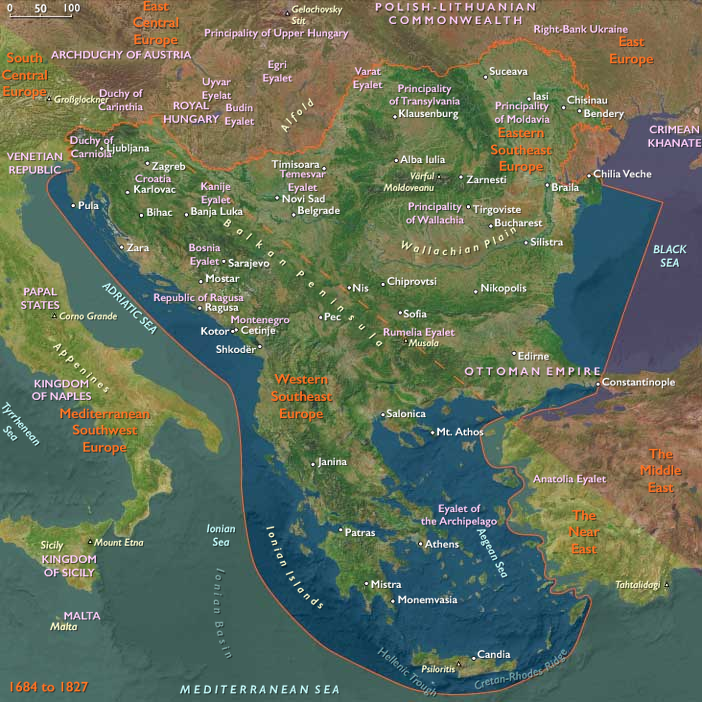
Subregions
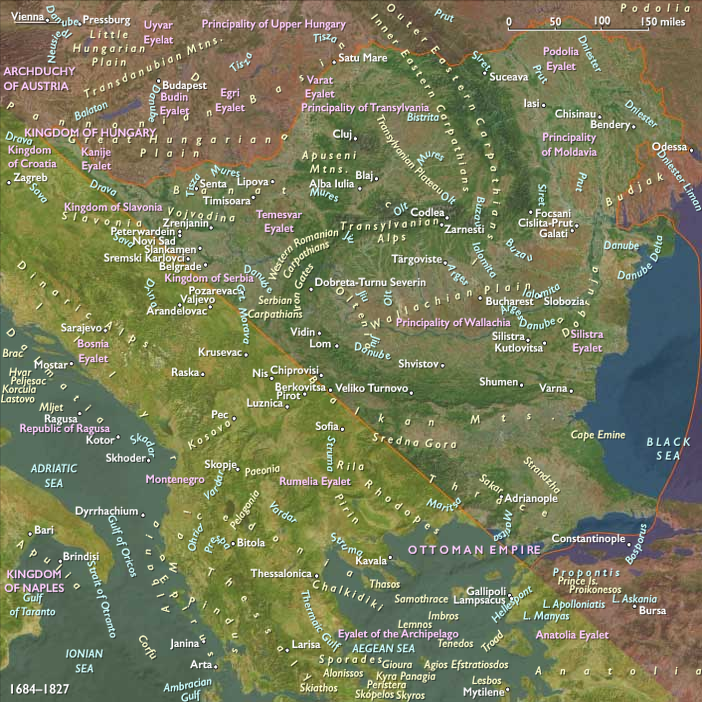
Years: 1816 - 1827
People
Groups
- Bulgarians (South Slavs)
- Bulgarian Orthodox Church
- Romanians
- Christians, Eastern Orthodox
- Ottoman Empire
- Bulgaria, Ottoman
- Turkish people
- Moldavia (Ottoman vassal), Principality of
- Wallachia (Ottoman vassal), Principality of
- Russian Empire
Topics
- Middle Subatlantic Period
- Greek War of Independence
- Wallachian uprising of 1821
- Auspicious Incident (or Event), aka Massacre of the Janissaries
Commodoties
Subjects
- Commerce
- Language
- Labor and Service
- Decorative arts
- Conflict
- Mayhem
- Faith
- Government
- Scholarship
- Custom and Law
- Human Migration
Regions
Subregions